The short answer
A bike rental business lends scooters and motorcycles by the hour, day or week to tourists, students and people between vehicles. It works best in hill towns, beach destinations, pilgrim centres and college towns where people need to get around but do not bring their own two-wheeler.
Start with a small, well-maintained fleet registered correctly for self-drive rental, a clear deposit and damage policy, and a handover process with photos. Most disputes and losses in this business come from poor handovers, not from bad customers.
Is a bike rental business right for you?
Travellers in India increasingly prefer to explore on their own schedule. In places like Goa, the hills of Uttarakhand and Himachal, Ladakh, Rishikesh, Pondicherry and Hampi, a rented scooter is often the easiest way to get around. In college towns and IT cities, students and new arrivals rent for weeks or months before they buy.
People who do well in this business are hands-on. They know vehicles, keep them clean and serviced, and are firm but fair about deposits and damage. They also understand seasons: a hill-town rental counter may be packed in May and June and quiet in the monsoon.
The hard parts:
- Damage and disputes. Scratches, dents and lost helmets lead to arguments if you did not record the condition at pickup.
- Seasonality. Tourist demand rises and falls sharply. Your costs do not.
- Document checks. Renting to someone without a valid licence puts you and them at risk.
- Registration. Using ordinary private vehicles for rental is a common shortcut that can get vehicles seized.
Business models to choose from
| Model | How it works | Suits |
|---|---|---|
| Tourist counter | Hourly and daily rentals from a shop near a bus stand, station or market | Hill towns, beach towns, pilgrim centres |
| Long-term rentals | Weekly and monthly rentals to students and professionals | College towns and IT cities |
| Hotel and homestay partnerships | Vehicles delivered to guests, with the property earning a commission | Destinations with many small stays |
| Ride-and-tour packages | Motorcycles with route plans, sometimes with a lead rider or support vehicle | Adventure routes and riding groups |
Licences and registrations
The most important point: in most states, vehicles rented out for self-drive must be registered for that purpose, typically under the central rent-a-motorcycle or rent-a-cab schemes, and carry the distinctive number plates for self-drive rentals. Renting out ordinary private vehicles is generally not allowed. Check exactly what your state requires before you buy a single scooter.
| Registration | Why you need it | Where you get it |
|---|---|---|
| Business registration and bank account | To own vehicles in the business name and take payments | Bank and local registration, or Ministry of Corporate Affairs |
| GST registration | For billing and input credit where it applies | GST portal |
| Udyam registration | MSME recognition for loans and schemes | Udyam portal |
| Shop & Establishment or trade licence | Covers your rental counter | Municipal body or state labour department |
| Self-drive rental licence or permit | Authorises you to rent vehicles without a driver | State transport department and RTO |
| Commercial registration of each vehicle | Rental vehicles must be registered for rental use | Your RTO |
| Commercial insurance | Covers the vehicle and third-party liability while rented | Insurer |
Self-drive rental rules vary by state and change. Some tourist states also have local rules for rental counters. Confirm with your RTO, a chartered accountant and a lawyer before you start. This guide is not legal advice.
What it costs to start
| Item | Small start | Larger setup |
|---|---|---|
| Vehicles | 8–10 scooters: ₹7–10 lakh | 30–50 scooters and motorcycles: ₹30–70 lakh |
| Registration, permits and insurance | ₹1–2 lakh | ₹5–10 lakh |
| Helmets, locks, phone mounts, rain covers | ₹30,000–₹60,000 | ₹2–4 lakh |
| Counter rent and setup | ₹20,000–₹60,000 a month plus deposit | ₹1–2 lakh a month plus deposit |
| Spares, servicing tools, a mechanic | ₹50,000–₹1 lakh | ₹3–6 lakh |
| Booking website and counter system | ₹50,000–₹2 lakh | ₹5–15 lakh |
| Working capital for the off-season | ₹2–4 lakh | ₹10–20 lakh |
These are planning estimates, not quotes. Vehicle prices, rent and insurance vary by town and season.
Step by step: from idea to first customer
- Pick your town and spot: near the bus stand, railway station, ferry point or main market.
- Check your state's self-drive rental rules with the RTO.
- Register your business, GST and Udyam.
- Buy a small, reliable fleet of popular scooters, plus one or two motorcycles if riders ask for them.
- Register every vehicle for rental use and get commercial insurance.
- Write a one-page rental agreement: rates, deposit, fuel policy, late return and damage charges.
- Set up a handover routine: licence check, ID copy, photos of the vehicle from all sides, fuel and kilometre reading.
- Accept UPI and cash; decide how you will hold and return deposits.
- Put your counter on Google Maps with photos and opening hours.
- Agree commissions with five nearby homestays and hotels.
- Open, and review every return for a month to tighten your process.
Running it day to day
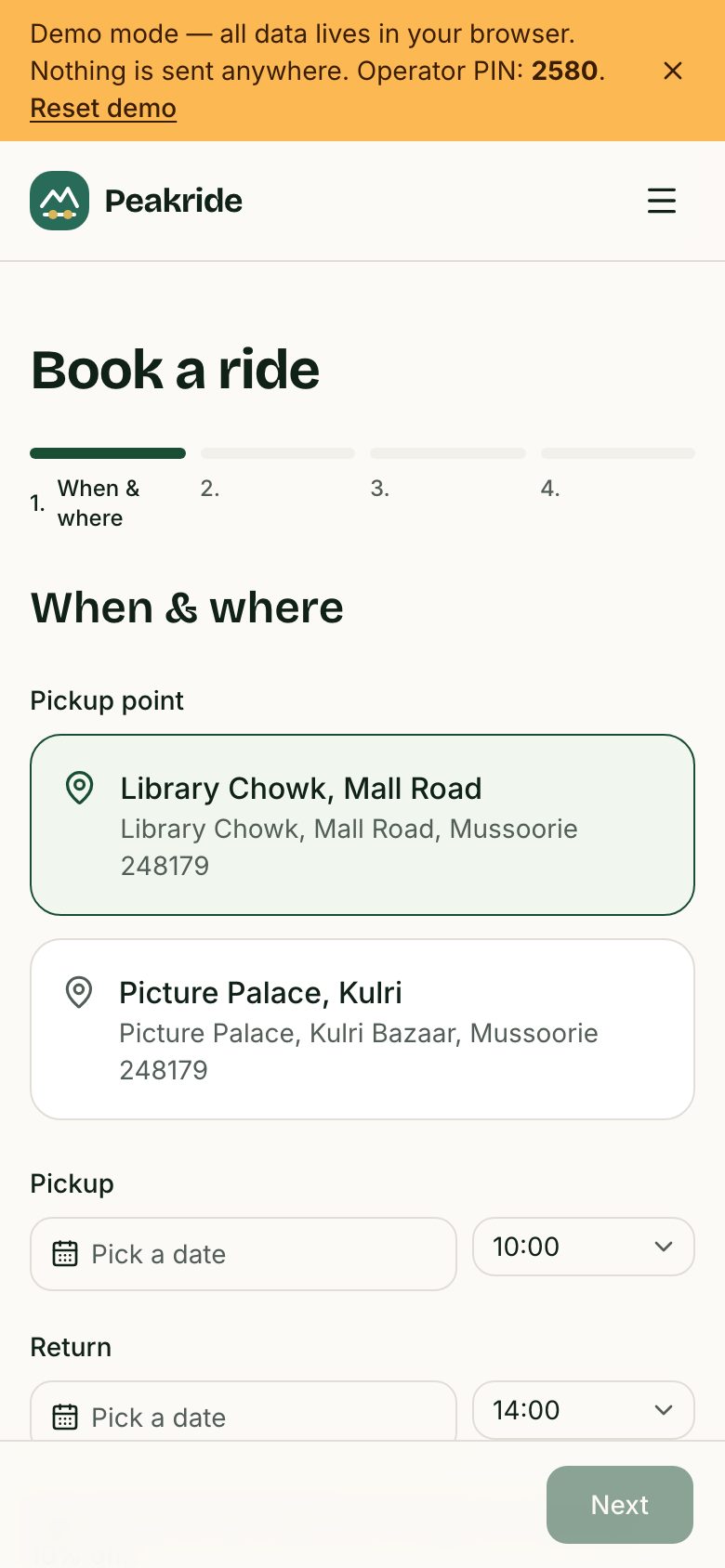
Handovers. This is where you make or lose money. Photograph the vehicle at pickup and return, from the same angles, with time stamps. Record fuel and kilometres. Our Peakride concept build, set in a hill town, shows pickup and return photos side by side with an itemised deposit settlement.
Maintenance. Check brakes, tyres, lights and horn every morning in the hills. Service on a schedule, not when something breaks. A breakdown on a mountain road ruins a trip and your reviews.
Bookings and double-bookings. Phone, walk-in and online bookings for the same scooter cause clashes. Use one calendar for the whole fleet. Peakride's counter console is built to keep working offline and sync when the network returns, because hill towns lose signal.
Deposits and payments. Take deposits by UPI where you can and return them promptly. Be clear about deductions and show the photo evidence.
Seasons. Plan for the slow months: long-term rentals to locals, servicing the fleet, or selling older vehicles.
Getting your first customers
- Google Maps first. Tourists search on the spot. A complete Google Business Profile with photos, rates and reviews is your shop window. See our local SEO guide.
- Homestays and hostels. Offer a commission or a guest discount. Read how to start a homestay and how to start a hostel to understand their side.
- WhatsApp. Let people book ahead on WhatsApp and send them pickup directions and documents to bring.
- Reviews. Ask every happy rider for a review at return. Reply to every complaint politely.
- Riding groups. For motorcycles, connect with local riding clubs and route planners.
The tech you need
A small counter can run on a register and WhatsApp. But once you have more than ten vehicles or take advance bookings, you need a booking page with live availability, document upload, deposits and a counter console that records handovers.
| Stage | What to use |
|---|---|
| Opening season | Google Business Profile, WhatsApp bookings, UPI, a photo-based handover checklist |
| 10+ vehicles | A booking website with a fleet list, rates and deposits; one calendar for all bookings |
| Multiple counters | A counter console that works offline, handover reports, a ledger and fleet timeline |
Read what goes into a travel booking website and open Peakride, our concept build for scooter rentals in a hill town. If you'd rather start with a lean site, our guide to website costs in India helps you plan. Send us a brief when you're ready.
See the app a bike rental business runs on
We designed and built this concept end to end, every side of it, so you can open it and try it before you plan your own. Our travel booking website page covers the features, timeline and what moves the cost.
Questions people ask
Do I need a licence to start a bike rental business?
Yes. In most states you need permission to run a self-drive rental business, and each vehicle must be registered for rental use, typically under the central rent-a-motorcycle or rent-a-cab schemes, with commercial insurance. Renting out private vehicles is generally not allowed. Rules vary by state, so confirm with your RTO before buying vehicles.
How much does it cost to start a scooter rental business?
A small counter with eight to ten scooters, registration, insurance, helmets and a few months of rent can start from roughly ₹10–15 lakh. A larger operation with several counters and a mixed fleet costs much more. Treat these as rough estimates and build your budget from local vehicle prices and rent.
How do I avoid damage disputes with renters?
Photograph the vehicle from fixed angles at pickup and return, with time stamps, and record fuel and kilometres. Put your damage charges in a short written agreement the renter signs. Show the photos when you deduct from the deposit. Most disputes disappear when both sides can see the before-and-after evidence.
What documents should I collect from a renter?
A valid driving licence for the vehicle type, a government photo ID, and a phone number you can reach. Many operators also keep a copy of the licence and ID on file for the rental period. Never rent to someone without a valid licence, and explain your deposit and fuel rules before handing over the keys.
Which towns are good for a bike rental business?
Tourist destinations where visitors arrive without vehicles do well: beach towns, hill stations, pilgrim centres and heritage towns. College towns and IT cities work for weekly and monthly rentals. Study the season: some places are busy for only a few months, so plan cash flow and long-term rentals for the quiet period.


