The short answer
A cafe is a coffee and snacks business that sells time as much as drinks. Decide early whether you are a quick takeaway counter or a place people sit for an hour, because that decides your rent, your seats and your menu. Then get FSSAI, GST and the local trade licence in place, and spend on coffee equipment before décor.
As a ballpark, a small kiosk or 10-seat cafe in a tier-2 city can open for roughly ₹8–20 lakh. A 40-seat metro cafe often needs ₹35–70 lakh. Good coffee, a consistent barista and a reason to come back each week matter more than the interiors.
Is a cafe right for you?
Cafes have spread well beyond the metros. Students, young professionals and freelancers in tier-2 cities now look for a place to meet, study or work over coffee, and specialty Indian coffee has made people more curious about what is in the cup.
Cafes suit owners who care about consistency — the same cappuccino at 8 am and 8 pm — and who enjoy being part of a neighbourhood. The hard parts: a coffee bill is small, so you need many customers a day; laptop users can fill seats for hours on one drink; and good baristas are hard to keep.
Business models to choose from
| Model | How it works | Suits |
|---|---|---|
| Kiosk or takeaway counter | A small counter, coffee and grab-and-go snacks | Office complexes, colleges, metro and railway stations |
| Neighbourhood cafe | 20–40 seats, coffee, light food, a regular crowd | Residential areas with young families and students |
| Work cafe | Plenty of seating, plugs, Wi-Fi and a minimum spend or time packs | Areas with freelancers and startups |
| Roastery cafe | You roast beans and sell them alongside drinks | Owners who want a retail and online beans business too |
| Bakery cafe | Coffee led by fresh bakes made on site | Owners with baking skills; see starting a home bakery |
Licences and registrations
| Registration | Why you need it | Where you get it |
|---|---|---|
| FSSAI licence or registration | Required for any business serving food or drinks | Food Safety and Standards Authority of India, online |
| GST registration | Needed above the turnover limit, and to bill businesses or list on platforms | GST portal |
| Shop & Establishment registration | Covers working hours and staff under your state's law | State labour department or municipal body |
| Health or trade licence | Permission to run an eating place at that address | Municipal corporation |
| Fire NOC | Depending on size, seating and building | State or city fire department |
| Eating house licence | Required in some cities for places that serve food on the premises | Local police or licensing authority, depending on the city |
| Signage permission | For a board facing the road, in many cities | Municipal corporation |
| Music licence | If you play recorded music for customers | The copyright licensing bodies for recorded music |
If you sell packed coffee beans or bakes with labels, packaging and labelling rules for packaged goods also apply.
Rules, tiers and thresholds vary by state and city, and they change. Confirm the exact list for your address with a CA or the local authority. This is not legal advice.
What it costs to start
| Item | Small start | Larger setup |
|---|---|---|
| Rent deposit and advance | ₹1–2.5 lakh | ₹4–10 lakh |
| Espresso machine, grinders and brewing gear | ₹2–5 lakh | ₹6–15 lakh |
| Fridges, oven and small kitchen equipment | ₹1–2.5 lakh | ₹3–6 lakh |
| Interiors, seating and lighting | ₹2–6 lakh | ₹12–25 lakh |
| Licences, CA and consultant fees | ₹25,000–75,000 | ₹1–2 lakh |
| Opening stock: beans, milk, cups, bakes | ₹30,000–75,000 | ₹1–2 lakh |
| Staff salaries for the first two months | ₹1–2 lakh | ₹4–8 lakh |
| Billing, QR menu and website | ₹20,000–75,000 | ₹1–3 lakh |
| Rough total | ₹8–20 lakh | ₹35–70 lakh |
Coffee equipment is the one place not to save. A cheap machine that cannot hold temperature through a rush makes every drink worse. Many suppliers offer machines on rent or with a bean supply agreement, which lowers the upfront cost.
These are ballpark estimates to sanity-check a plan, not quotes.
Step by step: from idea to first customer
- Choose your crowd: students, office workers, families or remote workers. Your menu, hours and seats follow from that.
- Find a location with morning and evening footfall, and check it on a weekday and a weekend.
- Taste beans from several roasters and settle on a house blend and one single-origin.
- Register the business and apply for GST, FSSAI and the trade licence.
- Plan the bar so a barista can make drinks without crossing paths with the person at the till.
- Hire and train baristas until drinks taste the same no matter who makes them.
- Keep the food menu short: a few bakes and sandwiches you can make well and fast.
- Set up billing, UPI QR and a loyalty card — paper or digital — from day one.
- Create your Google Business Profile with photos of the drinks and the space.
- Soft-launch for a week, then open properly and track the busiest hours.
Running it day to day
The day starts with dialling in the espresso: tasting and adjusting the grind until shots run right. Milk deliveries come early, bakes go into the display, and the bar is set before the first rush. Evenings bring a second crowd in many neighbourhoods.
- Beans: buy by roast date and use them within weeks, not months. Stale beans are the most common cafe mistake.
- Machine care: clean the group heads and steam wands daily and service the machine on schedule.
- Seats: if laptop users fill tables all day, try time-based packs or a minimum order after the first hour.
- Margins: drinks carry good margins; food carries the wastage. Track both separately.
Getting your first customers
Cafes grow through habit. Your aim is to turn a first visit into a weekly one. A complete Google Business Profile helps people nearby find you — see our local SEO guide — but the loyalty card and the barista who remembers an order do the rest.
- Nearby offices: offer morning coffee runs with ordering on WhatsApp.
- Events: open-mic nights, book clubs and coffee tastings fill quiet evenings.
- Beans to take home: selling bags of your house blend extends your brand into kitchens.
- Delivery platforms: useful for cold coffees and snacks, but keep the menu short and the packaging spill-proof.
The tech you need
Day one: billing with GST invoices, a UPI QR at the counter, and a simple loyalty system. Next: a website with the menu, location and hours, plus pre-ordering for office crowds so their coffee is ready when they walk in. If you roast or sell beans, an online store with subscriptions turns regulars into monthly customers.
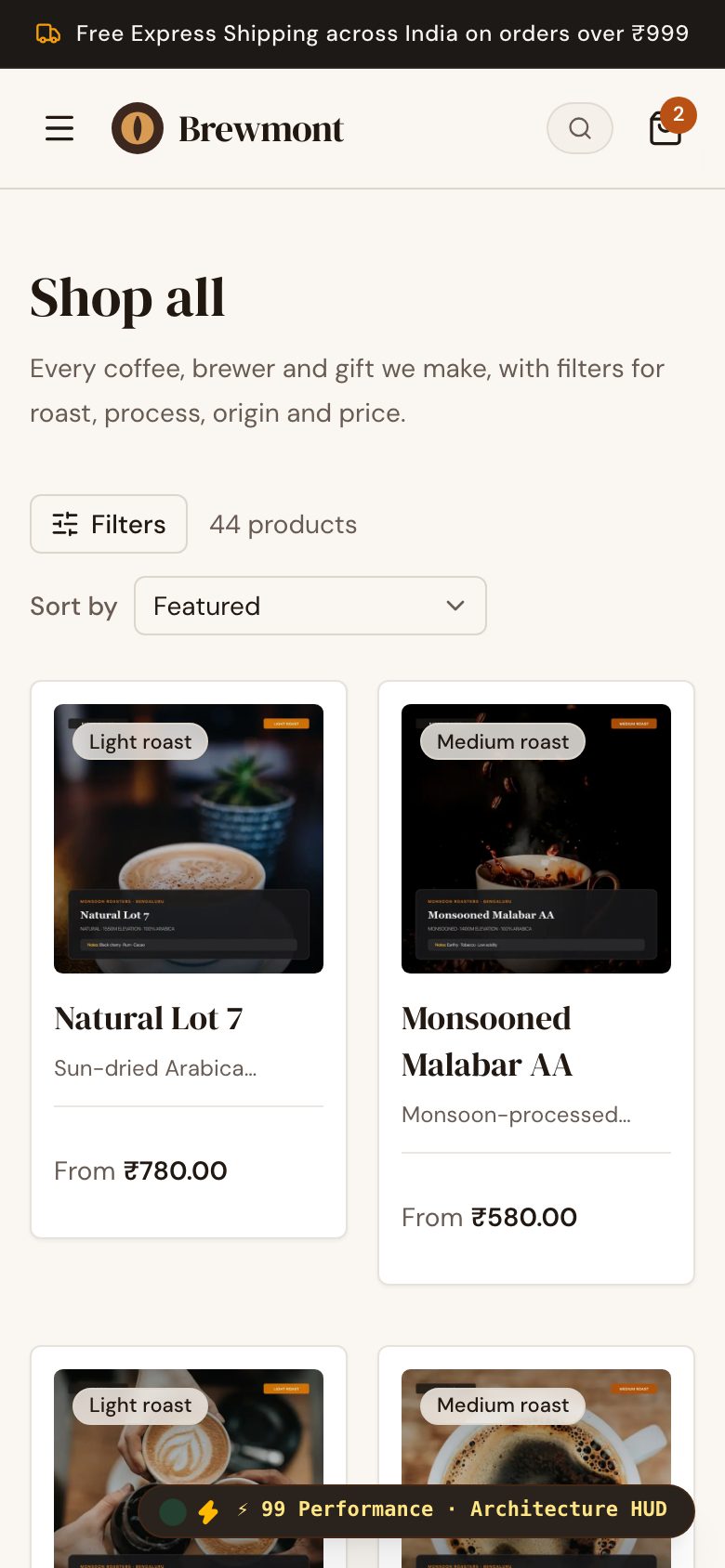
Our concept build Brewmont is a coffee storefront with brew guides, a brew-ratio calculator and a tasting-flight gift box — the kind of online shop a roastery cafe can grow into. See what a cafe or restaurant website involves, or an online store for beans, and how much a website costs.
See the app a cafe runs on
We designed and built this concept end to end, every side of it, so you can open it and try it before you plan your own. Our restaurant website and qr ordering page covers the features, timeline and what moves the cost.
Questions people ask
How much does it cost to open a cafe in India?
As a ballpark, a kiosk or 10-seat cafe in a tier-2 city needs about ₹8–20 lakh, and a 40-seat metro cafe about ₹35–70 lakh. Coffee equipment, interiors and rent deposit take most of it. Renting the espresso machine through a bean supplier can lower the upfront amount.
Do I need an FSSAI licence for a small cafe?
Yes. Every business that serves food or drinks needs FSSAI registration or a licence; which one depends on your size. You will usually also need a trade licence from the municipal body, Shop & Establishment registration and GST once you cross the threshold. Check the exact list with a CA.
Is a cafe business profitable in India?
It can be. Drinks have healthy margins, but the bill per customer is small, so profit depends on volume, rent and wastage. Cafes with a regular weekday crowd, a short food menu and sensible rent tend to do well; those relying on weekend crowds alone struggle.
How do I stop laptop users occupying tables all day?
Be clear and friendly about it. Common approaches are a minimum order every couple of hours, a separate work area with time packs, or limited plug points in the main seating. Many cafes welcome remote workers in quiet hours and keep peak tables for quicker customers.
Should my cafe have its own app?
Not at first. A website with the menu and pre-ordering, a loyalty card and a WhatsApp number cover most needs. An app becomes worthwhile when you have several outlets, many daily regulars or a bean subscription business that customers manage every month.


