The short answer
Start with one or two products you already make well, such as a family pickle, a masala blend or papad, and sell them to paying customers beyond your friends before you invest in packaging. Get FSSAI registration before your first sale, design labels that meet FSSAI and Legal Metrology rules, and file a trademark for the brand name early. Shelf life, consistent taste and honest labels matter more than a fancy jar.
As a ballpark, a home-run start selling a handful of products locally and online can begin with roughly ₹1–3.5 lakh. A small rented production unit with machines and stock for marketplaces and retailers often needs ₹10–30 lakh. This guide covers the models, the registrations, costs, launch steps, the weekly routine, finding buyers and the tech for selling direct.
Is a home food products business right for you?
Indian kitchens have always made pickles, papad, vadi, chutney powders, masalas and snacks in batches, and many city households now buy these rather than make them. People who move away from home look for the taste of their region, and boxes of regional foods are a popular festival gift. A small producer with a genuine recipe and a story can hold their own.
It suits people who enjoy careful, repeatable work. A pickle has to taste the same in March as in October, so recipes, weights and processes must be written down. You also need to enjoy selling, because most early orders come from conversations on WhatsApp, at exhibitions and with shopkeepers.
The hard parts: shelf life and spoilage, jars that leak or break in transit, courier charges that eat into small orders, and getting space on store shelves. Moving from a home kitchen to a production unit is a big step, both in money and in compliance.
Business models to choose from
| Model | How it works | Suits |
|---|---|---|
| Home kitchen, local sales | Small batches sold to neighbours, societies and WhatsApp groups | Testing recipes with very little investment |
| Direct to consumer online | Your own website and social media, shipping across India | Products with good shelf life and a strong story |
| Online marketplaces | Listings on marketplaces and quick-commerce apps | Reach, at the cost of commissions and price pressure |
| Retail and distribution | Supplying grocery stores, gourmet shops and supermarkets | Producers ready for bulk orders, credit terms and barcodes |
| Gifting and corporate | Curated boxes of regional products for festivals and companies | Seasonal spikes; premium packaging |
Most producers start local, move to their own online store and marketplaces, and approach retail once production is steady. Each step adds compliance and working capital. If you want to sell through neighbourhood shops, our playbook on starting a kirana store shows how small retailers think about margins and credit, and how to start a D2C brand covers growing beyond one product.
Licences and registrations
| Registration | Why you need it | Where you get it |
|---|---|---|
| FSSAI registration or licence | Required before you sell any food product; small home producers usually start with basic registration and move up as turnover grows | FSSAI online portal |
| FSSAI labelling compliance | Labels must show the product name, ingredients, nutrition information where required, the veg or non-veg mark, allergens, the FSSAI number and dates | FSSAI labelling and display regulations |
| Legal Metrology declarations | Pre-packaged goods need net quantity, retail price, maker or packer details and a consumer care contact; packers may also need to register | State Legal Metrology department |
| GST registration | Needed above the turnover limit, and usually required to sell on online marketplaces | GST portal |
| Udyam registration | Optional; records you as a micro enterprise for loans and some schemes | Udyam registration portal |
| Trademark | Protects your brand name and logo before you spend on packaging | Trade Marks Registry, online |
| Local trade licence | Asked for in many cities once you produce from a commercial space | Municipal corporation or panchayat |
Shelf-life claims and nutrition panels often need lab testing to back them up. Many producers get each product tested at an accredited lab before printing labels.
Labelling and packaging rules are detailed and are revised from time to time, and enforcement varies by state. Have a food consultant or CA review your labels and registrations before you print in volume. This is not legal advice.
What it costs to start
| Item | Small start | Larger setup |
|---|---|---|
| Kitchen equipment and utensils | ₹15,000–40,000 | ₹1–3 lakh |
| Production space rent and deposit | Home kitchen | ₹1–4 lakh |
| Machines: grinder, sealer, pulveriser | ₹15,000–50,000 | ₹2–6 lakh |
| FSSAI, trademark, testing and CA fees | ₹15,000–40,000 | ₹60,000–1.5 lakh |
| Packaging design and first print run | ₹20,000–60,000 | ₹1.5–4 lakh |
| Raw material stock | ₹15,000–50,000 | ₹2–5 lakh |
| Website, photography and listings | ₹15,000–50,000 | ₹1–3 lakh |
| Samples and marketing | ₹10,000–40,000 | ₹1–3 lakh |
| Rough total | ₹1–3.5 lakh | ₹10–30 lakh |
Packaging and shipping are where small food brands quietly lose money. A heavy glass jar can cost more to courier than the pickle inside earns, and leaks ruin reviews. Test packs by posting them to friends in other cities, price with delivery included, and set a minimum order value or bundle products so each parcel is worth sending.
Use these ranges as a rough guide to plan with, not quotes; product type, packaging and volume change them a great deal.
Step by step: from idea to first customer
- Pick your hero product, the one people already ask you for, and write its recipe down to the gram.
- Test shelf life by keeping samples at room temperature and checking taste and safety over several weeks.
- Sell a trial batch to people outside your family and ask what they would pay and what they would change.
- Get FSSAI registration and, if you will sell online or to shops, GST.
- Search for and file a trademark for your brand name before spending on design.
- Get products tested at an accredited lab if your labels will carry shelf-life or nutrition claims.
- Design compliant labels with FSSAI and Legal Metrology details, then order packaging in small quantities first.
- Set up a simple store: a WhatsApp catalogue and a website that accepts UPI and cards.
- Choose a courier partner and test your packing with real parcels to two or three cities.
- Launch locally at society events, exhibitions and through friends, and collect honest reviews.
- Add channels slowly: marketplaces, gourmet stores or corporate gifting once supply is reliable.
Running it day to day
Production happens in batches rather than daily. A typical week has one or two cooking or grinding days, followed by drying, curing or cooling, then packing and labelling. Orders go out to couriers every day or two, and evenings often go to WhatsApp replies, stock updates and posting on social media.
- Batch records: note the date, quantities and batch number for every lot, so any complaint can be traced.
- Seasonal sourcing: buy chillies, mangoes, lemons and spices in season and store them properly for the year.
- Clean production: keep a separate area for cooking and packing, with covered storage and regular pest control.
- Packaging stock: track jars, labels and boxes as closely as food; running out of packaging stops sales.
- After-sales care: answer delivery and damage complaints quickly and replace broken items without argument.
Getting your first customers
Early buyers are people who have tasted your food, so make it easy for them to order and to share. A WhatsApp catalogue, a short story about where the recipe comes from, and a clear photo of each product go a long way. Our guide on finding your first users after launch has more ideas that apply to small brands.
- Societies and exhibitions: stalls at weekend markets and food fairs let people taste before they buy.
- Regional communities: people living away from home want the foods they grew up with; reach them through community groups.
- Corporate gifting: pitch festival hampers of regional pickles and masalas to small companies.
- Local shops: gourmet and organic stores often take small producers on a trial basis.
- Instagram: short videos of sun-drying, pounding and bottling build trust in how the food is made.
The tech you need
On day one, a WhatsApp Business catalogue, a UPI QR, a simple billing app for GST invoices and a spreadsheet for batches and stock are enough. When orders start arriving from other cities, your own online store with shipping rates, cash-on-delivery rules and order tracking saves you from running everything in chats. Our ecommerce website guide explains the choices, and you can see what an online food store includes.
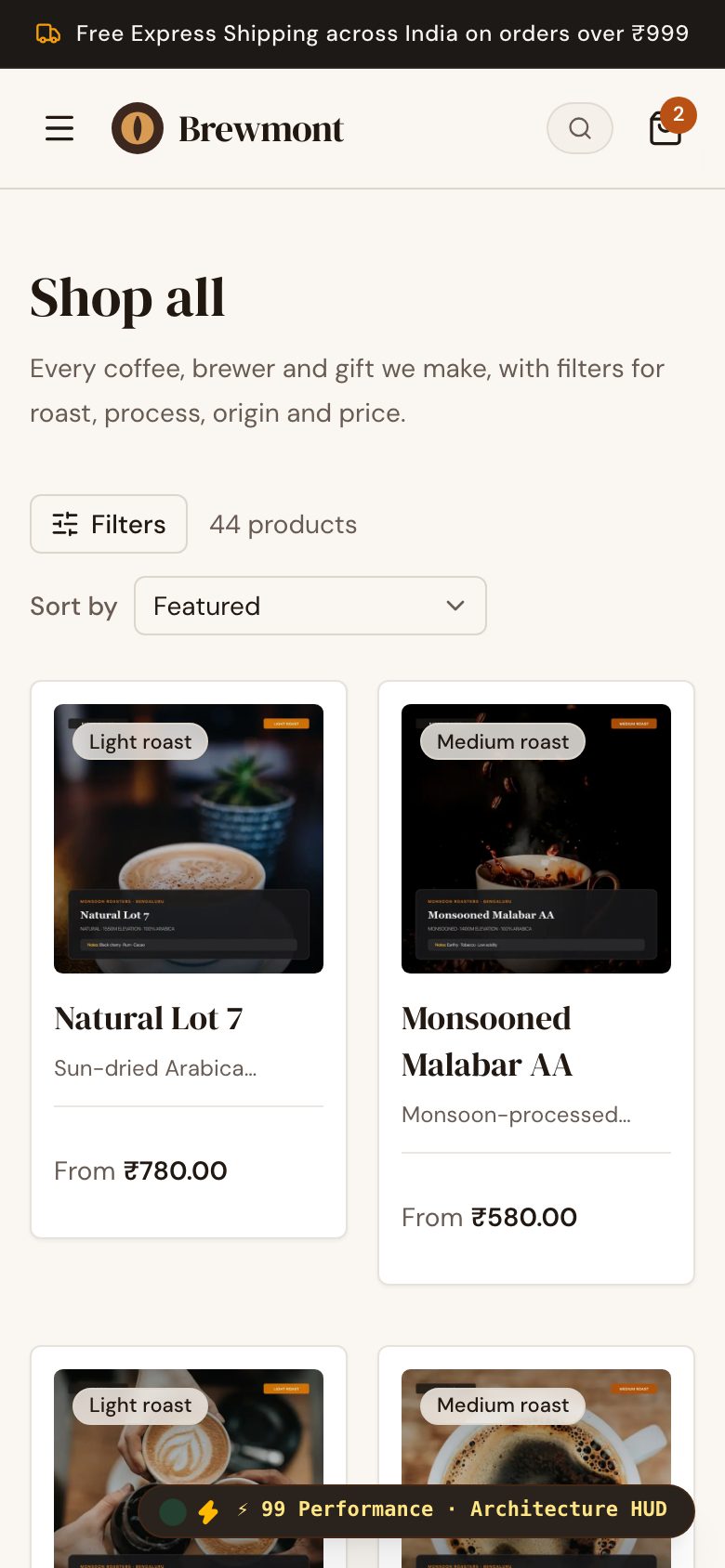
Our concept build Brewmont is a headless coffee storefront, and much of it carries over to packaged foods: a product shop with variants, content pages that tell the story behind each product, a sampler set modelled on its tasting flight, and subscriptions for monthly masala refills. A marketplace listing can run alongside your own store. When you're ready to build, send us a brief for a fixed quote within 48 hours.
See the app a home food products business runs on
We designed and built this concept end to end, every side of it, so you can open it and try it before you plan your own. Our ecommerce website page covers the features, timeline and what moves the cost.
Questions people ask
Can I sell homemade food products legally in India?
Yes, but you need FSSAI registration before you sell, even from a home kitchen. Packaged products also need labels that follow FSSAI and Legal Metrology rules, and GST applies above the turnover limit or when selling on most marketplaces. Check local rules on running a food business from a residential address too.
How much does it cost to start a pickle or masala business?
A home-based start with a few products can begin with roughly ₹1–3.5 lakh, covering equipment, registrations, packaging, stock and a basic online store. A small rented production unit with machines and larger stock often needs ₹10–30 lakh. Packaging and shipping are the costs most new producers underestimate.
Do I need a trademark for my food brand?
It is not mandatory, but it is wise. Filing a trademark for your brand name and logo before you print packaging protects you if someone else adopts a similar name. Search the trademark registry first to avoid names already taken, and file in the class that covers your products.
How do I ship pickles without leaks?
Use jars with tight lids and an induction or plastic seal underneath, put each jar in a sealed bag, and pack it with cushioning in a sturdy box. Send test parcels to other cities before you launch. Many sellers move to food-grade pouches, which are lighter and cheaper to ship.
Should I sell on marketplaces or my own website?
Do both, for different reasons. Marketplaces give you reach and search traffic, but they take commissions and push prices down. Your own website keeps more margin and lets you collect customer contacts for repeat orders. Many small food brands use marketplaces for discovery and their own store for regulars.


