The short answer
A salon in India can be a neighbourhood parlour with two chairs, a unisex studio in a busy market, or a team of beauticians who visit customers at home. Whichever you choose, your business rests on skilled staff, hygiene customers can see and a booking system that keeps chairs full without long waits.
A small parlour can open for a few lakh rupees, while a designed salon in a prime location costs far more in rent, interiors and equipment. Start with services you can deliver brilliantly, build a base of regulars and add premium services once you have steady footfall.
Is a salon right for you?
Grooming is a regular habit for men and women across India, and spending rises around weddings and festivals. Customers are loyal to stylists they trust, which is both your opportunity and your risk: when a popular stylist leaves, some customers follow.
Founders who do well are either trained professionals or good managers who respect the craft. You need an eye for hygiene and detail, comfort with retail sales of products, and patience for a business where Saturdays and festival weeks are packed and Tuesday afternoons are quiet.
- The hard parts: high rent in good locations, staff turnover, product costs and uneven footfall through the week.
- What helps: appointment booking, memberships and packages that bring customers back on a schedule.
- What to avoid: expensive interiors before you have proven the location.
Business models to choose from
| Model | How it works | Suits |
|---|---|---|
| Neighbourhood parlour | Two to four chairs serving a residential area, mostly walk-ins and regulars. | Trained beauticians starting out |
| Unisex salon | Hair, skin and grooming for everyone in a market or mall location. | Founders with capital and a good location |
| Salon at home | Beauticians travel to customers with kits; bookings come by phone or app. | Low capital; areas with busy working customers |
| Bridal and occasion studio | Makeup, hair and packages for weddings and events. | Experienced makeup artists with a portfolio |
| Franchise | Run a branded salon under a franchisor's system and fees. | Investors who prefer a playbook to building a brand |
Whichever model you pick, decide early who your customer is. A budget parlour wins on speed, convenience and fair prices; a premium salon wins on skill, ambience and time with each customer. Trying to be both usually means confusing prices and a menu that is too long to deliver well.
Many parlours add at-home services to fill quiet hours and reach customers who cannot visit. That model looks a lot like a home services business, with the same need for verified staff and reliable scheduling.
Licences and registrations
| Registration | Why you need it | Where you get it |
|---|---|---|
| Business structure | Sets liability and tax treatment. | A CA; LLPs and companies register with the Ministry of Corporate Affairs |
| GST registration | Required once turnover crosses the threshold; salon services attract GST. | The GST portal |
| Shop & Establishment registration | Covers your premises and staff hours under state law. | Municipal body or state labour department |
| Trade or health licence | Many municipalities license salons and check hygiene. | Municipal corporation or local body |
| Fire safety NOC | May be needed depending on the size of the premises and the building. | Local fire department |
| Signboard permission | Some cities require approval for shop signage. | Municipal corporation |
| EPF and ESI | Once employee numbers cross legal thresholds. | EPFO and ESIC portals |
Which licences apply depends on your state, city and premises, and the rules change. Confirm with a CA and your municipal office before signing a lease. This is general information, not legal advice.
What it costs to start
| Item | Small start | Larger setup |
|---|---|---|
| Rent deposit | ₹50,000–2 lakh | ₹5–15 lakh |
| Interiors, plumbing and lighting | ₹2–6 lakh | ₹20–50 lakh |
| Chairs, wash stations and equipment | ₹1–3 lakh | ₹8–20 lakh |
| Products and consumables | ₹50,000–1 lakh | ₹3–6 lakh |
| Registrations and CA | ₹10,000–30,000 | ₹50,000–1 lakh |
| Launch marketing | ₹20,000–50,000 | ₹2–5 lakh |
| Working capital (rent and salaries) | ₹2–4 lakh | ₹10–25 lakh |
These are rough estimates for planning, not quotes. Rent and interiors vary hugely between a residential street and a mall.
Step by step: from idea to first customer
- Decide your model and the customers you want — budget, mid-range or premium; women's, men's or unisex.
- Walk the area at different times and count footfall before you choose a location.
- Check zoning, building rules and licences before signing the lease.
- Write your service menu and prices, with packages for common combinations.
- Hire stylists and beauticians after a practical trial; check certificates where they have them.
- Fit out the space with good lighting, ventilation and visible hygiene — sterilisers, fresh towels, sealed kits.
- Choose products and suppliers, and set rules for opening and tracking stock.
- Set up appointment booking, UPI and card payments, and a customer list.
- Create a Google Business Profile with photos of the space and the team.
- Run a soft launch for neighbours and friends, and collect honest feedback.
- Launch with an offer that brings people back, such as a second-visit discount.
Running it day to day
A good salon day is a full calendar with short gaps. Morning prep, a steady flow of appointments, walk-ins slotted into gaps, and an end-of-day count of cash, UPI and product sales.
- Staff. Pay a fixed salary plus commission on services and product sales. Train regularly on new techniques and hygiene.
- Hygiene. Sterilise tools between customers, use disposable items where possible and keep it visible.
- Customer records. Note each customer's preferences, allergies and last service. It makes the next visit personal.
- Stock. Track products used per service so costs do not quietly eat your margin.
- Ratings and complaints. Ask for feedback after each visit, and fix a bad haircut free and fast.
Memberships and prepaid packages smooth your cash flow and keep regulars loyal even if a stylist moves on.
Plan your week around demand. Weekends, evenings and festival weeks fill first, so schedule your strongest stylists then and use quiet weekday hours for training, deep cleaning and at-home appointments. Offer gentle weekday incentives — a free hair spa with a weekday haircut, say — rather than steep discounts that train customers to wait for offers.
Watch your numbers every week: average bill per customer, how many first-time customers return within two months, product cost as a share of service revenue, and each stylist's rebooking rate. These four tell you more about the health of a salon than total footfall does.
Getting your first customers
People search “salon near me” and judge you on photos and reviews. Keep your Google Business Profile current, post real before-and-after photos with consent, and reply to every review. Our local SEO guide walks through it.
- Neighbourhood partnerships. Gyms, boutiques and wedding planners can refer customers in exchange for offers.
- Wedding season. Bridal and family packages fill weeks in advance; start promoting them early.
- WhatsApp. Appointment reminders and festival offers to opted-in customers bring visits back.
- Society events. A stall at a society festival or a ladies' event introduces you to dozens of nearby families.
The tech you need
At the start, a booking calendar, WhatsApp reminders and UPI cover most needs. As you grow, you will want online booking that respects each stylist's schedule, customer history, memberships, staff commissions and product stock in one place.
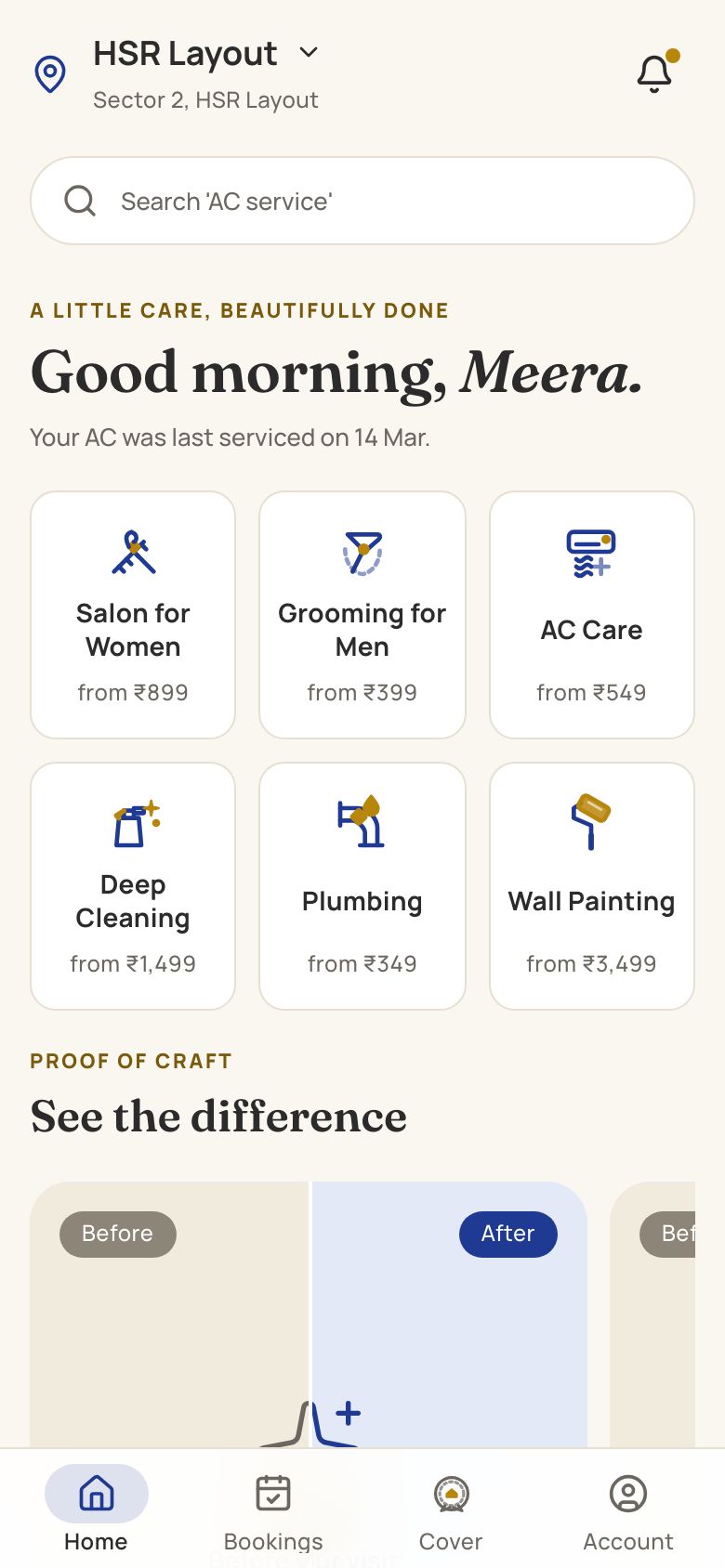
If you run at-home services, you need what a home services app offers: bookings, a staff app with routes and kits, and a dispatch view. Our HomeCraft concept build shows the pattern with verified pro profiles and job tracking.
A salon also benefits from a business website with a service menu and booking. Read website costs in India for ballparks, or brief us when you are ready.
See the app a salon runs on
We designed and built this concept end to end, every side of it, so you can open it and try it before you plan your own. Our home services app page covers the features, timeline and what moves the cost.
Questions people ask
How much does it cost to open a salon in India?
A small neighbourhood parlour can open for roughly ₹5–12 lakh including deposit, fit-out, equipment and working capital. A large unisex salon in a prime location can cost several times that. An at-home salon model can start for a few lakh in kits and training. These are rough planning estimates.
Do I need a certificate to open a beauty parlour?
A formal beauty qualification is not always a legal requirement to own a parlour, but trained staff are essential for quality and safety, and customers look for them. You will still need business registrations and any municipal licences your city requires. Check local rules with your municipal office.
Is an at-home salon business a good idea?
It can be, especially in dense cities with busy customers. Costs are lower because you avoid rent and interiors, but you need verified staff, reliable scheduling, safe travel arrangements and hygienic kits. It works well alongside a physical parlour to fill quiet hours.
How do salons keep customers coming back?
Consistent quality from the same stylist, visible hygiene, remembering preferences, timely reminders and memberships or prepaid packages. Asking for feedback and fixing problems quickly matters too. Most salon growth comes from regulars and their referrals, so look after the customers you already have before chasing new ones.
Does a small salon need an app?
Usually not at first. Online booking through a website or booking tool, WhatsApp reminders and UPI payments are enough. A custom app makes sense for chains, at-home services with many staff, or salons running memberships at scale. Until then, spend on stylists and hygiene rather than software.


