The short answer
Start with one or two dance styles you or your lead instructor can teach really well, rent a room with a proper floor in a neighbourhood full of families, and fill one children's batch and one adult batch before adding more. Register the business, get GST and a Shop & Establishment registration, sort out music licences before your first recital, and police-verify everyone who teaches children.
As a ballpark, a single-studio academy in a tier-2 city can open for about ₹5–12 lakh, while a two-studio metro academy with changing rooms and a reception often needs ₹20–50 lakh. This guide covers the models, the paperwork, the money, the launch steps and the software that keeps batches, fees and recitals in order.
Is a dance academy right for you?
Dance classes have moved well beyond the summer-camp slot. Parents enrol children in Bharatanatyam, Kathak and western styles all year, college students want hip-hop and contemporary, and working adults sign up for Bollywood fitness, salsa or wedding choreography. Demand shows up in every city, and it is strongest where families live close together and evenings are free.
It suits trained dancers who also enjoy teaching beginners, and organisers who can pair with a strong choreographer. You need patience for the eight-year-old who forgets every step, and the stamina to teach four batches back to back on a Saturday.
The hard parts:
- Short evenings. Most demand falls between 4 pm and 9 pm on weekdays and on weekend mornings, so the room sits empty for much of the day unless you add morning adult batches or rent it out.
- Instructor dependence. Students follow a teacher they like. If your star choreographer leaves to open her own studio, part of the batch may go too.
- The six-week slump. Adults sign up with enthusiasm and stop coming after a month or so. Recitals, grades and small goals keep them.
- Neighbours. Loud music and evening footfall can upset the building. Check this before you sign anything.
Business models to choose from
| Model | How it works | Suits |
|---|---|---|
| Classical academy | Structured training in one classical form, with graded levels and a solo debut or showcase as the goal | Trained classical dancers whose lineage parents respect |
| Western and Bollywood studio | Monthly batches in hip-hop, contemporary, Bollywood and freestyle, plus short weekend workshops | Younger instructors in college towns and metro suburbs |
| Dance fitness | Cardio-style dance sessions sold as monthly memberships | Adults, especially women's morning batches; overlaps with gyms |
| Event choreography | Sangeet, wedding and corporate show preparation, sold as packages | Choreographers with a network of wedding planners; seasonal |
| School and society tie-ups | Your instructors teach inside schools or housing societies for a fixed fee | A low-rent way to begin before you take a studio |
Many academies mix two of these: a steady base of children's batches for cash flow, and wedding choreography for the bigger tickets in season. If fitness batches turn into the main draw, our guide on how to start a gym goes deeper into memberships and trainer pay.
Licences and registrations
| Registration | Why you need it | Where you get it |
|---|---|---|
| Shop & Establishment registration | Covers your premises, opening hours and staff under the state's labour law | State labour department or municipal body, usually online |
| Trade licence | Permission from the city to run a commercial activity at that address | Municipal corporation or local body |
| GST registration | Needed once you cross the turnover limit, or earlier if schools and companies want GST invoices | GST portal |
| Music licences | Playing recorded songs at recitals, shows and public events needs permission from the rights holders | The copyright licensing bodies for music and sound recordings |
| Venue and event permissions | Annual shows in a hall or open ground may need police or local permission, on top of the venue's own licences | Local police and the venue; ask the hall manager |
| Police verification of staff | Anyone teaching minors should be verified before their first class | Local police station or the state police citizen portal |
| Child-protection and safety policy | Written rules on supervision, changing rooms, photos and complaints, in line with child-protection law | Drafted with a lawyer; shared with staff and parents |
| Fire safety | Depends on the building and floor area; many cities expect it for commercial spaces | State or city fire department |
| Exam board affiliation (optional) | Lets students sit graded dance exams with a recognised board, which parents value | The board itself, Indian or international |
Whether recorded music in an ordinary class needs a licence is a grey area. Recitals and ticketed shows clearly do. Ask the licensing bodies directly and keep their written reply on file.
Requirements differ between states and cities, and music licensing in particular is easy to get wrong. Run your list past a CA or lawyer before the first show. This is not legal advice.
What it costs to start
| Item | Small start | Larger setup |
|---|---|---|
| Rent deposit and advance | ₹50,000–1.5 lakh | ₹3–8 lakh |
| Sprung or vinyl dance floor | ₹1–2.5 lakh | ₹4–8 lakh |
| Mirrors, barres and lighting | ₹50,000–1.5 lakh | ₹2–5 lakh |
| Sound system | ₹30,000–1 lakh | ₹1.5–4 lakh |
| AC, changing room and waiting area | ₹1–2.5 lakh | ₹4–10 lakh |
| Licences, CA and music licence | ₹20,000–60,000 | ₹75,000–2 lakh |
| Instructor pay for the first two months | ₹60,000–1.5 lakh | ₹4–8 lakh |
| Website, class booking and payments | ₹15,000–75,000 | ₹1–4 lakh |
| Launch workshops and marketing | ₹25,000–75,000 | ₹1.5–4 lakh |
| Rough total | ₹5–12 lakh | ₹20–50 lakh |
The floor is the one place not to save money. Dancing on hard tile hurts knees and ankles, and injured students quit. Beyond that, keep rent low enough that your children's batches alone can cover it, and hold three months of instructor pay in reserve, because enrolments dip in exam months.
Treat these figures as rough planning numbers, not quotes. Your city, the space and the finish will move them a lot.
Step by step: from idea to first customer
- Pick your styles and your first two batches, for example a children's Kathak batch on weekday evenings and an adult Bollywood batch on weekends.
- Run free trial workshops in a society clubhouse or school hall to see who turns up and what they will pay.
- Find a space with a good floor and high ceilings, away from bedrooms in the same building, and check that the owner allows evening classes with music.
- Register the business as a proprietorship, partnership or LLP, open a current account, and apply for Shop & Establishment, the trade licence and GST.
- Lay a proper dance floor and fit mirrors, barres, sound and ventilation before you think about decor.
- Hire and verify instructors. Agree pay per batch or a fixed salary in writing, and complete police verification for anyone teaching children.
- Write the fee structure: monthly fees, a registration fee, costume charges for shows, and what happens when a student skips a month.
- Set up bookings and payments: an online form or app for trials, UPI collection, and receipts that go out automatically.
- Create a Google Business Profile with videos of real classes, the timetable and your phone number.
- Open with a launch week of free trial classes and a short performance by the instructors.
- Plan your first showcase within four to six months, so students and parents have a date to work towards.
Running it day to day
A typical day is quiet until the afternoon. Mornings go on admin, choreography for upcoming shows and perhaps a ladies' fitness batch. From four o'clock it is children's batches one after another, then adults after work, and the studio closes late. Saturdays and Sundays are the busiest days of the week.
- Attendance and progress: mark attendance every class and note which steps or levels each student has cleared, so parents see progress beyond the annual show.
- Fee follow-ups: send reminders before the due date, not after. A polite automated message saves awkward conversations at the door.
- Instructor cover: keep a backup teacher for every style, and plan around wedding season, when choreographers take outside work.
- Showcases: book the hall months ahead, collect costume money early and give each batch a clear piece to rehearse.
- Safety: clean the floor daily, keep a first-aid kit and ice packs ready, and never leave children unsupervised in changing rooms.
Getting your first customers
Dance sells on video. Short reels of real students, not stock clips, do more for a new academy than any banner. Post class snippets on Instagram, add them to your Google Business Profile, and ask parents for a review after their child's first performance. Our local SEO guide explains how to show up when someone nearby searches for dance classes.
- Schools: offer to choreograph the annual day or run an after-school club. It puts your name in front of hundreds of parents.
- Housing societies: a free Sunday workshop in the clubhouse often fills a weekday batch.
- Weddings: connect with wedding planners and event managers for sangeet choreography in season.
- Referrals: give a fee discount when a student brings a friend who stays beyond the first month.
- WhatsApp: keep separate broadcast lists for parents and adult students, and share timetable changes and show dates there.
The tech you need
On day one you need a timetable, a way to take trial bookings, UPI collection with receipts, and a WhatsApp group per batch. A spreadsheet can track attendance for the first fifty or so students. Past that, chasing fees and checking who has paid for which month eats the evenings you should spend teaching.
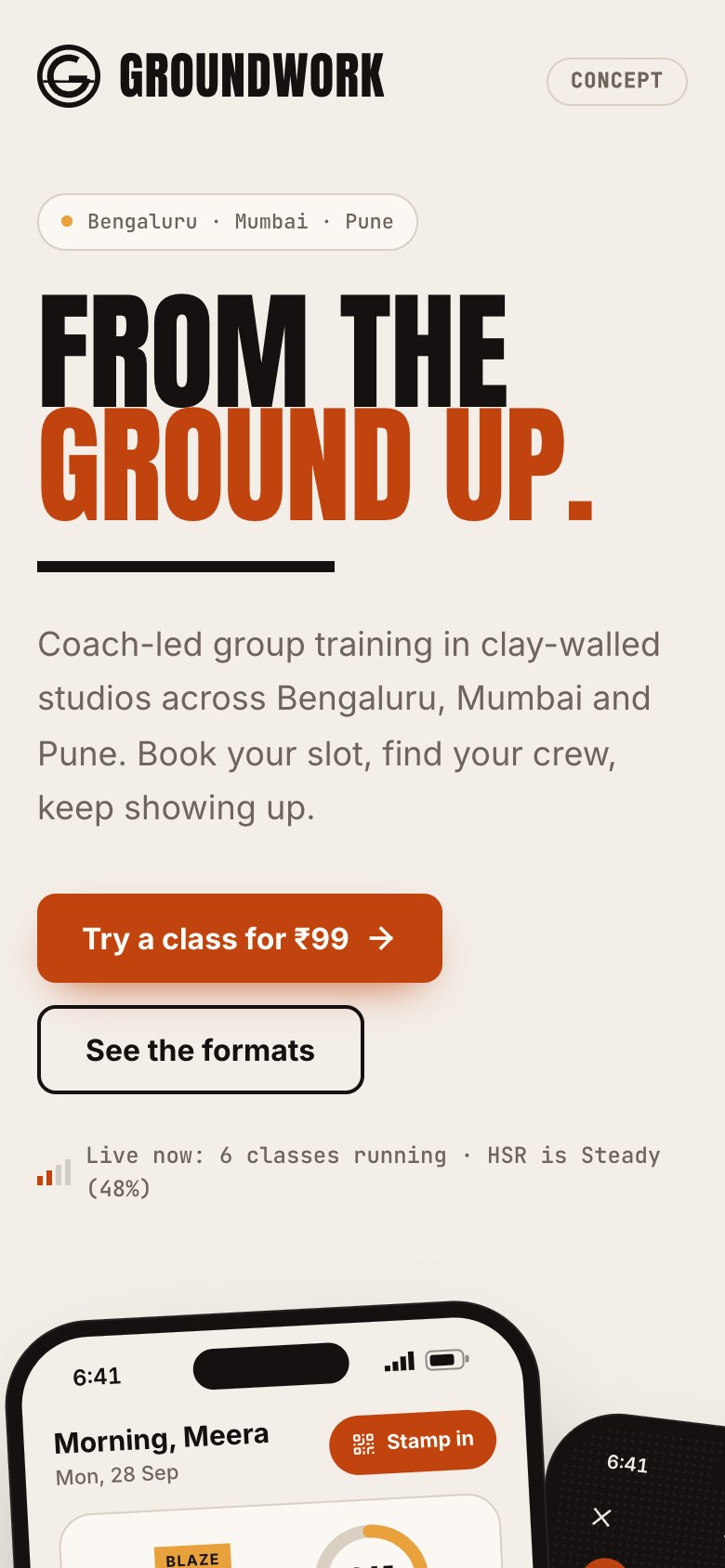
The next step is a member app: parents and adult students book trials, pay monthly fees, see the timetable and get reminders, while instructors mark attendance and share practice videos. Our concept build Groundwork was designed for fitness studios, but its class schedules, memberships and trainer app map straight onto dance batches and instructors. See what a class booking and membership app involves, read about taking UPI payments in an app, or send us a brief for a fixed quote within 48 hours.
See the app a dance academy runs on
We designed and built this concept end to end, every side of it, so you can open it and try it before you plan your own. Our fitness and wellness app page covers the features, timeline and what moves the cost.
Questions people ask
How much does it cost to start a dance academy in India?
A single-studio dance academy in a tier-2 city typically needs about ₹5–12 lakh to open, and a two-studio metro academy often needs ₹20–50 lakh. The dance floor, rent deposit, sound system and air conditioning take most of the money. Keep a few months of instructor pay aside too, because enrolments dip around school exams.
Do I need a licence to start dance classes?
There is no single dance licence, but you still need the usual business registrations: Shop & Establishment, a trade licence from the city, and GST once your turnover requires it. Add music licences for recitals and shows, permission for public events, and police verification of staff who teach children. Rules vary by state, so confirm with a CA.
Can I start a dance academy from home?
Yes, many academies begin in a home hall, terrace or society clubhouse with one or two small batches. Check that your housing society and local body allow commercial classes at home, keep the music at a level neighbours accept, and move to a proper studio with a sprung or vinyl floor once fees can cover the rent.
How do dance academies earn more than monthly fees?
Most add income from workshops, wedding and event choreography, costume and show charges, and paid tie-ups with schools or housing societies. Graded exams with a recognised board can bring exam-preparation fees and keep students enrolled for longer. Online classes for students in other cities are another option once your instructors have a following.
What software does a dance academy need?
At the start, a timetable, UPI payments and WhatsApp groups are enough. As batches grow, a booking and membership app saves time: students book trials, pay fees and see schedules, and instructors mark attendance. Look for automatic fee reminders and receipts, because chasing payments is where small academies lose hours every month.


