The short answer
Open with one well-equipped chair, a strict sterilisation routine and a dentist registered with the State Dental Council, in a spot families and office workers can reach after work. Have clinical establishment registration where your state asks for it, biomedical waste authorisation and AERB registration for your X-ray unit sorted before the first patient sits down.
As a ballpark, a single-chair clinic in a tier-2 city can start for roughly ₹10–24 lakh. A three or four-chair metro practice with an OPG machine often needs ₹60 lakh to ₹1.5 crore. This guide covers practice models, registrations, setup costs, a launch plan, daily running and the software for appointments and recalls.
Is a dental clinic right for you?
Most dental care in India is paid out of pocket and planned around pain: a toothache, a cracked filling, a child's cavity. Yet a growing number of people now come for cleaning, aligners and cosmetic work, and they return twice a year when the experience is good. A clinic that runs on time and explains costs before starting treatment keeps whole families for a long time.
It suits dentists who want their own practice and are ready to be managers too, or two dentists sharing the investment. Alongside patients, you will handle assistants, suppliers, dental lab work and money.
- Crowded streets. Many neighbourhoods already have several dental clinics. Find a gap: evening hours, children, a specialty or a part of town without one.
- Equipment loans. Chairs and imaging cost a lot and lose value. Plan repayments against realistic patient numbers, not hopeful ones.
- Unfinished treatment. Patients start root canals or braces and vanish. Recalls and staged pricing keep plans on track.
- Sterilisation discipline. One lapse can harm a patient and the clinic's name. It must be a routine nobody skips.
Business models to choose from
| Model | How it works | Suits |
|---|---|---|
| Solo general practice | One dentist, one or two chairs, general dentistry | A dentist starting their first practice |
| Group practice | Two or more dentists share chairs, staff and equipment | Partners who want to split capital and cover longer hours |
| Visiting specialists | A general practice hosts an orthodontist, endodontist or oral surgeon on set days | Clinics that want to keep complex cases in-house |
| Cosmetic and aligner focus | Whitening, veneers, aligners and smile design | Metro neighbourhoods; needs careful case records |
| Paediatric dental clinic | Child-friendly rooms and behaviour management | Paediatric dentists in family-heavy areas |
Visiting specialists usually work on a share of the treatment fee. Write down who pays for materials and lab work, who owns the patient record, and who handles a follow-up or a complication on days the specialist is not in.
Licences and registrations
| Registration | Why you need it | Where you get it |
|---|---|---|
| Dental Council registration | Every dentist who treats patients must be registered; display the registration in the clinic | State Dental Council |
| Clinical establishment registration | Required where your state's clinical establishments law covers dental clinics | State health department or the local registering authority |
| Biomedical waste authorisation | Sharps, extracted teeth, amalgam waste and contaminated cotton need proper disposal | State Pollution Control Board, plus a common treatment facility agreement |
| AERB registration for dental X-ray | Intraoral and OPG units must be registered before use and meet shielding and safety norms | Atomic Energy Regulatory Board, through its online licensing portal |
| Trade licence | Permission to run a clinic at that address | Municipal corporation |
| Shop & Establishment registration | Covers assistants, receptionists and working hours | State labour department |
| Fire safety approval | Where your building type and floor area call for it | State or city fire department |
| GST registration | Dental treatment may be exempt, but cosmetic procedures and product sales can be taxable | GST portal, after checking with a CA |
Professional indemnity insurance is not a registration, but most dentists take it before the first appointment. Dental Council rules also restrict advertising, so check before you run any promotion.
Which clinics need registration, and what an inspection covers, differs between states. Check current requirements with your State Dental Council, the local health authority and a CA. Treat it as general information, not legal advice.
What it costs to start
| Item | Small start | Larger setup |
|---|---|---|
| Rent deposit and advance | ₹1–2.5 lakh | ₹6–15 lakh |
| Interiors, plumbing, suction lines and sterilisation zone | ₹3–6 lakh | ₹15–35 lakh |
| Dental chair(s) with compressor and suction | ₹2–5 lakh | ₹12–30 lakh |
| Imaging: intraoral X-ray and RVG, plus OPG in the larger setup | ₹1.5–3 lakh | ₹12–28 lakh |
| Autoclave, handpieces and instruments | ₹1–2.5 lakh | ₹5–10 lakh |
| Materials and consumables | ₹50,000–1 lakh | ₹3–6 lakh |
| Registrations, AERB paperwork, waste contract and CA | ₹25,000–75,000 | ₹1–3 lakh |
| Assistant and receptionist for three months | ₹1–2 lakh | ₹6–15 lakh |
| Software, website and launch | ₹30,000–1 lakh | ₹3–8 lakh |
| Rough total | ₹10–24 lakh | ₹60 lakh–1.5 crore |
Chair and imaging choices drive the total. Many dentists begin with one good chair, an RVG sensor and a dependable autoclave, and lay plumbing for a second chair from the start so adding it later does not mean breaking the floor. Dental lab bills for crowns and dentures are a running cost, so price treatments with them included.
Use these as rough checks on your plan, not quotes. Equipment, finish and city rents can move the totals sharply.
Step by step: from idea to first customer
- Pick your positioning: family dentistry, children, aligners or a mix, and the hours you will keep.
- Map the catchment for existing clinics, their timings and what patients currently travel elsewhere for.
- Choose a site with water supply, drainage and power for chairs and compressors, and easy access for elderly patients.
- Register the business and apply for the trade licence, Shop & Establishment and clinical establishment registration if needed.
- Plan the layout with your equipment supplier: chair positions, suction, compressor placement and a one-way flow from dirty to clean instruments.
- Install the X-ray unit and register it with AERB before using it on any patient.
- Sign up with a dental lab for crowns, bridges and dentures, and agree turnaround times.
- Hire a chairside assistant and a receptionist, and train both on sterilisation, consent forms and handling appointments.
- Publish fees for common treatments at reception and on your website, with staged plans for longer work.
- Open with a screening week for a nearby school or society, and recommend treatment only where it is genuinely needed.
Running it day to day
A dental day is a string of timed appointments with gaps kept free for emergencies. Mornings start with autoclave cycles, checks on suction and compressors, and tray preparation. Between patients the assistant disinfects and resets the chair. At closing, instruments go through the full cycle again and the waste is weighed and logged.
- Recalls: remind patients about cleanings, the next sitting of a root canal or an aligner check. A missed recall is lost work and a worse result for the patient.
- Consent and charts: written consent for procedures, X-rays filed with the chart, and notes after every visit. Keep them private, in line with our DPDP Act checklist.
- Lab work: track every impression sent out, its due date and the patient's next appointment.
- Stock: watch expiry dates on anaesthetics and composites, and keep enough of the materials you use every day.
- Collections: take payment per sitting for long treatments so dues never build up.
Getting your first customers
People choose a dentist close to home, then stay for how the first visit felt. Dental Council rules limit what you can advertise, so stick to facts: qualifications, registration, services, timings and fees. Make no promises about results, and never publish patient photos without written consent and a check on what the rules allow.
- Google Business Profile: dental searches are local and often urgent, so keep emergency hours and the phone number current. Our local SEO guide covers the setup.
- Schools and societies: screening camps for children, with a printed note for parents explaining any findings.
- Doctors nearby: GPs and paediatricians see dental problems first. Build honest relationships, with no cuts. If you share premises with a GP, read how to start a clinic.
- Office workers: early-morning and late-evening slots fill a gap many clinics leave open.
- Reviews: ask once a treatment is complete, never in the middle of a painful one.
The tech you need
Day one needs an appointment book, billing that can issue GST invoices for taxable items, UPI at the desk and WhatsApp reminders. The step after that is online booking against real chair availability, patient charts with X-ray images attached, treatment plans with staged payments, and automatic recall reminders. Our clinic appointment software guide weighs ready-made tools against a custom build.
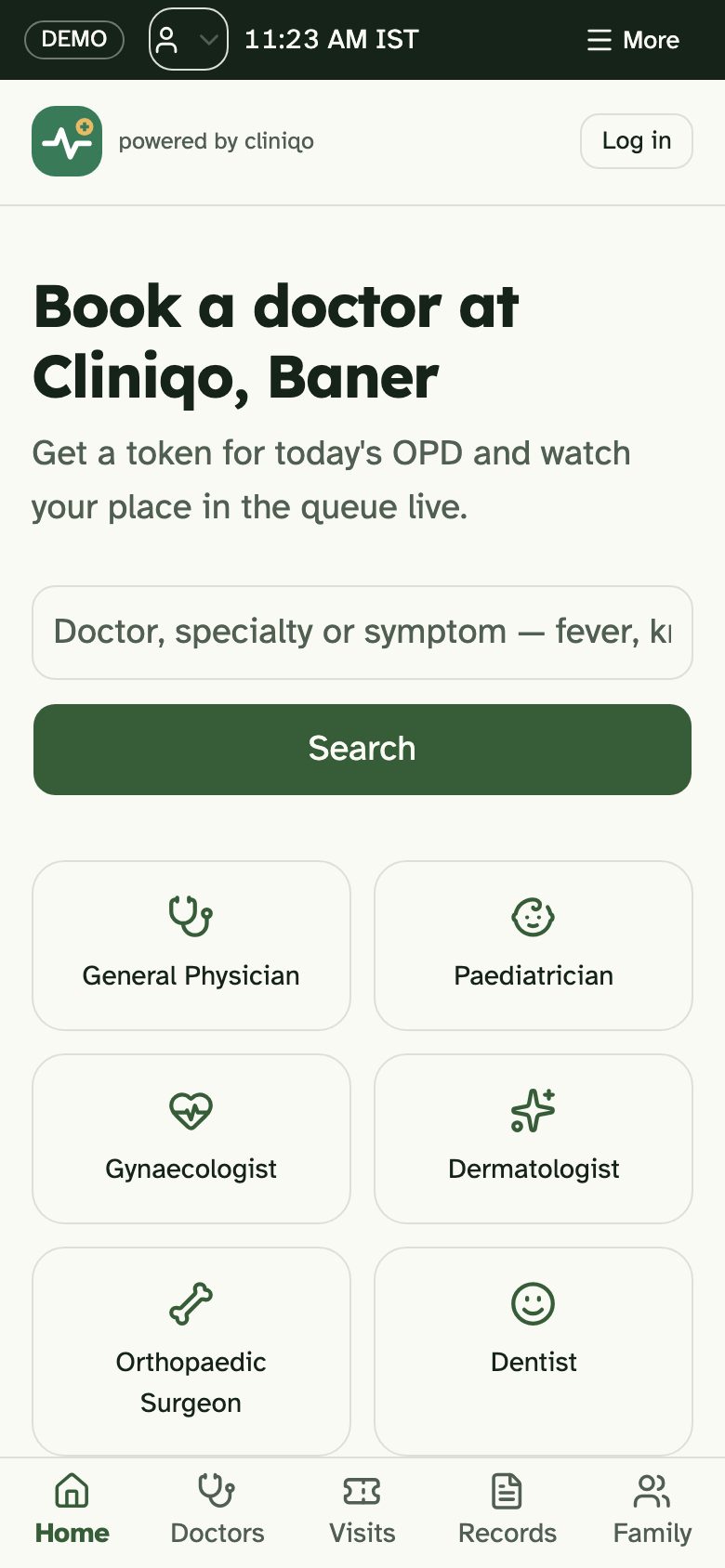
Our concept build Cliniqo runs doctor appointments and a clinic OPD with patient booking, a doctor desk, a reception board and a waiting-room screen. A dental clinic would reuse the booking, reception and doctor desk, then add chair scheduling, tooth charts and lab tracking. Read what a doctor appointment app includes, or send us a brief for a fixed quote within 48 hours.
See the app a dental clinic runs on
We designed and built this concept end to end, every side of it, so you can open it and try it before you plan your own. Our doctor appointment app page covers the features, timeline and what moves the cost.
Questions people ask
How much does it cost to open a dental clinic in India?
A single-chair clinic in a tier-2 city usually needs roughly ₹10–24 lakh, covering the chair, imaging, interiors and a few months of staff costs. A three or four-chair metro practice with an OPG often needs ₹60 lakh to ₹1.5 crore. Equipment choices and rent move the number more than anything else.
Do I need AERB registration for a dental X-ray?
Yes, dental X-ray units, including intraoral and OPG machines, need registration with the Atomic Energy Regulatory Board before use. You apply through its online licensing portal and must meet room layout, shielding and safety requirements. Buy from suppliers who can provide the equipment's type approval and help with the documents.
Can a newly qualified dentist open their own clinic?
Yes, a dentist registered with the State Dental Council can open a clinic, subject to local registration rules. Many new graduates first work as associates to learn patient handling and the business basics, then open their own practice. Some invite visiting specialists to cover cases outside their own training.
How do dental clinics handle biomedical waste?
Dental clinics segregate waste at the chair into colour-coded containers for sharps, contaminated cotton, extracted teeth and other categories, keep a log and hand it to an authorised common treatment facility on a schedule. Amalgam waste needs separate handling. You also need authorisation from the State Pollution Control Board.
Is online booking worth it for a small dental clinic?
Yes, once your chair is busy for most of the day. Online booking cuts phone calls, fills cancelled slots and sends reminders that reduce no-shows. A web booking link with WhatsApp confirmations is enough at first, and a full app makes sense later for recalls and family profiles.


