The short answer
A transport business moves goods by road for manufacturers, traders and distributors. You can own trucks, attach other people's trucks to your loads, or act as a transport agency that matches loads with vehicles. The work is steady because goods always need to move, but the money is tied up in vehicles, diesel and freight bills that customers pay late.
Start small: one or two vehicles, or an agency with a few attached trucks, serving shippers you can reach in person. Get your permits and insurance right, keep tight control of diesel and driver advances, and chase payments as seriously as you chase loads.
Is a transport business right for you?
Road transport carries most of India's goods. Factories in industrial belts send loads to cities, wholesalers send stock to towns, and e-commerce and FMCG companies need regular line-haul and city distribution. A good transporter who turns up on time and keeps goods safe is always in demand.
People who do well here usually know a route or an industry well: textiles from Surat, auto parts from Pune, steel, cement or fresh produce. They have relationships with shippers and drivers, and they are comfortable handling cash, credit and the occasional roadside problem at 2 am.
The hard parts:
- Working capital. You pay for diesel, tolls and driver advances today; the shipper may pay you in 30 to 60 days.
- Empty return trips. A truck that comes back empty earns half. Finding return loads is the difference between profit and loss.
- Drivers. Good, steady drivers are hard to find and keep.
- Paperwork on the road. Permits, e-way bills, fitness certificates and insurance must be valid at every check-post.
Business models to choose from
| Model | How it works | Suits |
|---|---|---|
| Own fleet, full truckload | You own trucks and carry one shipper's load from A to B | Operators with capital and steady shippers |
| Fleet attachment | Other owners attach their trucks to you; you find loads and take a margin | Founders with shipper relationships but little capital |
| Transport agency (booking office) | You match loads with vehicles for a commission, without owning trucks | People who know a market and its traders well |
| Part-load and parcel service | You consolidate smaller loads from many shippers on a fixed route | Busy trade routes with many small senders |
| Contract logistics | Dedicated vehicles for one company on a monthly contract | A predictable start once you have one large client |
Many successful transporters start as an agency, learn the routes and rates, and buy their own trucks only once their shipper base is steady.
Licences and registrations
| Registration | Why you need it | Where you get it |
|---|---|---|
| Proprietorship, partnership, LLP or company | A legal identity to sign contracts with shippers and banks | Bank and local registration; Ministry of Corporate Affairs for LLPs and companies |
| GST registration | Most shippers want GST invoices; transport has its own GST treatment worth understanding | GST portal |
| Transporter ID for e-way bills | Lets you be named on e-way bills even if you are not GST-registered | E-way bill portal |
| Udyam registration | MSME recognition, useful for vehicle loans and schemes | Udyam portal |
| Shop & Establishment or trade licence | Covers your office or booking office | Municipal body or state labour department |
| Commercial vehicle registration | Every goods vehicle must be registered as a transport vehicle | Your RTO |
| Goods carriage permits | State or national permits decide where each truck may operate | Your RTO and state transport department |
| Fitness certificate, PUC and insurance | Required to keep each vehicle legally on the road | RTO or authorised testing centres; insurer |
Learn how e-way bills work for the goods you carry. Many movements of goods need one, and the rules on who generates it and when are worth understanding before your first trip.
Permit types, e-way bill rules and tax treatment change and vary by state. Confirm with your RTO and a chartered accountant before you start. This guide is not legal or tax advice.
What it costs to start
| Item | Small start | Larger setup |
|---|---|---|
| Registration, permits, legal | ₹30,000–₹1 lakh | ₹2–4 lakh |
| Vehicles | Agency or attachment: none; or one used light truck ₹6–12 lakh | 5–10 new heavy trucks, mostly on loan: down payments ₹25–60 lakh |
| Insurance and fitness | ₹50,000–₹1.5 lakh a year per vehicle, by type | ₹10–20 lakh a year across the fleet |
| Office and booking setup | ₹50,000–₹2 lakh | ₹5–10 lakh |
| GPS trackers and software | ₹10,000–₹50,000 | ₹5–15 lakh for an ops console |
| Working capital (diesel, tolls, advances, salaries) | ₹3–8 lakh | ₹30–60 lakh |
These are planning estimates, not quotes. Truck prices, loan terms and insurance vary widely by vehicle size, age and lender.
Step by step: from idea to first customer
- Choose a route or an industry you understand, and list 20 shippers who move goods on it.
- Meet those shippers. Ask what goes wrong with their current transporter.
- Decide your model: agency, attachment or own fleet.
- Register your business, GST, Udyam and a transporter ID.
- Line up vehicles: attach two or three reliable owners, or buy one vehicle with a loan.
- Get permits, fitness, PUC and insurance in place for every vehicle you run.
- Set your freight rates per trip or per tonne, including tolls, loading and waiting charges.
- Fit GPS trackers so you can tell shippers where their load is.
- Do your first trips for one or two shippers at a fair rate. Be on time every time.
- Collect proof of delivery for every trip and invoice the same day.
- Find return loads on the same route before you add more vehicles.
Running it day to day
Drivers. Pay on time, treat them with respect and give clear trip instructions. Keep copies of licences and verify them. Driver advances for diesel and food are normal; record every rupee against the trip.
Diesel and tolls. Fuel is your largest cost. Use fuel cards or tie-ups with fuel stations so you see every fill. FASTag makes toll costs visible per vehicle; check them against the route.
Maintenance. Plan tyre changes, servicing and fitness renewals by date and by kilometres. A breakdown on a highway costs far more than a service.
Freight payments. Agree payment terms in writing, invoice with proof of delivery, and follow up weekly. Know which shippers pay late and price for it.
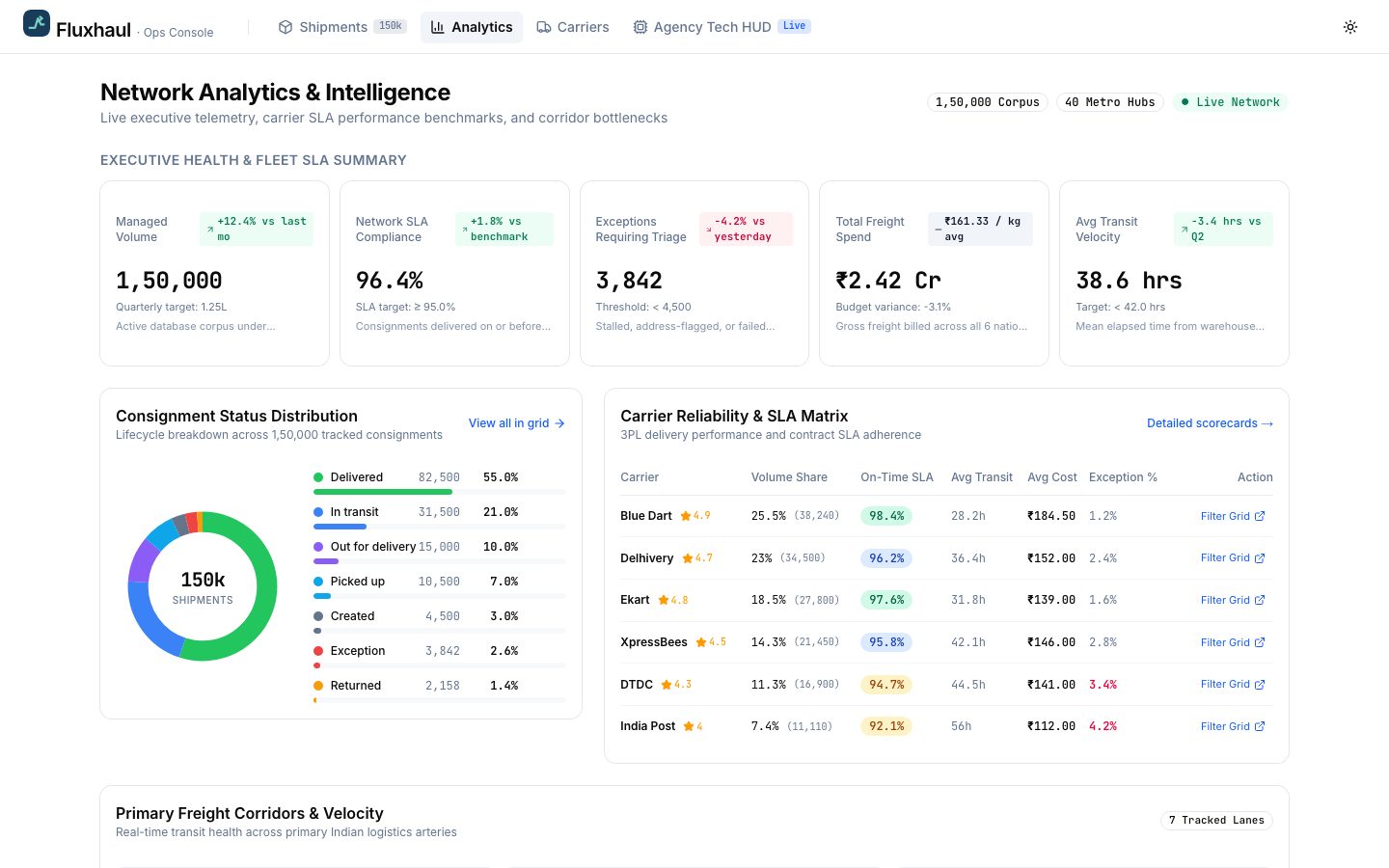
Exceptions. Delays, detentions and damage happen. Record each one with photos and time stamps so you can claim or explain. Our Fluxhaul concept build is a freight ops console with shipments, fleet, exceptions and reports, built to show how much calmer this gets on one screen.
Getting your first customers
- Go where shippers are. Industrial estates, wholesale markets and transport nagars. Visit in person with a one-page rate card.
- Be on Google. A Google Business Profile for your booking office helps factories and traders find you. See our local SEO guide.
- Use WhatsApp well. Share daily vehicle availability with regular shippers and send live location links on every trip. Our guide to WhatsApp for business covers what works.
- Partner up. Packers and movers, warehouses and distributors often need extra vehicles. Read how to start a packers and movers business for the household side of the trade.
- Referrals. One happy factory manager will introduce you to the next unit in the same estate.
The tech you need
A small transporter can run on GPS trackers, WhatsApp and a well-kept spreadsheet. As you add vehicles and shippers, you need software that shows every load, every vehicle and every unpaid invoice in one place.
| Stage | What to use |
|---|---|
| 1–3 vehicles | GPS trackers, WhatsApp location sharing, e-way bills on the portal, a trip register |
| 5–20 vehicles | A booking and trip app for drivers, proof-of-delivery photos, an invoicing and payments tracker |
| Larger fleets and contract logistics | An ops console with shipments, exceptions, fleet health, driver records and shipper reports |
See what goes into a logistics app and open our Fluxhaul and HornOK concept builds. If you're weighing costs, read what an app costs in India, then send us a brief.
See the app a transport business runs on
We designed and built this concept end to end, every side of it, so you can open it and try it before you plan your own. Our logistics app page covers the features, timeline and what moves the cost.
Questions people ask
How do I start a transport business with one truck?
Register your business and GST, buy or finance one reliable vehicle, and get its commercial registration, permit, fitness certificate and insurance in place. Then sign one or two regular shippers on a route you know, invoice with proof of delivery after every trip, and focus on finding return loads. Add a second truck only when the first is busy and paid on time.
Can I start a transport business without owning trucks?
Yes. Many transporters start as a transport agency or booking office, matching shippers' loads with vehicles owned by others, or attaching other owners' trucks to their business. You earn a commission or margin per trip. It needs less capital, but you must be reliable, because the shipper holds you responsible for the delivery.
What permits does a goods transport vehicle need?
Generally, a goods vehicle needs transport registration, a valid permit for the area it operates in (a state permit or a national permit), a fitness certificate, PUC certificate and insurance. The driver needs the right licence. Permit types and rules change, so confirm the current requirements with your RTO before buying or running a vehicle.
Is a transport business profitable in India?
It can be, if you control three things: diesel and running costs, empty return trips, and late payments. Profit comes from keeping vehicles loaded in both directions and getting paid on time. Transporters who take every load at any rate, or who give long credit to slow payers, often find themselves busy but short of cash.
Do I need software to run a transport business?
Not on day one. GPS trackers, WhatsApp and a trip register are enough for one to three vehicles. Software starts to pay for itself once you run several vehicles or contract clients who want tracking and reports, because it cuts phone calls, missed invoices and disputes over delivery times.


