The short answer
To start a homestay in India, check that your home and your state's rules allow paying guests, register under the state tourism department's homestay or bed-and-breakfast scheme where one exists, and get the basics right: clean private bathrooms, safe wiring, a guest register and simple home-cooked food if you serve it.
A homestay sells the experience of staying with a local family, not a hotel room. Your house, your food and your knowledge of the area are the product. Price for that, keep the room count small enough to stay personal, and build a list of returning guests who book with you directly.
Is a homestay right for you?
Homestays suit families who already own a house in a place people want to visit: a hill village, a coffee estate, a Goan village near the beach, a heritage neighbourhood or a quiet town on a pilgrimage route. Guests come for local food, conversations and tips they won't find online.
You will do well if you enjoy hosting, can cook or manage a cook, and are comfortable with strangers in your home. Someone in the family must be reachable all day during a stay. If you would rather keep guests at arm's length, a separate cottage or a small hostel model may fit better.
The hard parts are privacy, consistency and paperwork. Neighbours and housing societies may object. A bad review about one dirty bathroom stays online for years. And many states have specific homestay rules, such as limits on rooms and a requirement that the owner lives on the premises.
Business models to choose from
| Model | How it works | Suits |
|---|---|---|
| Rooms in your family home | Two to four rooms in the house you live in, with meals from your kitchen. | Families in tourist areas with spare rooms |
| Separate cottage or floor | A self-contained unit on your property; you host but guests have privacy. | Owners with land or an extra floor |
| Estate or farm stay | Rooms on a coffee, tea, spice or fruit estate, with walks and farm activities. | Estate owners who want income beyond the crop |
| Heritage home stay | An old family home restored for guests, sold on its history and architecture. | Families with a heritage property and patience for restoration |
| Managed homestay | You run someone else's home for a share of revenue. | Locals with hosting skills but no spare property |
Start with the rooms you already have. Adding rooms is easier once you know which ones guests book first and what they say in reviews.
Licences and registrations
| Registration | Why you need it | Where you get it |
|---|---|---|
| State homestay or B&B registration | Many states run a homestay scheme with rules on rooms, owner residence and standards; registration can be required and may bring benefits. | The state tourism department |
| Local body permission or trade licence | Commercial use of a residential property often needs permission. | Municipality, council or gram panchayat |
| Guest register and Form C | Keep ID records for every guest and report foreign guests through Form C. | Local police and the Form C online system |
| GST registration | Needed once your turnover crosses the threshold or if you sell through certain online platforms; ask your CA. | The GST portal |
| FSSAI registration | Required if you serve food to guests as part of the business. | The FSSAI online portal |
| Fire and electrical safety | Smaller homes may not need a fire NOC, but safe wiring, extinguishers and exits protect guests and your listing. | Fire department if required; a licensed electrician for checks |
| Society or building NOC | Apartments and gated communities may have rules on short stays. | Your housing society or resident association |
Homestay rules differ a lot between states, and some areas have extra rules for coastal, forest or heritage zones. Rules also change. Check with your state tourism department, the local body, a CA or a lawyer. This is general information, not legal advice.
What it costs to start
These ballparks assume you already own the house. The small start is two or three rooms in a lived-in home; the larger setup is five or six rooms, or a separate cottage built or renovated for guests.
| Item | Small start | Larger setup |
|---|---|---|
| Room furnishing (bed, mattress, linen, storage) | ₹1–2 lakh per room | ₹2–4 lakh per room |
| Bathroom upgrades (geyser, fittings, tiling) | ₹0.5–1.5 lakh per bathroom | ₹1.5–3 lakh per bathroom |
| Common area, dining and kitchen upgrades | ₹0.5–2 lakh | ₹3–8 lakh |
| Safety: wiring check, extinguishers, CCTV at entrances | ₹0.3–1 lakh | ₹1–3 lakh |
| Registrations and professional fees | ₹0.2–0.6 lakh | ₹0.5–1.5 lakh |
| Photography, website and booking setup | ₹0.3–1.5 lakh | ₹1.5–5 lakh |
These are estimates, not quotes. Spend first on beds, bathrooms and hot water; guests forgive a plain wall, not a cold shower.
Step by step: from idea to first customer
- Read your state's homestay scheme and check whether your house, room count and residence meet it.
- Talk to your family about privacy: which rooms, which bathrooms, which hours the kitchen is open to guests.
- Ask your housing society, panchayat or neighbours early if you live somewhere they have a say.
- Fix the essentials: comfortable beds, private or clearly assigned bathrooms, hot water, Wi-Fi and power backup.
- Apply for registrations and set up a guest register and Form C access.
- Decide your offer: room only, breakfast included, or full meals; plus any experiences like walks, cooking or farm visits.
- Take good photos in daylight and write honest descriptions, including what's nearby and what isn't.
- Set up a simple website with availability, rates and UPI payments, and list on one or two platforms.
- Host friends-of-friends for a soft launch and ask for frank feedback.
- Open bookings, reply fast, and ask every happy guest for a review before they leave.
Running it day to day
Hosting is a rhythm: confirm the guest's arrival time a day before, share directions with a map pin and a landmark, greet them in person, and explain the house in five minutes. Many homestays send a short welcome message on WhatsApp with Wi-Fi details, meal times and a few local tips.
Food is often what guests remember. Keep the menu local and simple, ask about allergies and preferences at booking, and agree meal times. If you hire a cook or helper, train them on hygiene and on how you want guests treated.
Plan seasons. Hill and beach homestays have peaks around holidays and long weekends and quiet months in the monsoon or winter. Use quiet months for repairs, and offer longer-stay rates to remote workers rather than discounting your peak weekends.
Keep simple accounts: bookings, advances, refunds and expenses per month. Write a clear cancellation policy and stick to it. Collect advances for peak dates.
Getting your first customers
Listing platforms help you get your first guests and reviews, but they take a commission on every stay. Use them, then work on direct bookings so returning guests and their friends book with you.
- Google Business Profile. Add your exact location, photos, rooms and meals. Many guests find homestays through Maps once they are already in the area. See our local SEO guide.
- Instagram. Show the view at breakfast, the kitchen, the walk to the waterfall. Let guests tag you.
- WhatsApp. Keep past guests on a broadcast list for festival and off-season offers.
- Local partners. Taxi drivers, trek guides, cafés and bike rentals send guests to hosts they trust.
- Direct booking perks. A free breakfast or late check-out for booking on your own site is fair and effective.
The tech you need
At the start, a clean website with your rooms, rates, an availability calendar and a payment link is enough, alongside a channel tool if you list on platforms. A WhatsApp Business account with quick replies handles most questions.
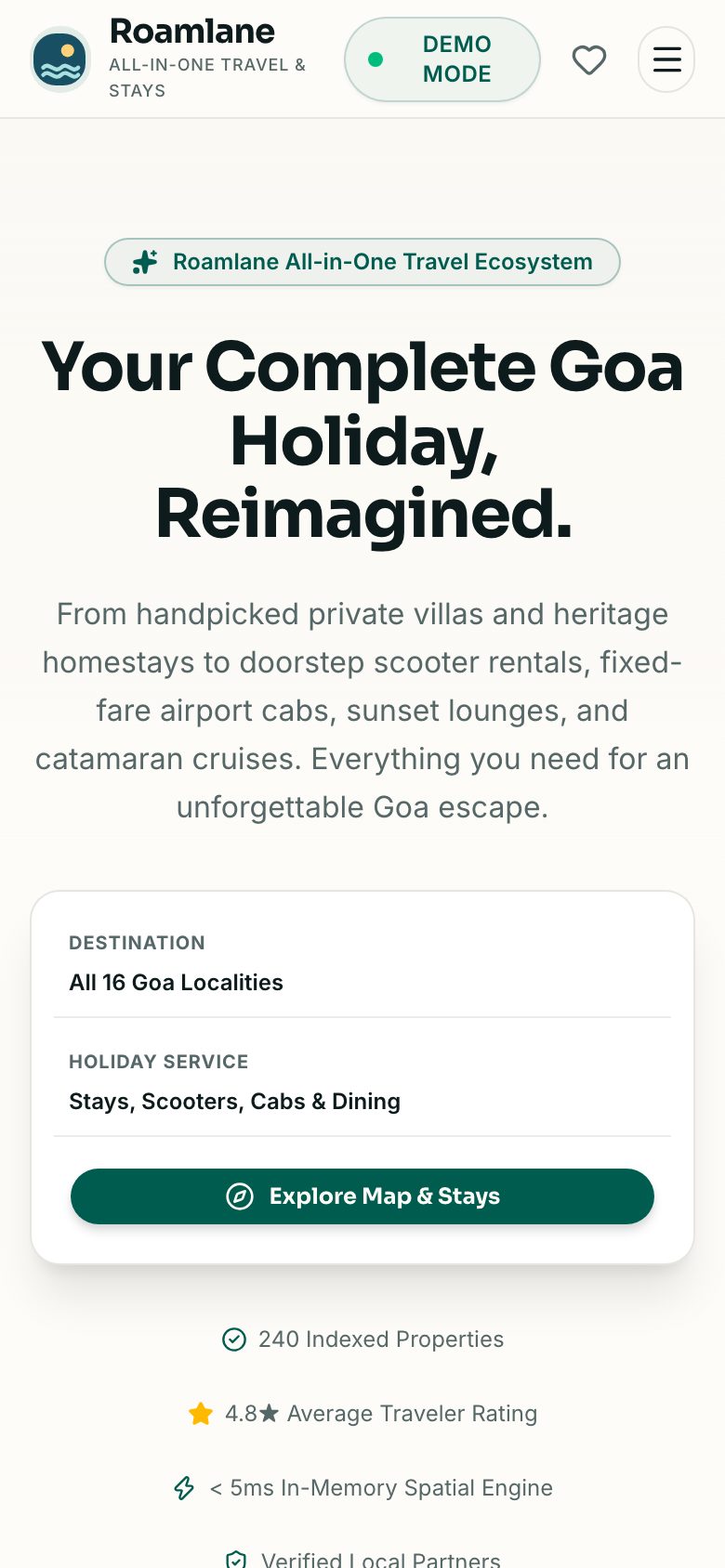
If you run several properties in one region, or want to bring local hosts together, a regional stays site with map search makes sense. Our Roamlane concept build does this for Goa: a split map and list search, beach proximity filters, saved wishlists and a host desk with seasonal tariffs.
Read about travel booking websites, and our guide on WhatsApp for business. When you're ready, brief us for a fixed quote.
See the app a homestay runs on
We designed and built this concept end to end, every side of it, so you can open it and try it before you plan your own. Our travel booking website page covers the features, timeline and what moves the cost.
Questions people ask
Do I need to register a homestay in India?
Usually yes. Many states run a homestay or bed-and-breakfast scheme through the tourism department, and some make registration compulsory. You'll also need a guest register, Form C reporting for foreign guests, and possibly local body permission, GST and FSSAI registration. Check your state's rules.
How many rooms can a homestay have?
It depends on your state's scheme. Many homestay rules limit the number of rooms and require the owner's family to live in the house; beyond that, the property may be treated as a guest house or hotel. Read your state tourism department's current rules before you add rooms.
How much can I earn from a homestay?
Earnings depend on your location, room rate, occupancy and meals. A homestay in a busy tourist area with good reviews can fill its rooms most weekends and holidays, while quieter months bring less. Track occupancy and average rate monthly rather than counting on peak-season prices.
Can I run a homestay in an apartment?
Sometimes, but check your housing society's rules and local regulations first. Many societies restrict short stays, and some state homestay schemes cover independent houses only. Get written permission from the society where needed, and keep a proper guest register.
Should I list my homestay on booking platforms?
Yes, at first. Platforms bring guests and reviews quickly. Alongside them, build your own website and WhatsApp list so returning guests and referrals book directly without a commission. Keep your availability in sync to avoid double bookings.


