The short answer
To start an event management company in India, pick a niche you can sell (corporate events, concerts and ticketed shows, college fests, or social events), build a reliable network of vendors, register your business for GST, and learn the permissions each type of event needs. Your first clients will come from people who have seen you deliver.
You don't need warehouses of equipment to begin. Most new event companies rent sound, light, staging and décor per event and earn on planning, coordination and margin. Invest in a small, dependable team, clear contracts and a portfolio of events done well.
Is an event management company right for you?
India runs on events: product launches, dealer meets, annual days, conferences, college fests, concerts, exhibitions and festivals. Companies and families increasingly hand the whole thing to one team rather than juggling ten vendors themselves.
People who do well are organised under pressure, good with money, and good with people. You will negotiate with venues in the morning, calm a client at noon and run a load-in at midnight. A background in hospitality, production or sales helps. If social events are your passion, also read our wedding planning playbook.
The hard parts are cash flow and risk. Clients pay late; vendors want advances. Weather, permissions and last-minute changes can sink margins. Ticketed events add the risk of unsold seats. Start with events where the client pays a fee, and treat ticketed shows as a later step.
Business models to choose from
| Model | How it works | Suits |
|---|---|---|
| Corporate events | Conferences, offsites, launches and dealer meets for a fee or a margin on costs. | Founders with corporate contacts and strong planning skills |
| Ticketed shows and gigs | You promote and sell tickets for concerts, comedy or festivals; revenue comes from tickets and sponsors. | Teams with an audience, artist contacts and appetite for risk |
| College and school events | Annual days, fests and convocations, often with sponsors. | Young teams with campus networks |
| Exhibitions and trade shows | Stall design, fabrication and visitor management for exhibitors or organisers. | Teams with fabrication partners in industrial cities |
| Social and private events | Birthdays, anniversaries and private parties with décor and entertainment. | Small teams starting locally with low overheads |
A niche makes selling easier. "We run dealer meets for manufacturing companies in Gujarat" is easier to pitch than "we do all events".
Licences and registrations
| Registration | Why you need it | Where you get it |
|---|---|---|
| Business registration (proprietorship, LLP or company) | Lets you sign contracts, open a current account and invoice corporates. | Bank and CA for a proprietorship; the MCA portal for an LLP or company |
| GST registration | Corporate clients expect GST invoices, and you'll often cross the threshold quickly. | The GST portal |
| Udyam registration | Recognises you as an MSME; useful for loans and some vendor lists. | The Udyam portal |
| Shop & Establishment registration | Covers your office and staff. | The state labour department |
| Event permissions from police | Public events, large gatherings, processions and loudspeakers usually need police permission. | The local police station or commissioner's office |
| Fire and safety clearance | Temporary structures, pandals and large crowds often need fire department approval. | The local fire department |
| Music and performance licences | Playing recorded music or performing copyrighted works in public can need licences from music rights bodies. | The relevant copyright societies, often arranged with the venue |
| Liquor permits | Serving alcohol needs the venue's licence or an occasional permit. | Through the venue or the state excise department |
Which permissions apply depends on the event type, size, venue and state, and the rules change. Ask the venue what it already holds, and confirm the rest with the local police, fire department, a CA or a lawyer. This is general information, not legal advice.
What it costs to start
The small start assumes you work from home or a shared office and rent all equipment per event. The larger setup assumes an office, a small team on salary and some owned inventory such as truss, lights or décor.
| Item | Small start | Larger setup |
|---|---|---|
| Registrations, contracts and professional fees | ₹0.3–1 lakh | ₹1–3 lakh |
| Laptops, phones and software | ₹1–2 lakh | ₹3–6 lakh |
| Office rent and deposit | ₹0 (home or coworking) | ₹3–10 lakh |
| Owned inventory (décor, lights, truss) | ₹0–2 lakh | ₹15–50 lakh |
| Portfolio shoot, website and branding | ₹0.5–2 lakh | ₹3–8 lakh |
| Working capital for vendor advances | ₹3–8 lakh | ₹15–40 lakh |
These are estimates, not quotes. Working capital is the number most new event companies underestimate, because you often pay vendors before the client pays you.
Step by step: from idea to first customer
- Choose one niche and one city to start in.
- Assist on a few events for an established company or venue to learn load-ins, run-sheets and vendor handling.
- Build a vendor list: sound, light, staging, décor, catering, photography, printing, transport and security, with backups for each.
- Register the business, open a current account and get GST registration.
- Write template contracts: scope, payment milestones, cancellation, force majeure and who holds which permission.
- Create a simple deck and website with events you have worked on, honestly described.
- Price your first events with a clear fee or margin and a contingency line.
- Pitch ten companies, colleges or venues in your niche personally, and offer a planning session.
- Deliver the first event with a written run-sheet, a show caller and a post-event report with photos.
- Ask the client for a testimonial and a referral the week after the event.
Running it day to day
Every event runs on three documents: the budget, the vendor list with contacts and timings, and the run-sheet minute by minute. Share them with your team and vendors, and keep one person in charge of each.
Payments need discipline. Take an advance from the client before you book vendors, set milestones, and pay vendors on the same schedule. Keep every quote and invoice so GST works out cleanly at the end.
Your crew matters more than your gear. Build a pool of freelance coordinators, runners and hosts you trust, and pay them on time. A good crew will come back for your next event.
Plan for seasons. Corporate events cluster around year-end and financial-year milestones, college fests around certain months, and social events around festivals and wedding seasons. Use quiet months for pitching and partnerships.
Getting your first customers
- Your network. HR, marketing and admin teams book corporate events. Start with people you know.
- Venues. Hotels, banquet halls and clubs refer planners they trust. Do a good job at one venue and it will send you work.
- Google Business Profile. Add your services, cities and photos of real events. Read our local SEO guide.
- Instagram and LinkedIn. Instagram for social and ticketed events, LinkedIn for corporate case studies.
- WhatsApp. Share run-sheets, quotes and updates; keep a list of past clients for festival-season offers.
- Ticketing your own show. Once you have an audience, a small ticketed gig teaches you more about selling than any course.
The tech you need
On day one: a website with your services and past events, an enquiry form, shared spreadsheets for budgets and run-sheets, and UPI or bank payment links for advances.
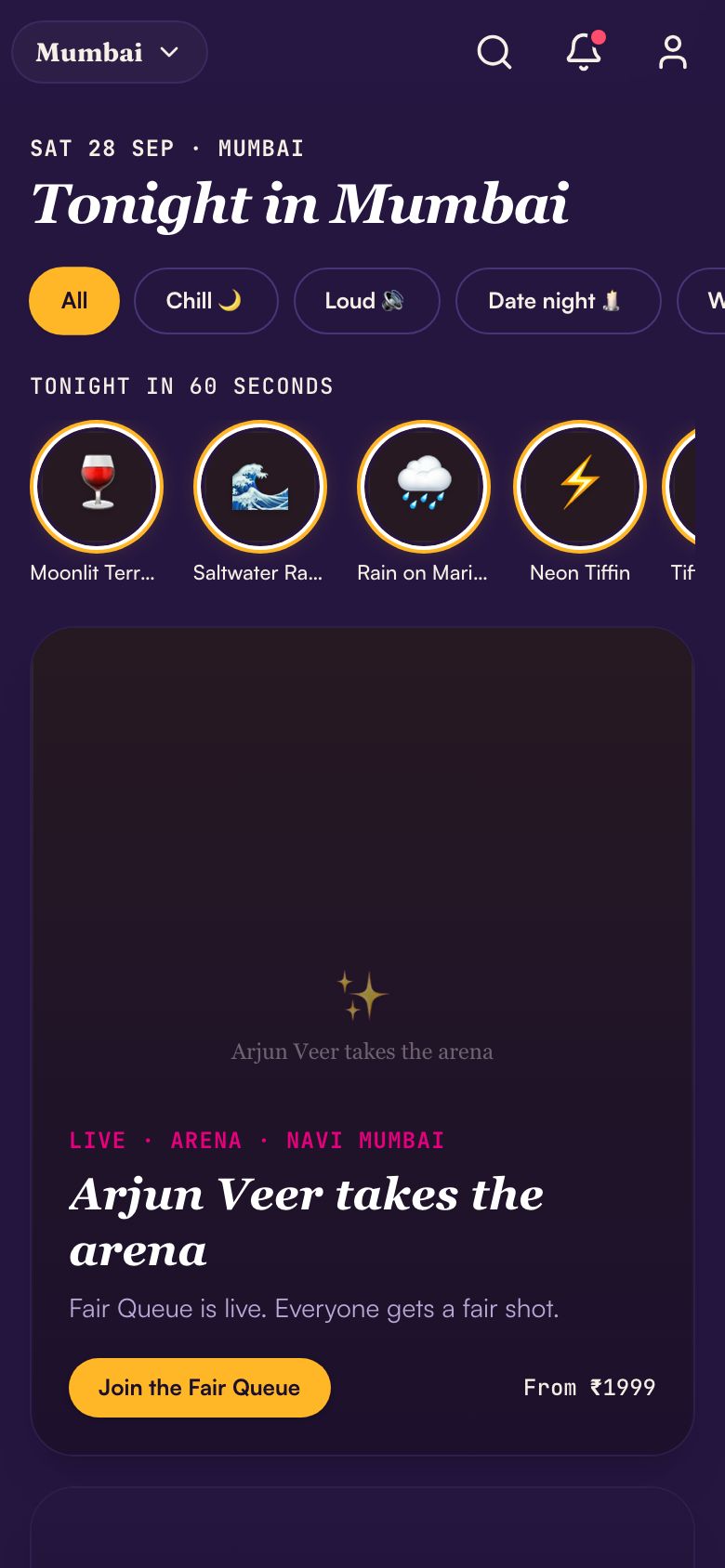
If you run ticketed events or a venue, you need more: online ticket sales with seat maps, QR tickets, a gate-scanner app and a live entry count. Our Outpass concept build shows all three sides running together: a customer app with seat maps and tickets, a venue app and a gate scanner with a green-or-red result.
See our event booking app page for what's involved, and the app cost guide for ballpark budgets. When you're ready, send us a brief.
See the app a event management company runs on
We designed and built this concept end to end, every side of it, so you can open it and try it before you plan your own. Our event & ticketing app page covers the features, timeline and what moves the cost.
Questions people ask
How much money do I need to start an event management company?
You can start with a few lakh rupees if you work from home and rent equipment per event, mainly for registrations, a laptop, a portfolio and working capital for vendor advances. Owning inventory, renting an office and hiring staff raises that to tens of lakhs. Working capital matters most.
Do I need a licence to start an event management business?
There's usually no single event-management licence. You register the business and GST, and then each event may need permissions: police for public gatherings and loudspeakers, fire safety for temporary structures, music licences, and liquor permits through the venue. Confirm per event and per city.
How do event management companies make money?
Mostly through a planning fee, a margin on vendor costs, or both. Ticketed events earn from ticket sales and sponsorships but carry the risk of unsold seats. Many companies combine steady corporate work with a few higher-risk ticketed or sponsored events.
How do I get my first event management clients?
Start with your own network, partner with venues that need reliable planners, and pitch one niche, such as corporate offsites or college fests. Document every event with photos and a short case study, and ask happy clients for referrals soon after the event.
Do I need an app for my event business?
Not at first. A website, enquiry form and shared run-sheets are enough. If you sell tickets, run a venue or handle large entry numbers, online ticketing with QR codes and a gate-scanner app saves time and stops fake or duplicate tickets.


