The short answer
Pick one model first: self-drive rentals or chauffeur-driven trips. They need different permits, different insurance and different customers. Start with a small fleet of the cars people actually ask for, register them commercially from day one, and put as much effort into renter checks, deposits and handover photos as into the cars themselves. Damage, fuel disputes and idle days drain a rental business far more often than a lack of demand.
As a ballpark, a self-drive start with five used hatchbacks and sedans in a tier-2 city needs roughly ₹24–50 lakh, most of it in the vehicles. A 20-car mixed fleet in a metro can cost ₹1.1–2.2 crore. This guide covers the models, the permits, the money, a launch sequence, daily operations, finding renters and the booking tech that holds it together.
Is a car rental business right for you?
Demand comes from several directions at once: tourists who arrive by air or rail and want to drive themselves, families heading to a wedding in another town, people whose own car is stuck at the workshop, and companies that need cars for visiting staff. Self-drive has grown as younger customers prefer renting to owning, while chauffeur-driven cars remain the norm for outstation trips and airport runs.
It suits people who understand vehicles and can stay calm when a car comes back with a dent and a story. You will deal with the RTO, insurers, mechanics and drivers every week. Capital matters more here than in most service businesses, because each car is a large asset that earns only on the days it's out on the road.
The hard parts: utilisation that swings between peak season and dead weeks, accident claims, traffic challans that arrive months after a trip, renters who misuse a car or vanish with it, and drivers who quit just before a long weekend.
Business models to choose from
| Model | How it works | Suits |
|---|---|---|
| Self-drive rental | Customers book, pass ID checks, pay a deposit and drive themselves | Tourist towns, airports and young urban renters |
| Chauffeur-driven outstation | You supply car and driver for trips between cities, priced per kilometre or per day | Families, pilgrims and wedding guests |
| Local packages and airport transfers | Fixed hourly or point-to-point packages within a city | Business travellers and hotels |
| Corporate leasing | Monthly contracts with companies for staff or executive travel | Steady income; needs a larger, well-kept fleet |
| Fleet attachment | Owners attach commercially registered cars to your business and share revenue | Growing supply without buying every car; needs tight agreements |
Many operators begin with chauffeur-driven trips, which need less trust in strangers, and add self-drive once their checks and damage process are solid. Two-wheelers work differently; read how to start a bike rental business if scooters suit your town better. If you mostly want to sell tour packages, starting a travel agency may be the better fit.
Licences and registrations
| Registration | Why you need it | Where you get it |
|---|---|---|
| Rent a Cab Scheme permit | Self-drive car rental needs a licence under this central scheme, issued by the state | State transport department or regional transport authority |
| Commercial vehicle registration | Rental cars must be registered for commercial use; self-drive cars carry black plates with yellow lettering | RTO |
| Commercial vehicle insurance | A private-car policy does not cover paid rentals | General insurers, directly or through an agent |
| Contract carriage or tourist permit | Needed for chauffeur-driven cars that carry passengers for hire | Regional transport authority |
| All India Tourist Vehicles permit | Lets tourist vehicles cross state borders without separate state permits | Transport department, through its online permit portal |
| Driver licences and badges | Hired drivers need a licence valid for commercial vehicles and, in many states, a badge or endorsement | RTO |
| GST registration | Car rental is a taxable service, and self-drive and with-driver services are treated differently | GST portal |
| Shop & Establishment registration | Covers your office and staff under state law | State labour department or municipal body |
Renter checks are not a licence, but they protect you. Collect a valid driving licence, a government ID and proof of address, and keep a signed rental agreement covering fuel, kilometre limits, damage, challans and late returns. Explain the security deposit in writing before the keys change hands.
The Rent a Cab rules set conditions on operators that each state applies in its own way, and permit rules change. Check with your regional transport office and a CA before you buy cars. This is not legal advice.
What it costs to start
| Item | Small start | Larger setup |
|---|---|---|
| Vehicles (used, or down payments on new) | ₹18–35 lakh | ₹80 lakh–1.6 crore |
| Commercial registration, permits and road tax | ₹1–2.5 lakh | ₹5–10 lakh |
| Commercial insurance for the first year | ₹1.5–3 lakh | ₹6–12 lakh |
| GPS trackers and dashcams | ₹40,000–1 lakh | ₹2–4 lakh |
| Parking, office and deposit | ₹50,000–2 lakh | ₹3–8 lakh |
| Cleaning kit, spares and first servicing | ₹50,000–1 lakh | ₹2–4 lakh |
| Staff and drivers for two months | ₹1–2 lakh | ₹6–12 lakh |
| Booking website, ID checks and payments | ₹50,000–2 lakh | ₹2–6 lakh |
| Launch marketing | ₹30,000–1 lakh | ₹2–5 lakh |
| Rough total | ₹24–50 lakh | ₹1.1–2.2 crore |
Financing changes the shape of this table. With vehicle loans the upfront spend falls, but each EMI has to be paid whether or not the car goes out. Work out how many rental days a month every car needs to cover its EMI, insurance and servicing, and be honest about how many days it will really earn in the off-season.
These numbers are rough planning ranges, not quotes. Vehicle prices, premiums and permit charges change by state and by model.
Step by step: from idea to first customer
- Choose self-drive, chauffeur-driven or both, and write down who will rent from you and why: tourists, wedding families, companies or airport travellers.
- Pick the cars renters ask for: usually economical hatchbacks and sedans first, with an SUV or seven-seater for families later.
- Visit the regional transport office to learn the Rent a Cab or tourist permit conditions before you buy, so the fleet meets them.
- Register the company, open a current account and apply for GST.
- Buy or finance the fleet, register each car commercially and insure it under a commercial policy.
- Fit GPS trackers with speed and geofence alerts, so you can find a car and spot misuse early.
- Write the rental agreement: deposit, fuel policy, kilometre limits, late fees, the damage process and who pays traffic fines.
- Set up checks and handover: licence and ID verification, a video walkaround at pickup and return, and fuel and odometer photos.
- Line up a workshop, a cleaner and a tyre shop that can turn a car around in hours rather than days.
- Go live online with real car photos, clear prices and a booking flow that collects the deposit.
- Start with customers who book again: hotels, travel agents and local companies that will return if the first trip goes well.
Running it day to day
The rhythm follows handovers. Mornings bring pickups for day trips and airport drops, evenings bring returns, and in between the cars go to the wash bay, the fuel pump and the workshop. Weekends and holidays are packed; midweek is when you service cars and chase corporate payments.
- Handover checks: inspect every car with the renter present, photograph all sides, and have both of you agree the condition on record before the keys move.
- Deposits: refund promptly once the car is checked, and explain any deduction with photos. Slow refunds cost you repeat bookings.
- Challans: check each car for traffic fines regularly, because they arrive late. Your agreement should let you recover them from the renter.
- Maintenance: service by kilometres, not by the calendar, and rotate cars so one vehicle doesn't take all the mileage.
- Drivers: for chauffeur trips, schedule rest between long drives, pay allowances on time, and keep a standby driver for festival weeks.
Getting your first customers
Renters compare prices and reviews on their phone, often the day before they travel. A Google Business Profile near the airport or railway station, with your own cars in the photos and a phone number someone actually answers, brings bookings quickly. Our local SEO guide explains the setup.
- Hotels and homestays: offer their front desks a dependable car on call, with a small commission per booking.
- Wedding and event planners: families need several cars for two or three days, and one planner can fill your fleet in season.
- Corporate accounts: visiting staff and auditors need cars on a monthly invoice. Fewer bookings, steadier payment.
- Rental marketplaces: listing brings discovery, but read their damage and payout terms before you sign up.
- Repeat renters: keep their verified documents on file so the second booking takes a minute, and send a festival-season offer.
The tech you need
On day one you need a booking channel that takes a deposit online, a way to collect and verify licences and IDs, GPS in every car, and a shared calendar so two people never promise the same car. A spreadsheet copes with five cars. Past ten, double bookings and missed services start to cost real money.
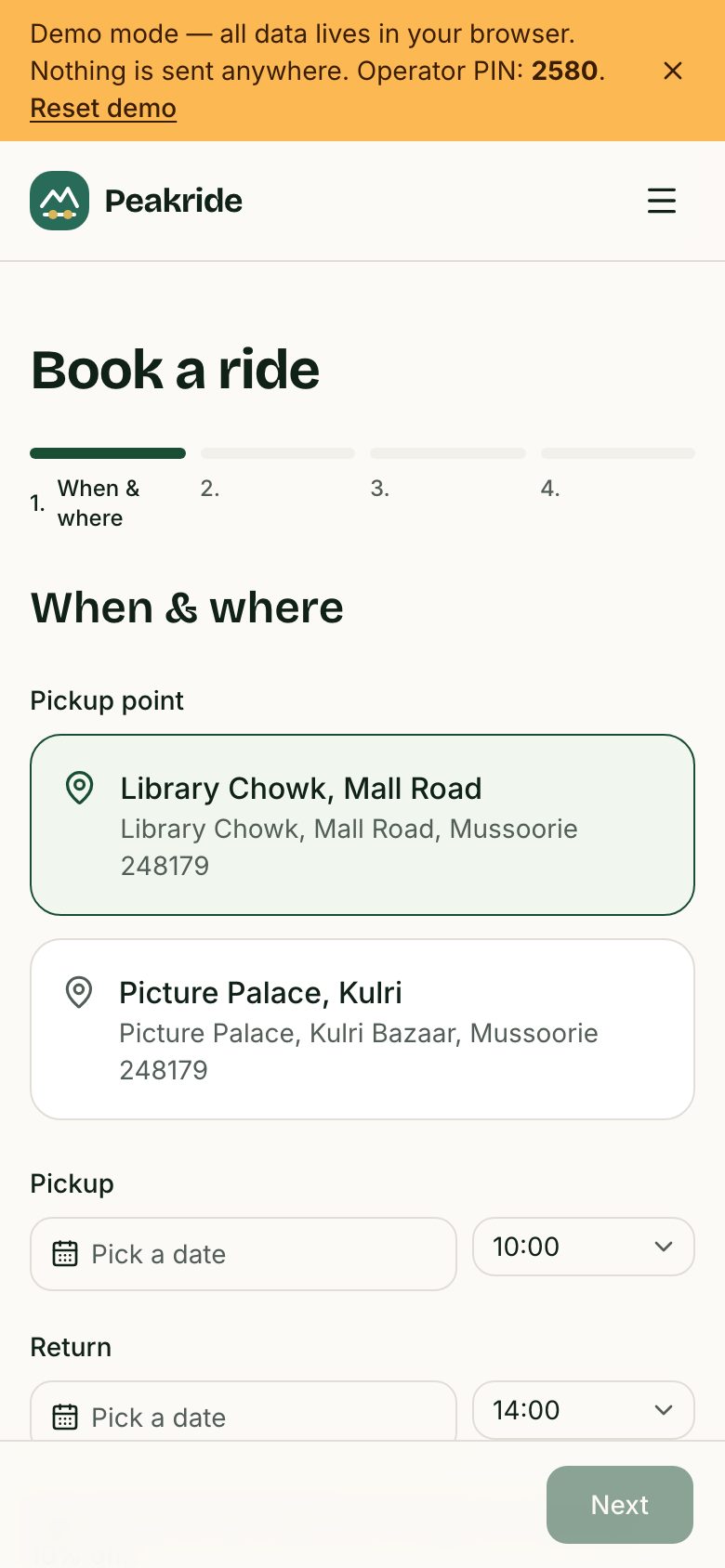
That is when a booking website with live availability, online ID checks, UPI deposits (how UPI fits into an app) and an ops dashboard pays off. Our concept build Peakride runs scooter rentals for a hill town, and its pieces carry over to cars: bookings, an ops desk, deposits, photo handover checks and an installable app for staff. For chauffeur-driven trips with live tracking, a taxi booking app is closer. Read what a rental booking website involves, or send us a brief and we'll come back with a fixed quote.
See the app a car rental business runs on
We designed and built this concept end to end, every side of it, so you can open it and try it before you plan your own. Our travel booking website page covers the features, timeline and what moves the cost.
Questions people ask
How much does it cost to start a car rental business in India?
A small self-drive start with five used cars in a tier-2 city needs roughly ₹24–50 lakh, mostly for the vehicles. A 20-car metro fleet mixing self-drive and chauffeur-driven cars can run to ₹1.1–2.2 crore. Financing lowers the upfront amount but adds monthly EMIs, so plan utilisation carefully before you buy.
Can I rent out my private car for self-drive?
No, not legally. A car rented out for money has to be registered for commercial use and insured under a commercial policy, and the operator needs a permit under the Rent a Cab Scheme. Renting out a private-plate car exposes you to fines, seizure of the vehicle and an insurance claim that may be refused after an accident.
What documents should I collect from renters?
At minimum, a valid driving licence, a government photo ID and proof of address, checked against the originals. Many operators also take a selfie holding the licence, an emergency contact and a signed agreement. Store copies securely, use them only for the rental, and delete them once you no longer need them.
How do I protect my cars from damage and misuse?
Combine paperwork, tracking and a fair deposit. Photograph the car with the renter at pickup and return, fit GPS with speed and geofence alerts, and set clear rules in the agreement on routes, drivers and penalties. Commercial insurance covers accidents, while the deposit covers the small dents an insurer won't.
Is self-drive or chauffeur-driven rental more profitable?
Self-drive usually earns more per car per day, because there is no driver's wage, but it carries more damage and misuse risk. Chauffeur-driven trips earn less per car yet bring steadier repeat business from families, hotels and companies. Many operators start with one and add the other once their processes are settled.


