The short answer
A used car business buys pre-owned cars, inspects and reconditions them, and sells them on with paperwork done properly. Many Indian families buy a used car as their first car, so demand is steady. What separates a lasting dealer from a roadside lot is trust: honest inspection reports, clean documents and quick ownership transfer.
Start with a small, carefully chosen stock in the price range your area buys most, a reliable mechanic, and a strict process for checking documents. Sell with photos, inspection details and finance options, and complete the RC transfer before you consider a deal closed.
Is a used car business right for you?
Used cars sell in every Indian city and town. Buyers want a reliable car at a fair price, and sellers want a quick, safe sale. A dealer earns the margin between the two by inspecting, fixing and documenting cars well.
You will do well if you know cars mechanically, can judge a fair price quickly, and are careful with paperwork. Relationships with mechanics, painters, banks and insurance agents matter as much as the cars themselves.
The hard parts:
- Hidden problems. Accident damage, flood damage and tampered odometers can turn a car into a loss.
- Paperwork risk. Pending loans, unpaid challans and incomplete transfers can come back to you.
- Capital tied up. Every car on your lot is money you can't use elsewhere.
- Trust. Buyers arrive expecting to be cheated. You have to prove otherwise every time.
Business models to choose from
| Model | How it works | Suits |
|---|---|---|
| Stock dealer (own inventory) | You buy cars, recondition them and sell from your lot | Dealers with capital and mechanical know-how |
| Consignment | Owners leave cars with you to sell; you earn a commission | Starting with less capital |
| Online-first dealer | Inspection reports, photos and test drives booked online; delivery from a hub | Urban buyers who research before they visit |
| Trade and auctions | Buying in bulk from auctions or exchanges and selling to other dealers | Experienced traders with networks |
| Inspection and documentation service | Paid inspections and RC transfer help for private buyers and sellers | Mechanics and agents building a brand first |
Licences and registrations
Central motor vehicle rules now recognise dealers in registered (used) vehicles. In general, dealers are expected to hold an authorisation from the registering authority and keep records of the vehicles in their possession. Ask your RTO exactly what applies to you.
| Registration | Why you need it | Where you get it |
|---|---|---|
| Business entity and current account | To buy and sell cars in the business name | Bank; Ministry of Corporate Affairs for LLPs and companies |
| GST registration | Used car sales have their own GST treatment that your CA should explain | GST portal |
| Udyam registration | MSME recognition for loans and schemes | Udyam portal |
| Shop & Establishment and trade licence | For your showroom or lot | Municipal body or state labour department |
| Dealer authorisation for registered vehicles | Allows you to hold and deal in cars still registered to previous owners | Your RTO |
| Ownership transfer paperwork for each car | RC transfer, loan closure (NOC from the financier) and insurance transfer | RTO, the seller's lender, the insurer |
Dealer rules, transfer processes and GST treatment of used cars vary and change. Confirm with your RTO and a chartered accountant. This guide is not legal or tax advice.
What it costs to start
| Item | Small start | Larger setup |
|---|---|---|
| Lot or showroom rent and deposit | ₹30,000–₹1 lakh a month plus deposit | ₹2–4 lakh a month plus deposit |
| Initial stock | 5–8 cars: ₹20–40 lakh | 25–40 cars: ₹1.5–3 crore, often with inventory finance |
| Reconditioning (paint, parts, detailing) | ₹20,000–₹60,000 per car | A small workshop: ₹10–20 lakh |
| Registration and legal | ₹30,000–₹1 lakh | ₹2–5 lakh |
| Photography and listings | ₹20,000–₹50,000 | ₹3–6 lakh |
| Website or listing app | ₹1–3 lakh | ₹15–40 lakh for a buyer app and inspector app |
These are planning estimates, not quotes. Stock costs depend entirely on the segment you sell.
Step by step: from idea to first customer
- Pick a segment: budget hatchbacks, family sedans and SUVs, or premium cars.
- Line up a trusted mechanic and a painter, and agree rates.
- Register your business, GST and Udyam, and apply for dealer authorisation with your RTO.
- Rent a lot or showroom with space for photos and test drives.
- Write an inspection checklist covering engine, gearbox, body, flood signs, odometer and documents.
- Buy your first few cars carefully. Check RC, insurance, loan status and challans before paying.
- Recondition, clean and photograph each car in daylight from fixed angles.
- List cars online with price, kilometres, owners and an honest inspection summary.
- Tie up with banks and NBFCs for buyer finance and with an insurer for transfers.
- Sell your first cars, and complete the RC transfer before closing the deal in your books.
- Collect reviews and ask buyers for referrals.
Running it day to day
Buying right. Profit is made when you buy, not when you sell. Inspect thoroughly, check documents and know the market price for each model and year.
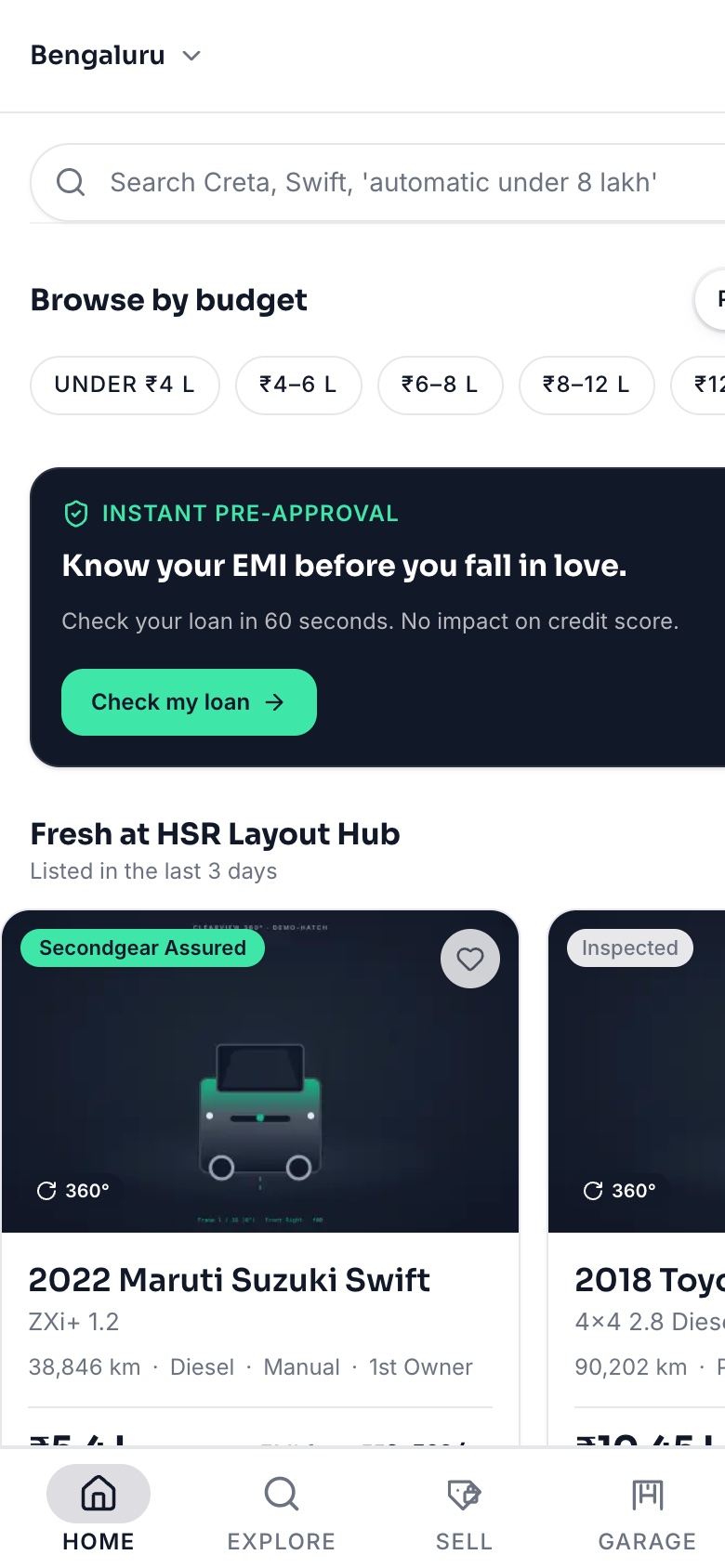
Inspections. A written inspection report with photos builds trust. Our Secondgear concept build is a used-car marketplace with inspections, financing and hub delivery, built to show how an inspection can become a selling point.
Paperwork. Keep a file for every car: RC, insurance, previous owner details, loan closure, transfer forms. Track each transfer until it is complete.
Stock age. Cars that sit for months lose value. Review prices every week and move slow stock.
Payments. Take UPI, bank transfers and finance payouts, and keep receipts for every token amount.
Getting your first customers
- Be easy to find. A Google Business Profile with real photos of your lot. See our local SEO guide.
- Honest listings. Clear photos, real kilometres and a short inspection summary for every car.
- WhatsApp. Share new arrivals with interested buyers and send videos on request.
- Exchange offers. Help buyers sell their old car through you. It brings in both stock and customers.
- Referrals. A small thank-you for every friend a buyer sends your way.
The tech you need
| Stage | What to use |
|---|---|
| First cars | Google Business Profile, WhatsApp, a stock register, good photos |
| 10+ cars in stock | A website with every car, filters, inspection reports and test-drive booking |
| Growing brand | A buyer app, an inspector app, finance and delivery tracking |
Read what goes into a marketplace app, and open Secondgear, our concept build. For classified-style local selling, see how to start a second-hand goods business. Our guide to choosing an app development company helps you compare teams. Send us a brief when you're ready.
See the app a used car business runs on
We designed and built this concept end to end, every side of it, so you can open it and try it before you plan your own. Our marketplace app page covers the features, timeline and what moves the cost.
Questions people ask
Do I need a licence to sell used cars in India?
You need the usual business registrations, such as GST and a shop or trade licence. Central motor vehicle rules also recognise dealers in registered vehicles and generally expect them to hold an authorisation from the registering authority and keep records of cars they handle. Ask your RTO what applies in your state. This is not legal advice.
How much capital do I need to start a used car business?
A small lot with five to eight budget cars might need roughly ₹25–50 lakh including stock, rent and reconditioning. Consignment selling needs much less, since you don't buy the cars. A branded showroom with a workshop needs far more. Treat these as rough estimates and plan by the segment you want to sell.
How do I check a used car before buying it for resale?
Inspect engine, gearbox, suspension and body, look for flood and accident signs, and check the odometer against service records. Then verify documents: RC, insurance, loan status and any pending challans. Get a written NOC if the car had a loan. Never pay in full until the documents are clean.
How does RC transfer work when selling a used car?
The seller and buyer complete transfer forms and submit them with the RC, insurance, PUC and ID to the RTO, often online through the state's transport services. If there was a loan, the lender's NOC is needed to remove hypothecation. As a dealer, track every transfer until the RC shows the new owner.
Should a used car dealer sell online?
Yes. Most buyers research online before they visit. A website or app with every car, clear photos, kilometres, owners and an inspection summary brings better-informed buyers and fewer wasted visits. Test-drive booking and finance enquiries online also help you plan your day.


