The short answer
Start with a small, airy hall, one or two experienced teachers and a weekly timetable built around when your neighbourhood is free: early mornings, evenings and weekends. Register under Shop & Establishment, take insurance, collect a health screening form from every student and keep your claims modest. Good classes and a warm teacher are what bring people back.
As a ballpark, a single-hall studio in a tier-2 city can open for roughly ₹4–11 lakh. A two-hall metro studio with showers and changing rooms often needs ₹30–75 lakh. This guide covers the formats, paperwork, setup costs, launch steps, daily running and the booking and membership tools worth having.
Is a yoga studio right for you?
Yoga is part of daily life for many Indians, and interest has spread from older practitioners to office workers, new parents and people returning to activity with their doctor's approval. Classes are social as much as physical, so a studio that feels welcoming builds a community that renews month after month.
Those who do well are usually teachers with a long personal practice and a following, or operators who partner with such teachers. You will teach or manage teachers, sell memberships, plan timetables and keep the space clean and calm. Studios that try to offer every style to every audience usually end up with half-empty rooms.
- Seasonal swings. New year and pre-wedding months fill up; the monsoon and festival weeks can thin classes.
- Teacher loyalty. Students follow a teacher, not a brand. If your main teacher leaves, members may go too.
- Free alternatives. Parks, community groups and online videos cost nothing. You compete on guidance, space and belonging.
- Safe teaching. Students with injuries, pregnancy or medical conditions need adapted practice, and sometimes a doctor's advice before they join.
Business models to choose from
| Model | How it works | Suits |
|---|---|---|
| Group class studio | Drop-in and membership classes on a fixed timetable | Neighbourhoods with steady morning and evening demand |
| Private and small-group sessions | One-to-one or small batches at the studio or in clients' homes | Experienced teachers; higher fees per hour |
| Corporate yoga | Weekly sessions at offices or online for teams | Studios with spare weekday daytime hours |
| Online classes | Live sessions on a membership, sometimes with recordings | Teachers with students beyond their own city |
| Retreats and workshops | Weekend or week-long programmes around a theme | Established studios with a loyal base |
Most studios combine a group timetable with private sessions and a few corporate batches. If you plan to add strength or cardio classes, compare notes with our playbook on how to start a gym; memberships work the same way, but the floor and equipment are very different.
Licences and registrations
| Registration | Why you need it | Where you get it |
|---|---|---|
| Shop & Establishment registration | Covers your premises, staff hours and holidays | State labour department or municipal body |
| Trade licence | Local permission to run a studio at that address, where the local body requires one | Municipal corporation or local body |
| GST registration | Needed once you cross the turnover limit; online classes sold across states need a closer look | GST portal; a CA can confirm when it applies |
| Instructor certification (optional) | Not a legal requirement in most places, but it shows teachers trained to a recognised standard | Yoga Certification Board under the Ministry of Ayush, or a recognised teacher training school |
| Insurance | Public liability for the premises and professional liability for teachers | General insurers |
| Health screening forms | Students declare injuries, conditions and pregnancy so teachers can adapt or suggest a doctor's opinion first | Your own form, reviewed by a lawyer |
| Music licence | Only if you play recorded music during classes | The copyright licensing bodies for recorded music |
If you collect student details, health notes or payments online, take consent and keep the data private. Our DPDP checklist for apps explains what that means for a small studio.
Requirements depend on your state, city and building, and they change. Check with the local body and a CA before signing a lease. This list is a starting point, not legal advice.
What it costs to start
| Item | Small start | Larger setup |
|---|---|---|
| Rent deposit and advance | ₹50,000–1.5 lakh | ₹5–12 lakh |
| Flooring, lighting, ventilation and sound system | ₹1–3 lakh | ₹8–20 lakh |
| Mats, blocks, straps, bolsters and wall ropes | ₹30,000–80,000 | ₹2–5 lakh |
| Changing area, lockers and washrooms | ₹50,000–1.5 lakh | ₹5–12 lakh |
| Registrations, insurance and CA | ₹20,000–60,000 | ₹1–2 lakh |
| Teacher fees for the first three months | ₹1–2.5 lakh | ₹6–15 lakh |
| Booking app, website and launch marketing | ₹30,000–1 lakh | ₹3–8 lakh |
| Rough total | ₹4–11 lakh | ₹30–75 lakh |
Rent decides almost everything. A hall that stands empty from late morning to late afternoon still costs a full month's rent, so plan daytime use: private sessions, prenatal classes with suitably trained teachers, corporate batches, or renting the room to other teachers. Hold three months of rent and teacher fees in reserve on opening day.
These are rough figures to test your plan, not quotes. Rents, finish and teacher fees vary widely from city to city.
Step by step: from idea to first customer
- Define your style and audience: gentle hatha for beginners, vinyasa for younger professionals, chair yoga for seniors, or a deliberate mix.
- Test demand first. Teach in a park, a society hall or a rented room for a few weeks and build a list of regulars.
- Find a hall with good ventilation, natural light, a quiet street and a floor that grips mats well.
- Register the business, sign up for Shop & Establishment and any trade licence, and ask a CA about GST.
- Take insurance and write your health screening form, waiver and refund policy.
- Hire or partner with teachers, checking their training, teaching style and how they handle injuries.
- Plan a level-wise timetable, and keep the first month lighter than you think you need.
- Set membership options: drop-in, monthly plans, class packs and a trial class.
- Set up booking and payments with UPI, renewal reminders and a waitlist for popular slots.
- Open with a free trial week for neighbours, and follow up personally with everyone who came.
Running it day to day
The first class may start before 6 am and the last end after 8 pm, with a quiet stretch in between. Before each class the room is aired, mats and props are wiped, and the teacher checks the list for newcomers and anyone who reported an injury. After the last class, someone reconciles payments and messages members whose plans are about to lapse.
- Attendance: notice who stops coming. A friendly message after two missed weeks often brings a member back.
- Substitutes: cover sick days with a teacher students already know, not a stranger.
- Cleanliness: wiped mats, fresh towels if you offer them, and clean washrooms matter a great deal to members.
- Renewals: remind members a week before their plan ends, with an option to pause for travel.
- Feedback: ask what students want more of, and adjust the timetable each quarter.
Getting your first customers
Most students live or work within a short distance, so local visibility matters more than reach. Describe classes honestly: what happens, which level they suit and who should consult a doctor first. Avoid any claim that yoga cures or treats a condition; talk about practice, comfort and routine instead.
- Google Business Profile: list styles, levels, the timetable and real photos of your hall.
- Community sessions: International Day of Yoga, park sessions and society hall classes introduce you to neighbours.
- Corporate batches: pitch HR teams on short weekday sessions at their office or online.
- Referrals: give each member a free class to pass on to a friend.
- Instagram and WhatsApp: share the timetable, short teaching tips and class updates rather than stock images.
The tech you need
Day one needs a timetable people can see, a booking link or simple sign-up list, UPI payments and WhatsApp reminders. As you grow, add memberships with auto-renewal, class packs, waitlists, attendance tracking, teacher payouts and online classes. Our gym and fitness app guide and our guide to subscription apps cover memberships and renewals in depth.
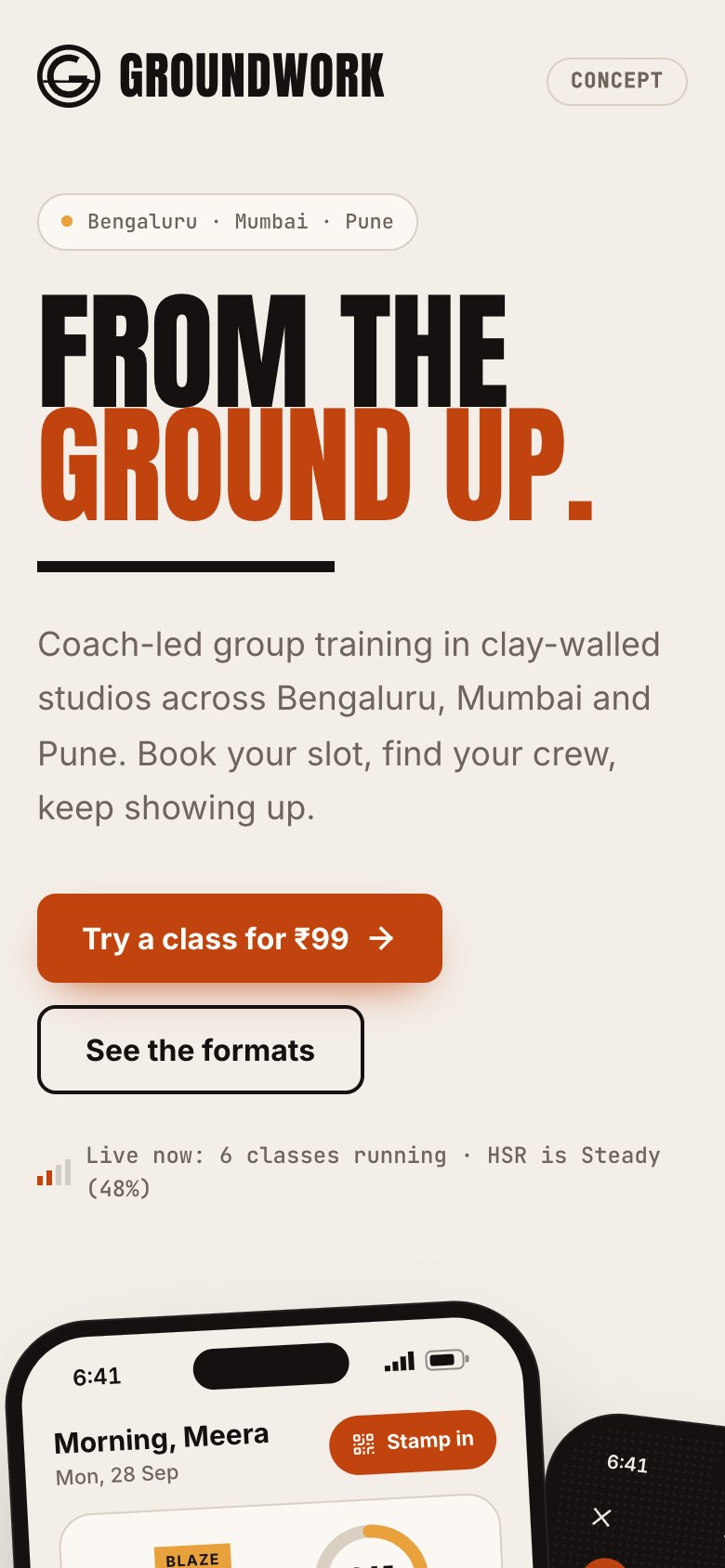
Our concept build Groundwork runs fitness studios and home workouts with a member app and a trainer app, and it carries over to yoga closely: class booking, memberships, attendance and teacher schedules work the same way. See what a fitness app involves, or send us a brief for a fixed quote within 48 hours.
See the app a yoga studio runs on
We designed and built this concept end to end, every side of it, so you can open it and try it before you plan your own. Our fitness and wellness app page covers the features, timeline and what moves the cost.
Questions people ask
Do I need a certificate to open a yoga studio in India?
There is usually no legal requirement for a certificate to open a studio, but teachers should be properly trained. Certification from the Yoga Certification Board under the Ministry of Ayush, or a recognised teacher training school, reassures students and insurers. The business itself still needs the usual registrations, such as Shop & Establishment.
How much does it cost to start a yoga studio?
A single-hall studio in a tier-2 city can open for roughly ₹4–11 lakh. A two-hall metro studio with showers and changing rooms often needs ₹30–75 lakh. Rent, flooring and teacher fees are the largest costs, so testing demand in a hired hall first keeps the risk low.
Can I run a yoga studio from home?
Often yes, at a small scale, if your housing society and local rules allow it. Many teachers begin with a few students in a spare room or on a terrace. Check society bylaws, keep insurance and screening forms in place, and move to a commercial space once classes regularly fill up.
How should I price yoga classes?
Price against what nearby studios and gyms charge, then add value through smaller classes, stronger teachers or a calmer space. Most studios offer a trial class, drop-in fees, class packs and monthly plans, with discounts for longer commitments. Review prices after a few months, once you know your real attendance.
Should a yoga studio offer online classes?
Online classes are worth adding once your in-person timetable is steady. They suit members who travel, students outside your city and early sessions people would rather do at home. Keep them live where you can, and record only with consent from everyone who appears on screen.


