The short answer
To start a hostel in India, pick a town where young travellers already go, lease a building you can legally run as a guest house, register it with the local body and the state tourism department where a scheme exists, and set up guest reporting with the police. Fit it out with bunks, lockers, clean bathrooms and a common room people want to sit in.
A hostel lives or dies on two things: occupancy in the off-season and the mood in the common room. Plan your bed count, your rent and your events calendar around those two, and get direct bookings working early so every guest isn't paying a commission to someone else.
Is a hostel right for you?
Hostels in India have moved well beyond the cheapest bed in town. Backpackers, solo women travellers, remote workers and college groups now expect clean dorms, private rooms, fast Wi-Fi, a café and a calendar of things to do. The demand is real in the hill towns, beach belts, pilgrimage routes and big-city nightlife districts.
People who do well tend to be travellers themselves. They know what a good common room feels like, they enjoy meeting strangers every day, and they are comfortable being on call when a guest locks themselves out at 2 am. If you want a quiet, passive property business, a homestay with three rooms may suit you better.
The hard parts are rent, seasonality and noise. Most hostels lease rather than own, so a long lock-in on a building in the wrong lane hurts. Hill and beach towns can go quiet for months. Neighbours and housing societies complain about late nights. Plan for all three before you sign anything.
Business models to choose from
| Model | How it works | Suits |
|---|---|---|
| Leased building, own brand | You lease a house or small building for several years, fit it out and run it under your name. | First-timers with some savings who know one destination well |
| Revenue share with an owner | The owner provides the building; you run it and share revenue instead of paying fixed rent. | Towns where owners have empty bungalows and want income without the work |
| Hostel plus café | The ground floor is a café open to the public, the floors above are dorms. | Busy streets where the café brings in walk-ins and day revenue |
| Workation hostel | Fewer dorms, more private rooms, desks and long-stay rates for remote workers. | Hill towns and quieter beach areas with good connectivity |
| Small chain | Two or three properties on one travel circuit, sharing a brand, booking site and staff training. | Founders who have already run one hostel profitably |
Most people start with one leased property. A revenue share lowers your risk in the first year, but write the split, the maintenance responsibilities and the exit terms down clearly.
Licences and registrations
| Registration | Why you need it | Where you get it |
|---|---|---|
| GST registration | You charge guests for accommodation and likely food; GST applies once you cross the threshold or sell through online platforms. | The GST portal, usually with help from a CA |
| Udyam registration | Recognises you as a small enterprise and helps with loans and some schemes. | The Udyam registration portal |
| Trade licence / local body permission | Running a lodging business from a building needs the municipality's or panchayat's permission. | Your municipal corporation, council or gram panchayat |
| Shop & Establishment registration | Covers your staff, working hours and the premises as a commercial establishment. | The state labour department, often online |
| Tourism department registration | Many states register guest houses, hostels or homestays under a tourism scheme; it can be required and helps with listings. | The state tourism department |
| Guest register and police reporting | Hotels and guest houses keep ID records; foreign guests must be reported through Form C. | The local police station and the Form C online system for foreign guests |
| Fire NOC | Dormitories put many people in one building; larger premises need fire clearance. | The state or municipal fire department |
| FSSAI registration or licence | Needed if you run a café or kitchen that serves guests. | The FSSAI online portal |
Rules vary by state and by town, and they change. Some hill and coastal areas have extra building or zoning rules. Confirm the list for your property with the local authority, a CA or a lawyer before you sign a lease. This is general information, not legal advice.
What it costs to start
These ballparks assume a leased building in a tourist town, about 24–30 beds for the small start and 60–80 beds for the larger setup, with basic renovation rather than structural work.
| Item | Small start | Larger setup |
|---|---|---|
| Rent deposit and advance | ₹2–6 lakh | ₹6–15 lakh |
| Repairs, paint, plumbing and wiring | ₹3–8 lakh | ₹10–25 lakh |
| Bunks, mattresses, lockers and linen | ₹3–6 lakh | ₹8–15 lakh |
| Common room, kitchen or café fit-out | ₹1.5–4 lakh | ₹5–12 lakh |
| Registrations and professional fees | ₹0.3–1 lakh | ₹1–3 lakh |
| Website, booking engine and branding | ₹0.5–3 lakh | ₹3–10 lakh |
| Working capital for 3–4 months | ₹3–6 lakh | ₹8–15 lakh |
These are estimates to help you plan, not quotes. Get two or three contractor quotes on site, and keep a contingency of 15–20% for the things old buildings hide.
Step by step: from idea to first customer
- Pick one destination and stay there for a week as a guest. Count which hostels are full on a weekday and why.
- Decide your guest: party backpackers, quiet trekkers, remote workers or college groups. It shapes everything from bunk spacing to the playlist.
- Shortlist buildings within walking distance of where travellers spend their evenings, and check the lane for neighbours who will object to late nights.
- Before signing, ask the local body and a lawyer whether the building can be used as a guest house, and check the owner's title and permissions.
- Negotiate a lease with a rent-free fit-out period and a lock-in you can survive in a bad season.
- Plan the layout: dorm sizes, women-only dorm, private rooms, bathrooms per bed, lockers, charging points and a common room with daylight.
- Apply for registrations in parallel with the fit-out so you are not waiting for paperwork after the beds arrive.
- Set up your booking website, payment links and a simple bed-management system before opening.
- Hire a manager and night staff, and write down check-in, cleaning and emergency routines.
- Do a soft launch with friends and local travel creators, fix what breaks, then open bookings to everyone.
Running it day to day
The daily rhythm of a hostel is check-outs, cleaning, check-ins and the evening. Housekeeping has to turn dorm beds between 11 am and 2 pm, so plan your linen stock at two to three sets per bed. Bathrooms are what reviews mention first; clean them more often than feels necessary.
Your staff are your brand. Many hostels hire a manager, front-desk volunteers who stay for a few weeks in exchange for a bed, housekeeping and a night guard. Write simple rules for volunteers: hours, duties and what they cannot do, such as handling cash alone.
Events fill beds. A weekly bonfire, a trek, a cooking night or a local walk gives people a reason to choose you and to stay an extra night. Keep a public calendar, and let guests sign up from their phones.
Watch cash flow month by month. Collect deposits for group bookings, keep three months of rent aside before the off-season, and track occupancy by room type. In quiet months, offer long-stay rates to remote workers and students instead of cutting nightly prices for everyone.
Reviews decide your next guest. Reply to every review, the bad ones calmly, and fix the issue they name. Ask happy guests for a review at check-out, not weeks later.
Getting your first customers
Most hostels start on listing platforms because that is where travellers search. They bring guests quickly but take a commission on every booking. The aim is to use them for discovery and then move repeat guests and groups to direct bookings on your own site.
- Google Business Profile. Add real photos, bed prices, the women-only dorm and your events. Travellers search maps on arrival. Our local SEO guide covers the setup.
- Instagram. Post the common room, the view, the people and the events, not just empty rooms. Short videos of a real evening do more than a professional shoot.
- WhatsApp. Keep a broadcast list for past guests and a quick reply flow for enquiries. Group leaders book on WhatsApp more than anywhere else.
- Partnerships. Trek operators, surf schools, bike rentals and cafés can send guests both ways. A bike rental business next door is a natural partner.
- Colleges and companies. Offer group rates for college trips and team offsites in the off-season.
The tech you need
On day one you need a website with a booking engine that shows live bed availability and takes UPI and card payments, plus a simple bed-management screen for the desk. Listing platforms can sync with your availability so you don't double-book a bed.
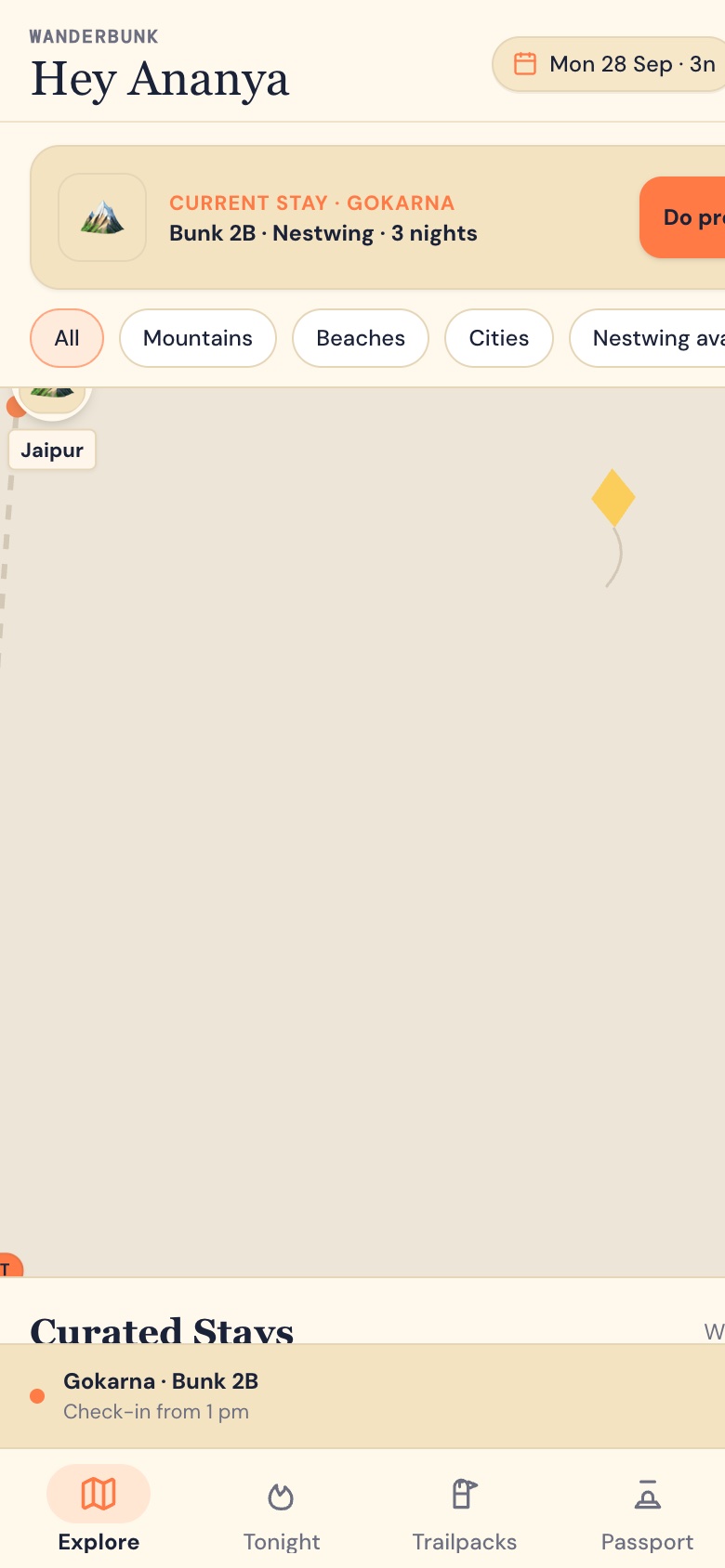
As you grow, a guest app or mobile web app helps: digital check-in, a door code or key, the events calendar and a way for guests to meet each other. Our Wanderbunk concept build shows this: an illustrated destination map, a bunk picker, a digital key and a property desk with a bed matrix and room turnover.
See our travel booking website page for what a direct-booking site and staff tools involve, and read website, app or both? before you commit to an app. If you want a fixed quote, send us a brief.
See the app a hostel runs on
We designed and built this concept end to end, every side of it, so you can open it and try it before you plan your own. Our travel booking website page covers the features, timeline and what moves the cost.
Questions people ask
How much does it cost to start a hostel in India?
A small leased hostel with 24–30 beds typically needs somewhere around ₹12–30 lakh including deposit, repairs, furniture, registrations and a few months of working capital. Larger properties or buildings that need heavy repairs cost more. These are ballparks; the town and the building matter most.
Do I need a licence to run a hostel in India?
Yes, usually several. Expect local body permission or a trade licence, GST and Shop & Establishment registration, tourism department registration where your state has a scheme, a fire NOC for larger buildings, and police guest reporting, including Form C for foreign guests. Confirm the exact list locally.
Is a hostel business profitable in India?
It can be, but profit depends on occupancy through the year, not peak-season prices. Hostels with a clear audience, good reviews, events and a share of direct bookings tend to do better. Rent is the biggest fixed cost, so a sensible lease matters more than fancy interiors.
Can I start a hostel in a rented building?
Yes, most hostels do. Check that the building can legally be used for lodging, that the owner has clear title, and that the lease allows commercial use, renovations and subletting beds. Negotiate a rent-free fit-out period and a lock-in you can afford in a slow season.
How do hostels get bookings without paying high commissions?
Use listing platforms for discovery, then build direct demand: a website with live availability and online payment, a strong Google Business Profile, Instagram, a WhatsApp list of past guests, and partnerships with local activity operators. Offer a small perk for booking direct.


