The short answer
Pick a category where used goods hold value and buyers need reassurance: phones, furniture, books, kids' gear, appliances, thrifted clothing. Then decide your model — buy and resell yourself, sell on consignment, or run a local marketplace where people sell to each other. Your job in every model is the same: grade honestly, price fairly and make buyers feel safe.
Trust is the whole business. Clear condition grading, real photos, warranties where you can offer them, and safe ways to meet or deliver are what make people choose you over a random listing.
Is a second-hand goods business right for you?
Indian households have long passed things on, repaired them and sold them to the local kabadiwala. Today more people buy refurbished phones, used furniture for rented flats, pre-loved clothes and second-hand books, for price and for sustainability. Students, young professionals moving cities and families with growing children are steady buyers and sellers.
This suits practical people who can judge condition, negotiate, and stay patient with buyers who ask many questions. If you can repair or refurbish, your margins improve a lot.
The hard parts: inconsistent supply, items that need cleaning or repair, storage space, and fraud and scams in peer-to-peer deals. A business that solves trust well stands out.
Start by watching your own city. Which items do people post again and again in society groups? Which do they struggle to sell? Where do buyers ask the most questions? That is usually where a business that grades, cleans, delivers and guarantees can charge a fair margin for removing the hassle.
Business models to choose from
| Model | How it works | Suits |
|---|---|---|
| Buy, refurbish and resell | You buy items, clean or repair them, grade and sell with a short warranty. | Phones, laptops, appliances, furniture |
| Consignment | Owners leave items with you; you sell and keep a commission. | Furniture, designer clothing, baby gear |
| Thrift store | Curated pre-loved clothing and accessories, online or in a shop. | Fashion-minded founders |
| Local marketplace | People list and sell to each other near them; you provide trust, chat and moderation. | Founders who want to build a platform |
| Bulk liquidation | Buying excess, returned or office stock in lots and reselling. | Traders with capital and storage |
Licences and registrations
| Registration | Why you need it | Where you get it |
|---|---|---|
| GST registration | Resellers generally need a GSTIN; second-hand goods can have specific GST treatment, so confirm with a CA. | GST portal |
| Shop & Establishment / trade licence | Needed for a shop, warehouse or office with staff in most cities. | State labour department; municipal body |
| Udyam registration | Records you as an MSME. | Udyam portal |
| E-waste handling | Electronics resellers and refurbishers may have e-waste obligations for parts they cannot sell. | State pollution control board; authorised recyclers |
| Platform obligations | If you run a marketplace, intermediary and consumer-protection rules shape your grievance process and seller information. | Ask a lawyer before launch |
Rules for used electronics, vehicles and marketplaces vary and change. Check with a CA or lawyer, especially if you run a platform. This is general information, not legal advice.
What it costs to start
Assumptions: a small start is a buy-and-resell business in one category from home or a small godown. A larger setup is a local marketplace app with moderation, or a refurbishment workshop with staff.
| Item | Small start | Larger setup |
|---|---|---|
| Opening stock | ₹50,000–2 lakh | ₹5–20 lakh |
| Storage space and fit-out | ₹0–50,000 | ₹3–10 lakh |
| Repair tools, cleaning and parts | ₹20,000–75,000 | ₹2–6 lakh |
| Photography setup | ₹10,000–30,000 | ₹50,000–1.5 lakh |
| Website or marketplace | ₹30,000–1.5 lakh (store) | ₹15–40 lakh (two-sided marketplace with chat and moderation) |
| Marketing for three months | ₹30,000–1 lakh | ₹5–15 lakh |
Estimates only, not quotes. A marketplace costs more because you build for both buyers and sellers, plus the tools to moderate them.
Step by step: from idea to first customer
- Choose one category and one city or neighbourhood to start.
- Write a simple grading scale — like new, good, fair — with what each means.
- Find supply: moving-out sales, offices upgrading, housing society groups, consignors.
- Set up cleaning, testing and, where you can, repair.
- Register for GST and any local licences you need.
- Photograph every item honestly, including flaws, and list measurements and age.
- Decide your warranty or return window and write it down.
- List on your own store or catalogue and in local community groups.
- Offer safe pickup, delivery or meeting points with clear payment by UPI.
- Collect reviews and ask happy buyers to refer sellers.
Running it day to day
Sourcing. Keep supply steady with regular channels — societies, offices, movers — and pay fair, quick prices so sellers return.
Grading and testing. Test every function before listing. Consistent grading protects your reputation.
Inventory. Each item is unique; list fast, mark sold immediately and discount items that sit too long.
Trust and safety. Watch for stolen goods, fake payment screenshots and scam messages. Verify payments in your bank app, not from screenshots.
Returns. Honour your stated warranty quickly; it is your best advertising.
Cash flow. Buying stock ties up money; consignment frees it. Many businesses mix the two.
Pricing. Track what similar items actually sell for, not what they are listed at. Price by grade, and lower prices on a schedule — for example after two and four weeks — so stock keeps moving and storage does not fill up with items nobody wants.
Getting your first customers
- Housing society and community groups. The natural home of local resale.
- Students and new movers. Campuses and co-living spaces at the start of each term.
- WhatsApp catalogues. New stock to interested buyers first.
- Google Business Profile. If you have a store or workshop — see our local SEO guide.
- Instagram. Thrift and refurbished furniture photograph well.
- Marketplaces. Classifieds and resale platforms add reach.
The tech you need
Early on: good photos, a catalogue, UPI and WhatsApp. As you grow: a store with grading and warranty on every listing, and if you open it to other sellers, a marketplace with verified numbers, in-app chat with scam warnings, reporting and a moderation queue.
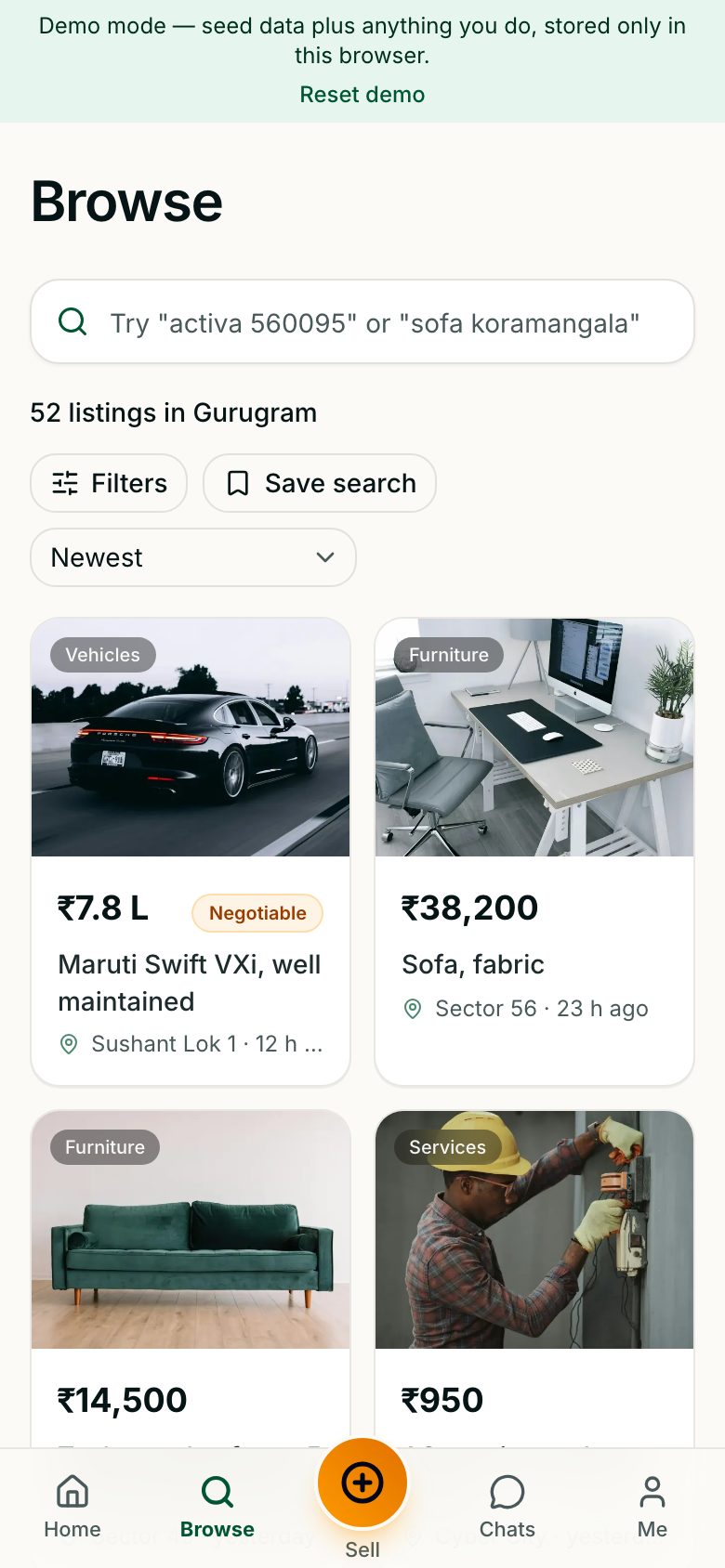
Our concept build Vendly is a hyperlocal classifieds marketplace with posting, browsing, chat, reporting and moderation — the trust tools a resale platform needs. Read what a marketplace app involves and our notes on data protection if you hold user data. Reselling cars? See how to start a used car business.
If you go the marketplace route, decide early how you will handle disputes, fake listings and prohibited items, and who reviews reports each day. Moderation is not a feature you add later; it is part of the product from launch. Our guide to choosing an app development company covers the questions to ask whoever builds it.
See the app a second-hand goods business runs on
We designed and built this concept end to end, every side of it, so you can open it and try it before you plan your own. Our marketplace app page covers the features, timeline and what moves the cost.
Questions people ask
Is a second-hand goods business profitable in India?
It can be, especially in categories where you can add value by cleaning, repairing and grading — phones, furniture, appliances. Margins come from buying well and selling with trust. Steady supply, low storage costs and quick turnover matter more than any single sale.
Do I need GST to resell used items?
Resellers generally need GST registration, and second-hand goods can have specific GST treatment depending on how you buy and sell. The rules are technical, so ask a CA before you set your pricing.
How do I avoid scams when selling second-hand goods?
Confirm payments in your own bank or UPI app, never from screenshots. Meet in public places or deliver to verified addresses. Keep chats on one platform, be wary of buyers who push for urgency or advance codes, and check that items you buy are not stolen.
How much does it cost to build a local resale marketplace app?
A two-sided marketplace with listings, chat, verification, reporting and moderation is a significant build — often ₹15–40 lakh with a small studio for a first version. A simple store for your own stock costs far less. Our app cost guide explains what moves the number.
What sells best second-hand in India?
Phones and laptops, furniture for rented homes, kids' gear and books, appliances, and pre-loved clothing all have steady demand. Pick a category you can judge confidently and source reliably in your city.


