The short answer
Start with routine pathology done accurately and on time: blood counts, sugar, lipid, thyroid, liver and kidney panels. Bring in a qualified pathologist to sign reports, register the lab under your state's clinical establishment rules, get biomedical waste authorisation, and offer home sample collection from the first week, because convenience is what most patients compare labs on.
As a ballpark, a pathology lab with semi-automated analysers in a tier-2 city can open for roughly ₹15–35 lakh. A fully automated metro lab with several collection points can need ₹1 crore or more. This guide covers lab models, approvals, setup costs, a launch sequence, daily quality routines and the software that ties every sample to its report.
Is a diagnostic lab right for you?
Doctors order tests for almost every chronic condition, and more people now book routine check-ups on their own. Towns that once sent samples to the nearest city can support a local lab, and patients would much rather have a technician at the door at 7 am than stand in a queue on an empty stomach.
The business suits pathologists, lab technologists who partner with one, and operators who enjoy process. Correct results depend on calibration, quality control and paperwork as much as on equipment. If checklists bore you, a lab will too.
- Price pressure. Large chains advertise cheap packages. A local lab competes on turnaround, accuracy and service rather than on price alone.
- Doctor relationships. Many tests come from prescriptions, and you must earn doctors' confidence without offering cuts, which professional ethics rules forbid.
- Sample integrity. Blood left too long in a hot bag gives a wrong value, and one wrong value can cost you a referring doctor.
- Machine utilisation. Analysers are expensive, and idle capacity quietly eats your margin.
Business models to choose from
| Model | How it works | Suits |
|---|---|---|
| Collection centre | Draws samples and sends them to a partner lab that processes and reports | First-time operators testing demand with little capital |
| Standalone pathology lab | Runs routine tests in-house and sends specialised ones to a reference lab | Pathologists setting up their own practice |
| Home collection service | Phlebotomists visit homes and offices; processing in-house or outsourced | Dense residential areas and busy working households |
| Lab with imaging | Pathology plus X-ray or ultrasound under one roof | Towns where patients travel far for scans; far more approvals |
| Corporate and camp testing | Check-up packages for employers, schools and housing societies | Labs with spare capacity on weekday afternoons |
Many new labs pair a compact processing room with a reference lab for rare tests, so no prescription is ever turned away. Agree turnaround times, sample transport and responsibility for errors in writing. If you are opening near doctors' chambers, our playbook on how to start a clinic shows how referrals look from the other side of the desk.
Licences and registrations
| Registration | Why you need it | Where you get it |
|---|---|---|
| Clinical establishment registration | Labs count as clinical establishments in states that have adopted the central Act or passed their own law | State health department or the registering authority your state names |
| Biomedical waste authorisation | Blood, sharps and used reagents need segregation, logs and disposal through an authorised facility | State Pollution Control Board, plus a contract with a common treatment facility |
| Qualified pathologist | Reports should be signed by a qualified pathologist registered with the medical council | State medical council or the national medical register |
| NABL accreditation (voluntary) | Shows your quality system meets the laboratory standard; hospitals, insurers and companies often prefer it | National Accreditation Board for Testing and Calibration Laboratories |
| AERB licence or registration | Only if you add X-ray equipment | Atomic Energy Regulatory Board, through its online licensing portal |
| PCPNDT registration | Only if you add ultrasound; record-keeping is strict and inspections are common | The appropriate authority under the PCPNDT Act for your area |
| Trade licence | Local permission to run a lab at that address | Municipal corporation or local body |
| Shop & Establishment registration | Staff hours, leave and holidays | State labour department |
| GST registration | Diagnostic services may be exempt or taxable depending on how they are supplied; packages and corporate contracts need a closer look | GST portal, with a CA's advice |
State rules on clinical establishments, waste and imaging change and are applied differently from place to place. Confirm your list with the local health authority and a CA before signing the lease. This is a planning aid, not legal advice.
What it costs to start
| Item | Small start | Larger setup |
|---|---|---|
| Premises deposit and fit-out: clean zones, plumbing, power backup | ₹3–6 lakh | ₹20–40 lakh |
| Analysers: biochemistry, haematology, later immunoassay | ₹6–15 lakh | ₹40 lakh–1 crore |
| Microscope, centrifuges, refrigerators and small equipment | ₹1.5–3 lakh | ₹5–10 lakh |
| Reagents, controls and consumables for the first months | ₹1–2 lakh | ₹8–15 lakh |
| Registrations, waste contract and CA | ₹30,000–1 lakh | ₹1–4 lakh |
| Pathologist, technicians, phlebotomists and front desk for three months | ₹3–6 lakh | ₹20–40 lakh |
| Home collection kits, cold boxes and travel | ₹30,000–1 lakh | ₹4–10 lakh |
| Lab software, report delivery and website | ₹50,000–2 lakh | ₹5–15 lakh |
| Rough total | ₹15–35 lakh | ₹1–2.5 crore |
Ask analyser suppliers about reagent rental agreements, where the machine is placed in your lab and you commit to buying its reagents. That lowers the upfront bill but ties you to one supplier, so read the minimum purchase terms closely. Set money aside for control material and external quality assessment, which never appear on an equipment quote.
These ranges help you test a plan; they are not quotes. Equipment, test menu and city change the totals a great deal.
Step by step: from idea to first customer
- Fix your test menu. List the tests local doctors order most, and decide which you will run in-house and which go to a reference lab.
- Bring in the pathologist early, full-time or as a consultant, to plan the layout, equipment and quality system with you.
- Choose premises with separate areas for collection, processing and waste, steady power and water, and easy access for elderly patients.
- Register the entity and apply for clinical establishment registration, the trade licence and GST.
- Sign the biomedical waste contract and obtain authorisation from the State Pollution Control Board.
- Install the analysers, then calibrate, validate and run controls before you report a single patient result.
- Hire and train phlebotomists in venepuncture, patient identification, labelling and keeping samples cool.
- Build the home collection kit: insulated boxes with gel packs, labelled tubes, a temperature log and a sharps container.
- Set up reporting: lab software that links each barcode to a patient, pulls results from the analysers and sends signed reports by WhatsApp or email.
- Meet doctors nearby with your test list, turnaround times and sample reports, and no talk of cuts.
- Open with a fixed home collection window each morning, then widen it as bookings grow.
Running it day to day
A lab day starts before sunrise. Phlebotomists head out for fasting samples while the processing team runs calibrations and controls. Samples arrive in batches through the morning, results flow from midday, and the pathologist reviews and signs before reports go out in the afternoon and evening. Late samples and repeat tests stretch the evening shift.
- Quality control: run internal controls daily, chart them, and act on drift before it reaches a patient's report.
- Cold chain: check box temperatures on arrival and recollect any sample that sat too long in the heat.
- Turnaround: measure collection-to-report time for each test and fix the slowest step first.
- Critical values: phone the doctor or patient at once when a result falls in a dangerous range, and log the call.
- Privacy: reports are health data. Limit who can open them and follow our DPDP compliance checklist.
Getting your first customers
Patients usually pick a lab for three reasons: their doctor trusts it, it comes to them, and reports arrive when promised. Earn the first with accurate reports and prompt calls on critical values. Earn the other two with a home collection slot that actually turns up on time and a report that lands on the patient's phone the same day.
- Doctors and clinics: visit with sample reports and your turnaround list. Regular, ethical contact beats any discount scheme.
- Societies and offices: weekend check-up camps with prior booking, fasting instructions sent the evening before, and reports on the phone.
- WhatsApp booking: one thread to book a slot, get preparation instructions and receive the report. See how businesses use WhatsApp.
- Pharmacies: chemists are often asked where to get a test done. Our playbook on starting a pharmacy shows what that partner cares about.
- Google Business Profile: list timings, home collection areas and the tests you process on site.
The tech you need
Day one needs lab software that registers patients, prints barcodes, takes results straight from the analysers and produces signed reports, plus billing with UPI and a phone or WhatsApp booking line. Later, web or app booking for home collection, a phlebotomist app with routes and sample tracking, and a portal where doctors can see their patients' reports make the biggest difference. Our guide to UPI payments in your app covers collecting at the door.
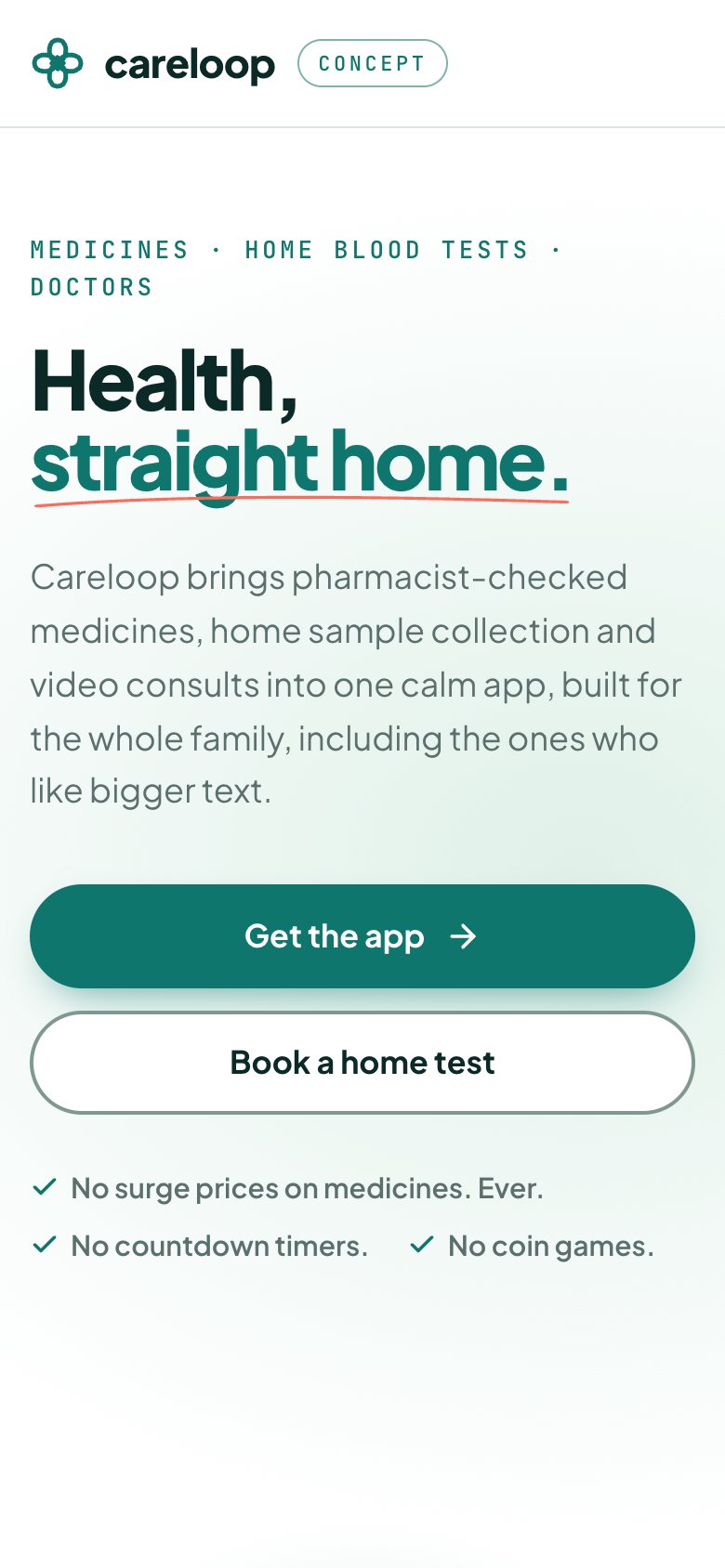
Our concept build Careloop covers medicines, lab tests at home and doctor consults in one loop, so its test booking, slot picking, collection tracking and report delivery map closely onto a lab. A doctor appointment and health app uses the same building blocks. Send us a brief for a fixed quote within 48 hours.
See the app a diagnostic lab runs on
We designed and built this concept end to end, every side of it, so you can open it and try it before you plan your own. Our doctor appointment app page covers the features, timeline and what moves the cost.
Questions people ask
Can I start a diagnostic lab without being a doctor?
Yes, many labs are owned by people who are not doctors, but reports must be signed by a qualified pathologist and the lab must meet your state's clinical establishment rules. Owners usually employ or contract a pathologist and qualified technicians. Put the pathologist's responsibilities, hours and signing authority in a written agreement from the start.
Is NABL accreditation mandatory for a pathology lab?
No, NABL accreditation is voluntary for most labs, but it helps a great deal. Hospitals, insurers, corporate clients and some government schemes prefer or require accredited labs. Many new labs build their quality system to the standard from the start and apply once they have enough records to show it works in practice.
How much does it cost to open a pathology lab in India?
A small pathology lab with semi-automated analysers in a tier-2 city costs roughly ₹15–35 lakh to start. A fully automated metro lab with several collection centres can need ₹1 crore or more. Reagent rental agreements can lower the upfront equipment bill in exchange for a long supply commitment with one vendor.
How do labs keep home collection samples safe?
They keep samples cool, correctly labelled and moving. Trained phlebotomists use insulated boxes with gel packs, label tubes beside the patient, note the collection time and return within the window each test allows. The lab checks temperature and time on arrival, and asks for a fresh sample if either is out of range.
Do I need extra approvals to add X-ray or ultrasound?
Yes. X-ray equipment needs a licence or registration from the Atomic Energy Regulatory Board, and ultrasound machines must be registered under the PCPNDT Act, which carries strict record-keeping duties. Both bring room, staffing and inspection requirements too. Many labs start with pathology only and add imaging once the core business is steady.


