The short answer
An optical store needs a qualified optometrist or optician for eye testing, a small space with good lighting, basic testing equipment, an opening range of frames and lenses, and a reliable lens lab — in-house or outsourced. Register the business, GST, Shop & Establishment and trade licence, and check whether contact lenses you sell fall under medical-device rules.
The store's real job is trust and turnaround: accurate prescriptions, glasses ready when promised, and someone who fixes a loose screw for free. Customers come back every year or two, and they bring their families.
Is an optical store right for you?
Screen time, an ageing population and rising awareness of eye health keep demand for spectacles steady across India. Most families still prefer to try frames in person and have their eyes tested nearby, which favours neighbourhood stores that do it well.
Optometrists who want their own business, and retailers who hire a qualified optometrist, both do well. The skills that matter are clinical accuracy, frame styling and keeping track of every job from test to pick-up.
- Stock risk. Frames go out of fashion; unsold stock ties up cash.
- Turnaround. Waiting a week for lenses loses customers to faster stores.
- Remakes. Wrong prescriptions or fitting errors cost money and goodwill.
- Online competition. Price-led online sellers set customer expectations on frames.
Children are an underrated part of the market. Parents often notice a problem only when a teacher mentions it, so school screening days and kid-friendly frames that survive the playground can bring in families who stay with you for years.
Business models to choose from
| Model | How it works | Suits |
|---|---|---|
| Neighbourhood optical shop | Eye testing, frames and lenses, repairs, outsourced lens lab | Most first-time owners |
| Optometry-led eye care store | Fuller eye examinations, contact lens fitting, referrals to ophthalmologists | Qualified optometrists |
| Franchise store | A brand's stock, pricing and systems for fees | Owners who want a ready playbook |
| Home eye tests plus delivery | Optometrists visit homes or offices; glasses delivered later | Seniors and busy professionals; often paired with a store |
| Specialty store | Kids' eyewear, sports eyewear or contact lenses | Owners in areas with a clear niche |
Whatever the model, your lens partner shapes the business as much as your frame range. Compare labs on turnaround for single-vision and progressive lenses, remake terms, coating options and how they communicate delays. Customers judge you on the date you promised, not on which lab missed it.
Licences and registrations
| Registration | Why you need it | Where you get it |
|---|---|---|
| Business entity and bank account | Contracts, supplier accounts and liability | Bank and PAN; MCA portal for LLPs and companies |
| GST registration | Frames, lenses and sunglasses are taxable; suppliers will need your GSTIN | GST portal — confirm rates with a CA |
| Shop & Establishment registration | Staff and working hours | State labour department |
| Trade licence | Local permission to run the shop | Municipal corporation |
| Optometrist qualification and registration | Eye testing should be done by a qualified optometrist; national allied-health registration rules are being implemented | Check the current position with the relevant council |
| Medical device rules (contact lenses, some solutions) | Some eye-care products are regulated as medical devices and may need registration or a licence to sell | Central and state drug regulators — check what applies |
| Fire NOC | Depends on the building and floor area | Fire department |
Requirements vary by state and change. Confirm with your local authority, the relevant regulator, a CA or a lawyer before opening. This is general information, not legal advice.
What it costs to start
| Item | Small start | Larger setup |
|---|---|---|
| Rent deposit and advance | ₹1–5 lakh | ₹5–15 lakh |
| Interiors, lighting and display | ₹3–8 lakh | ₹10–25 lakh |
| Eye-testing equipment (autorefractometer, trial set, charts) | ₹2–6 lakh | ₹8–20 lakh |
| Lens edging and fitting equipment | ₹0 (outsourced lab) | ₹3–10 lakh |
| Opening stock: frames, sunglasses, contact lenses | ₹3–8 lakh | ₹10–30 lakh |
| Registrations, legal and CA | ₹20,000–60,000 | ₹50,000–1.5 lakh |
| Staff for three months | ₹1.5–3 lakh | ₹5–10 lakh |
| Working capital | ₹2–4 lakh | ₹5–15 lakh |
Ballpark estimates for planning, not quotes. Equipment can be bought new or refurbished, and frame stock can be partly on consignment — both change the totals.
Step by step: from idea to first customer
- Pick your customer and price band. Students, families, professionals or premium buyers.
- Choose a location with footfall — a market street, near a school or an eye clinic.
- Hire or partner with an optometrist. Accuracy is the foundation of the business.
- Register the business, GST, Shop & Establishment and trade licence.
- Fit out for testing. A testing corner with the right distance or mirror set-up, good lighting and privacy.
- Choose a lens lab and agree turnaround, remake terms and pricing in writing.
- Buy a focused frame range across your price band; add on consignment where suppliers allow.
- Set up job cards so every order has a prescription, measurements, lens type and promised date.
- Go live online with a Google Business Profile, timings, brands carried and the testing service.
- Launch with eye-check camps at nearby offices, schools or societies, with no pressure to buy.
Running it day to day
- Job tracking. Status for every order — sent to lab, received, fitted, ready — and a WhatsApp message when it's ready.
- Quality checks. Verify power and fitting before handover; remakes cost more than a second check.
- Prescription records. Store test results securely so returning customers don't start from scratch. See our DPDP Act checklist.
- Stock ageing. Review slow frames every quarter and discount or return them.
- After-sales. Free adjustments and cleaning bring people back into the store.
- Reminders. A yearly check-up reminder is the easiest repeat sale you'll ever make.
Getting your first customers
- Google Business Profile. Photos of the store and frames, services and timings. See our local SEO guide.
- Eye-check camps in offices, schools and housing societies.
- Ophthalmologist relationships. Refer medical cases to them; many will send dispensing back to you.
- WhatsApp catalogue. Share new frames with regular customers and let them reserve before visiting.
- Family offers. One visit, glasses for the whole family.
The tech you need
Start with a billing system that handles GST, job cards and prescription records, plus WhatsApp for ready-for-pickup messages. A simple website with your services and a booking link for eye tests helps local search.
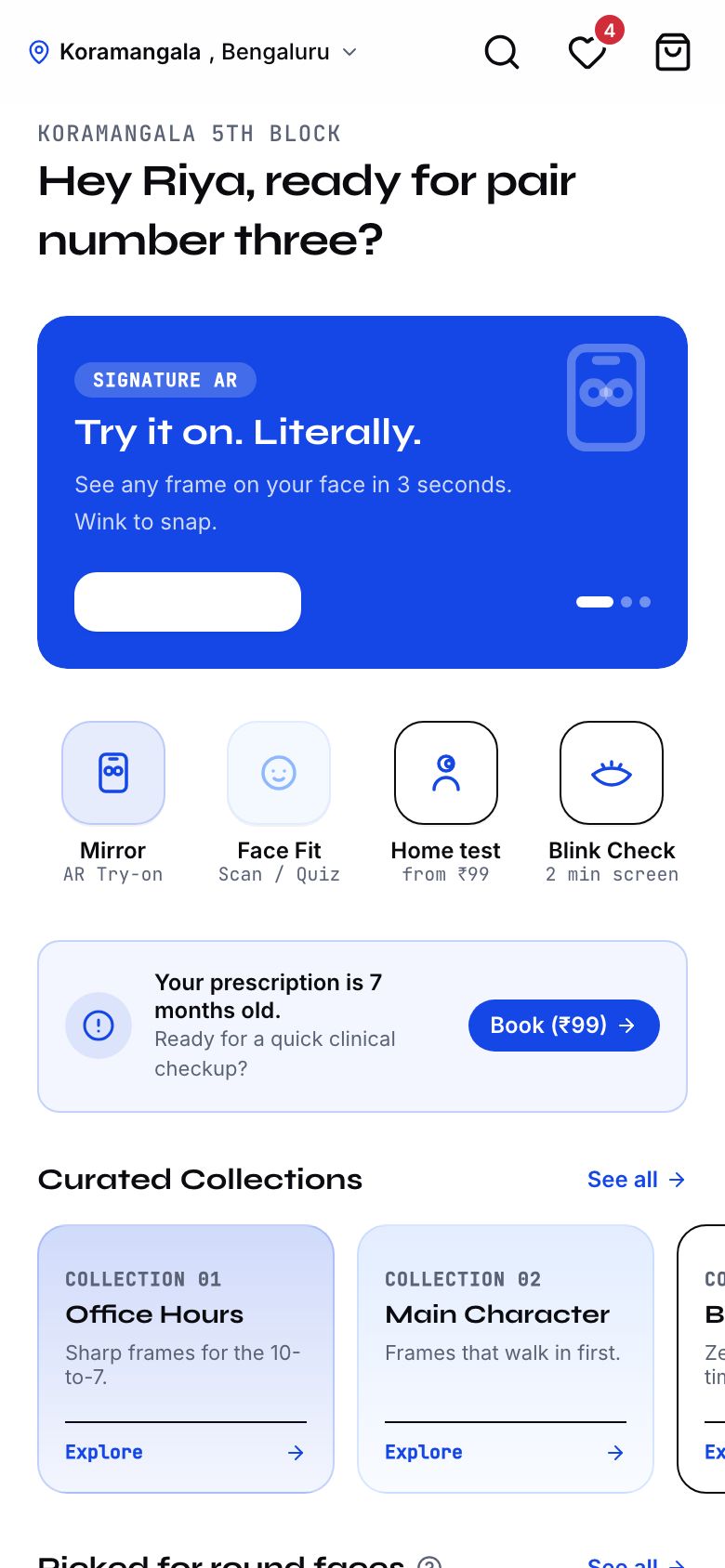
If you plan to sell online or run several stores, you'll need more: a catalogue with try-on, lens selection, home eye-test bookings and a store desk that ties everything together. Our live concept build Specsy shows that omnichannel version: 3D frames, a lens lab flow, home eye tests and a store desk.
Read about our ecommerce website work, our GST billing apps, and the website cost guide before you budget. Thinking of a broader retail brand? See how to start a D2C brand. Brief us for a fixed quote within 48 hours.
See the app a optical store runs on
We designed and built this concept end to end, every side of it, so you can open it and try it before you plan your own. Our ecommerce website page covers the features, timeline and what moves the cost.
Questions people ask
Do I need to be an optometrist to open an optical shop?
You don't have to be one yourself, but eye testing should be done by a qualified optometrist, so most owners hire or partner with one. National registration rules for optometrists are being implemented, so check the current requirements. Medical eye problems should always be referred to an ophthalmologist.
How much does it cost to open an optical store in India?
A small store with an outsourced lens lab often needs somewhere around ₹12–30 lakh including deposit, interiors, testing equipment, opening stock and running costs for a few months. Larger stores with in-house edging need more. These are ballparks; local rent and stock choices change them.
Should I buy a lens edging machine or use a lab?
Most new stores start with an outside lab to save capital, then buy edging equipment once volumes justify it. In-house edging speeds up turnaround for single-vision lenses, which is a selling point. Compare monthly lab charges against the machine's cost and the skill needed to run it.
Can I offer home eye tests?
Many stores do, using portable equipment and a qualified optometrist. Keep the same standard of testing and records as in the store, and refer anything medical to an ophthalmologist. Check whether any local rules apply to home visits in your state.
Can an optical shop sell contact lenses?
Yes, but contact lenses and some solutions may be regulated as medical devices, which can mean registration or licensing requirements for sellers. Fit contact lenses only through a qualified practitioner and check the current rules with the regulator or a lawyer before stocking them.


