The short answer
Open where people need paper, pens and printouts every week: beside a school gate, a college, a coaching lane or a cluster of offices. Keep the core range tight, add photocopy and printing from the first day because those services bring people back daily, and get your Shop & Establishment registration, trade licence and GST done before you buy stock for the school season.
As a ballpark, a 150–200 sq ft neighbourhood shop with one photocopier in a tier-2 town can open for roughly ₹5–14 lakh, most of it stock. A 500 sq ft metro store with art, office and gift ranges often needs ₹20–40 lakh. This guide covers the formats, the paperwork, the money, a launch sequence, the daily routine and the tech that keeps the counter moving.
Is a stationery shop right for you?
Stationery demand is steady rather than exciting. Every new term, exam, office restock, project deadline and new year sends people to the counter. The goods don't spoil, so a slow item loses value gradually instead of overnight. The trade-off is thin margins on everyday items like ballpoint pens and ruled notebooks, which means the money comes from volume, school-season bulk orders and services like printing.
It suits someone who enjoys a counter full of small sales, remembers that one school insists on a particular size of drawing book, and buys carefully. You will carry hundreds of items, many costing less than a cup of tea, and profit often depends on how well you buy and how little leaves the shop unbilled.
The hard parts are seasonal cash and competition. In most states the school rush runs from about March to June, and you need money for stock all at once. Online sellers undercut branded items, small things go missing from open shelves, and the photocopier tends to jam on the busiest afternoon. A shop that plans its buying around school dates and keeps a service contract on its machines copes far better.
Business models to choose from
| Model | How it works | Suits |
|---|---|---|
| Neighbourhood stationery and xerox | Everyday supplies plus photocopy, printouts, lamination and spiral binding | Residential lanes and school routes; steady daily footfall |
| School supplies specialist | Book-list kits, notebooks, bags and exam material sold in bulk before term | Shops near several schools; heavy seasonal cash need |
| Office supplies | Monthly orders delivered to offices, billed on credit | Commercial areas; needs firm collections |
| Art and craft store | Paints, sketchbooks, craft kits and hobby material, sometimes weekend workshops | Cities with art colleges and hobby buyers; better margins, slower stock |
| Stationery plus gifts | Premium pens, diaries, greeting cards, gift wrap and small gifts | High streets and malls; festival peaks |
Most small shops blend the first two and add office supplies once they know a few admin managers. If gifts start pulling more than notebooks, read how to start a gift shop; if customers keep asking for books beyond the syllabus, starting a bookstore covers that side.
Licences and registrations
| Registration | Why you need it | Where you get it |
|---|---|---|
| Shop & Establishment registration | Registers the shop and covers working hours, weekly offs and staff rules | State labour department, usually online |
| Trade licence | Permission from the local body to trade from that address | Municipal corporation, or the panchayat in smaller places |
| GST registration | Needed above the turnover limit, and asked for by schools and offices that want tax invoices | GST portal |
| Legal Metrology compliance | Packaged goods such as notebooks, refills and craft kits must carry MRP and the required declarations, and you cannot charge above MRP | State Legal Metrology department |
| Packer registration | Only if you assemble and pack your own school kits for sale under your shop's name | State Legal Metrology department |
| Signage permission | For a board facing the road, in many cities | Municipal corporation |
| Udyam registration | Optional; records you as a micro enterprise, which helps with loans and schemes | Udyam portal |
The print counter needs judgement more than paperwork. Copying a few pages for someone's study is one thing; photocopying whole textbooks to sell is a copyright problem. Refuse to copy currency, and be careful with other people's identity documents.
Rules differ between states and cities and they change. Confirm the list for your address with a CA or the municipal office before you sign a lease. This is not legal advice.
What it costs to start
| Item | Small start | Larger setup |
|---|---|---|
| Rent deposit and advance | ₹50,000–1.5 lakh | ₹3–6 lakh |
| Shelving, counter, display and signage | ₹1–2.5 lakh | ₹4–8 lakh |
| Opening stock | ₹2–5 lakh | ₹8–14 lakh |
| Photocopier, printer, laminator and binding machine | ₹60,000–2 lakh | ₹2–5 lakh |
| Billing software, barcode scanner and UPI soundbox | ₹10,000–40,000 | ₹50,000–2 lakh |
| Registrations and CA fees | ₹10,000–30,000 | ₹30,000–80,000 |
| Working capital for the school season | ₹1–2 lakh | ₹3–5 lakh |
| Rough total | ₹5–14 lakh | ₹20–40 lakh |
Stock is the line to watch. Buy the fast movers (A4 paper, ruled notebooks, pens, files, glue, chart paper) in depth, and buy character-printed and trend items shallow, because they date by next term. Ask distributors for credit on school-season orders and for the right to return unopened stock. A second-hand copier on a maintenance contract is usually a smarter first buy than a new one.
Treat these as ballpark figures for planning, not quotes. Rent and the depth of your opening stock move the total more than anything else.
Step by step: from idea to first customer
- Map every school, college and office within walking distance: note the board each school follows, when term starts and whether it hands out a book list.
- Choose your core range and services so the shop has a clear identity: school supplies and xerox, office supplies, or art material.
- Find a shop on the walking route that students and parents already use, and check that a trade licence is possible at that address.
- Register the business, open a current account, and apply for Shop & Establishment, the trade licence and GST.
- Open accounts with two or three distributors and agree credit terms, minimum orders and returns on unsold seasonal stock.
- Set up the print corner with a copier on a service contract, a printer, a laminator and a binding machine.
- Load every item into billing software with a barcode or short code, so the counter keeps moving in the June rush.
- Put a UPI QR and soundbox at the counter so every payment is announced aloud and nobody has to check a phone.
- Visit principals and office managers with a printed price list for class-wise kits and monthly supplies.
- Open three or four weeks before term begins and take pre-orders for book-list kits on WhatsApp.
- Review after the rush: see what sold, what is stuck, and clear slow items before they look old.
Running it day to day
Mornings bring parents and students on the way to school, buying the one thing they forgot. Afternoons belong to the print counter: assignments, forms, resumes and ID copies. Evenings bring office buyers and the inevitable chart-paper emergency at eight o'clock. Close by matching cash and UPI against the bill book, noting the copier counter reading and writing the reorder list.
- Reordering: set minimum levels for fast movers like A4 reams and blue pens, and reorder before you hit them, not after.
- Print counter: log the copier reading daily, keep toner and paper in reserve, and know the service engineer's number by heart.
- Credit accounts: offices and schools usually pay monthly. Invoice on time and follow up the same week.
- Shrinkage: keep pens, erasers and sharpeners near the counter, and do a quick count of small items every week.
- The calendar: plan around school reopening, exams, project season, festivals and the run-up to new-year diaries and calendars.
Getting your first customers
Most customers come from within a few streets, so make the shop easy to find. A Google Business Profile listing photocopy, printouts and lamination alongside stationery catches people searching nearby. Our local SEO guide walks through setting it up.
- Book-list kits: pack a complete kit for each class at each nearby school and take pre-orders, so parents skip the queue.
- Print from your phone: publish a WhatsApp number where students can send files and collect printouts later. Our guide to WhatsApp for business covers the setup.
- Office supply runs: give admin teams a monthly order sheet and deliver by mid-morning.
- Exam-season bundles: geometry boxes, pens, pencils and clipboards packed together for board exams.
- Ask for reviews from regular parents and students once they've used the print service a few times.
The tech you need
On day one you need billing software that handles hundreds of low-value items quickly, prints GST invoices for schools and offices, and keeps stock counts honest, plus a UPI QR with a soundbox and a WhatsApp Business number for print orders. Our GST billing software guide explains what to look for. Later, a simple catalogue for pre-ordering school kits and a reorder page for office customers save hours in the rush.
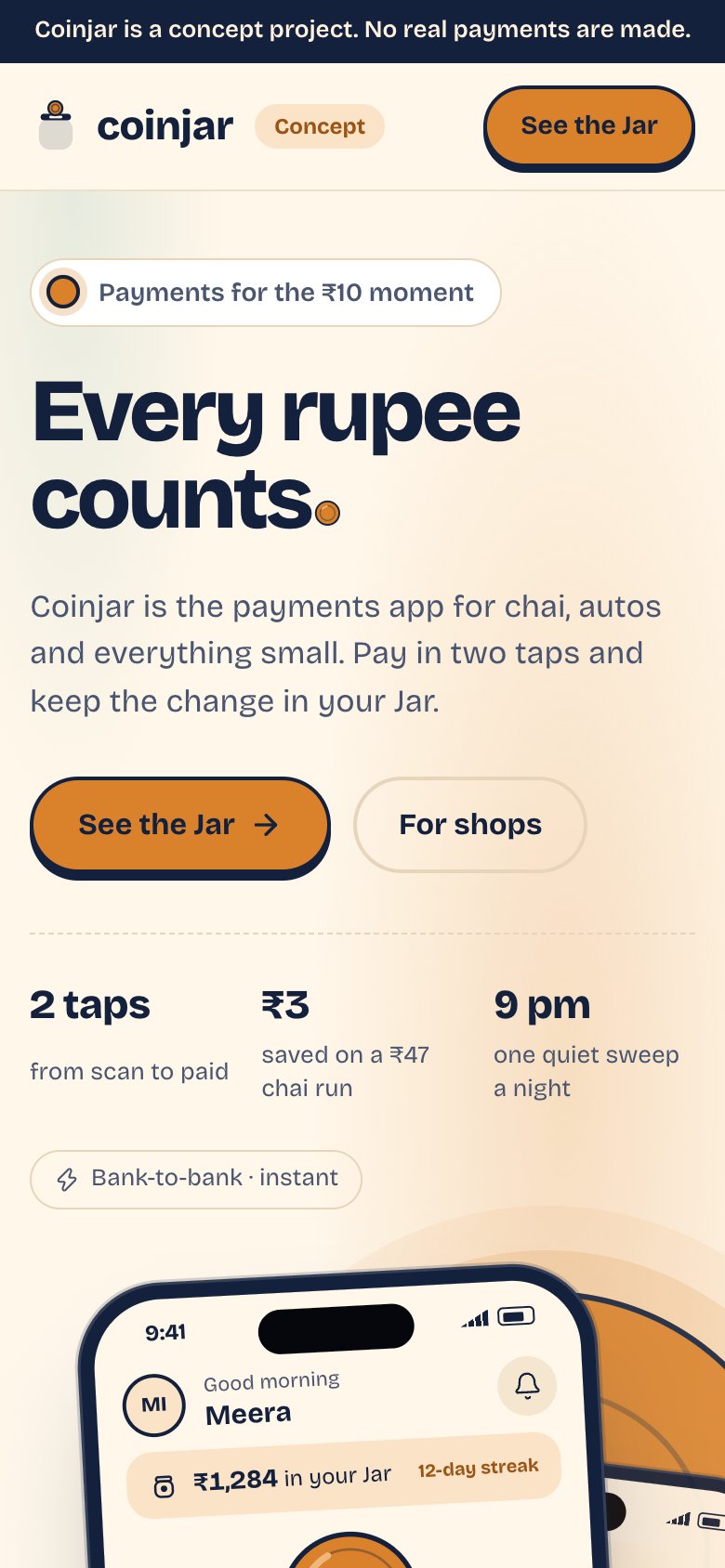
Our concept build Coinjar is a UPI payments app with a soundbox-ready toolkit for shopkeepers. For a stationery shop, the UPI collection, the payment sound alerts and the shopkeeper toolkit carry over as they are; the billing and stock side comes from a billing app. If you want the two working together, send us a brief and we'll come back with a fixed quote within 48 hours.
See the app a stationery shop runs on
We designed and built this concept end to end, every side of it, so you can open it and try it before you plan your own. Our gst billing app page covers the features, timeline and what moves the cost.
Questions people ask
How much does it cost to open a stationery shop in India?
A small neighbourhood shop with a photocopier in a tier-2 town usually needs about ₹5–14 lakh, and a larger metro store with art and office ranges can need ₹20–40 lakh. Opening stock and the rent deposit are the biggest lines. Keep some working capital aside for the school season, when you buy heavily before you sell.
Which licences does a stationery shop need?
Usually a Shop & Establishment registration, a trade licence from the municipal body and GST registration. Packaged goods must follow Legal Metrology rules on MRP and labelling, and if you pack your own school kits you may need packer registration too. Signage permission applies in many cities. Check the exact list for your area with a CA.
Should a stationery shop offer photocopy and printing?
Yes, in most locations it should. Photocopy, printouts, lamination and binding bring people in every day, earn better margins than pens and notebooks, and turn one-time visitors into regulars. Start with a reliable second-hand copier on a service contract, then upgrade once you know how many pages you print each month.
How do I get school book-list orders?
Meet the principals or administrators of nearby schools before term and ask for each class's list. Pack class-wise kits, publish a price for each, and take pre-orders on WhatsApp with a pickup date. Some schools already have a tie-up with a vendor, so start with the ones that don't and deliver well.
Is a stationery shop profitable in India?
It can be steadily profitable if rent is modest and the shop sits on a busy school or office route. Margins on everyday items are thin, so the profit comes from volume, bulk school orders, office accounts and print services. Shops that buy carefully and clear slow stock each term tend to do well.


