The short answer
Start as a distributor, not a bottler. Tie up with one licensed packaged drinking water plant, check its BIS and FSSAI papers yourself, and win a few tight pockets of homes, offices and shops where one vehicle can make many drops an hour. The money in water cans comes from packed routes and cans that come back, not from the water itself.
As a ballpark, a one-vehicle distribution business in a tier-2 city can start for roughly ₹3–8 lakh. Two or three vehicles with a bigger pool of cans in a metro is closer to ₹17–33 lakh. A bottling plant of your own is a far larger, separately regulated project. This guide covers the models, the paperwork, the money, your first routes and the tech.
Is a water can delivery business right for you?
In most Indian cities, homes, small offices, shops, clinics and tea stalls rely on 20-litre cans for drinking water. The order repeats every few days whatever the economy is doing, and it climbs sharply in the hot months. That steady, boring demand is the appeal.
It suits someone who knows the local lanes, does not mind early starts and physical work, and can manage two or three delivery staff who handle cash. Founders who already run a kirana, a milk route or a small transport business often add water cans because the customers and the vehicle overlap.
The hard parts are cans that never come back, cans that crack, offices that pay late, and price cuts from suppliers who sell water from unlicensed plants. Your name is also tied to the plant's quality. If a batch tastes wrong, customers blame you first, so choose the plant carefully and keep checking it.
Business models to choose from
| Model | How it works | Suits |
|---|---|---|
| Single-plant distributor | Buy filled cans from one licensed plant at a trade price, deliver them and collect empties | First-time founders; the lowest capital |
| Multi-brand distributor | Carry cans and bottles from two or three plants so customers can choose | Areas where offices ask for a familiar brand |
| Home subscription | A fixed number of cans a week per flat, billed monthly | Apartment complexes and gated societies |
| Office supply with dispensers | Cans plus a dispenser on deposit or rent, on a weekly route | Commercial streets, small offices and clinics |
| Own bottling plant | Treat, fill, seal and sell water under your own label | Founders with land, capital and patience for certification |
Most people should start as a distributor and think about a plant only once they know their volume. The daily rhythm is close to a dairy round, so our playbook on starting a milk delivery business is worth reading for the subscription and route ideas.
Licences and registrations
| Registration | Why you need it | Where you get it |
|---|---|---|
| FSSAI registration or licence as a distributor | Distributing packaged drinking water makes you a food business; the tier depends on your scale | Food Safety and Standards Authority of India, online |
| GST registration | Lets you buy against tax invoices and bill offices and shops properly | GST portal |
| Shop & Establishment registration | Covers your godown or office and the people who work there | State labour department or municipal body |
| Trade licence | Permission to run the business from your godown address | Municipal corporation or local body |
| Commercial vehicle registration | A delivery vehicle carrying goods must be registered for commercial use, insured and fit | Your RTO |
| The plant's BIS certification and FSSAI licence | Packaged drinking water must be BIS certified and the plant must hold an FSSAI licence; you need proof you sell a certified product | Ask the plant for copies and verify them on the BIS and FSSAI websites |
| BIS certification and FSSAI licence for your own plant | Only if you bottle water yourself; pollution and groundwater approvals usually apply too | BIS, FSSAI, the State Pollution Control Board and the groundwater authority |
Before you sign with a plant, look at the label on a sealed can. It should carry the BIS standard mark with a licence number, the FSSAI number, a batch code and a packing date. Keep copies of the plant's certificates on file, ask for fresh copies each time they renew, and walk away from any plant that cannot show them.
Requirements for distributors and plants differ between states and are revised from time to time. Check the current list with a CA or a food safety consultant before you buy vehicles or cans. This is not legal advice.
What it costs to start
| Item | Small start | Larger setup |
|---|---|---|
| Godown rent deposit | ₹20,000–60,000 | ₹1–2 lakh |
| Cans and dispensers | ₹50,000–1.5 lakh | ₹3–5 lakh |
| Delivery vehicle (used goods carrier or new vehicles) | ₹1.5–3 lakh | ₹8–14 lakh |
| First stock bought from the plant | ₹20,000–50,000 | ₹1–2 lakh |
| Registrations and CA fees | ₹15,000–40,000 | ₹50,000–1 lakh |
| Delivery staff wages for the first two months | ₹40,000–80,000 | ₹2–4 lakh |
| Ordering, billing and a simple app or website | ₹10,000–50,000 | ₹1–4 lakh |
| Launch offers and leaflets | ₹10,000–30,000 | ₹50,000–1 lakh |
| Rough total | ₹3–8 lakh | ₹17–33 lakh |
The cost people forget is the can float. Every customer holds one or two of your cans at any moment, so you own far more cans than you deliver in a day. Take a refundable deposit per can, record it, and count your cans every week. Office credit is the other drain, so set one billing date a month and stick to it.
Use these as rough planning figures, not quotes. Vehicle choice, can prices and godown rent swing widely from one city to the next.
Step by step: from idea to first customer
- Pick a pocket first. Choose two or three neighbourhoods or one commercial street you can cover in a single loop, and count the buildings and offices in it.
- Visit plants within a short drive and check the BIS licence, the FSSAI licence, recent lab reports and how clean the filling and can-washing areas are.
- Agree terms in writing: trade price per can, who owns the cans, replacement of leaking or damaged ones, and how much supply you get in summer.
- Register the business, open a current account and apply for GST, FSSAI and Shop & Establishment registration.
- Rent a small godown with vehicle access, shade and a raised, dry floor so cans never stand on wet ground.
- Buy or lease a goods vehicle registered for commercial use, insure it, and fit racks so cans cannot roll.
- Hire one or two delivery staff you trust with cash and society gate passes, and pay a small bonus linked to cans delivered.
- Fix prices and deposits: a rate per can, a refundable can deposit, a dispenser rent for offices and a monthly plan for homes.
- Set up orders and payments: one WhatsApp number, a UPI QR on the vehicle and a register of cans held by each customer.
- Launch building by building with a free first can for flats that sign up for a month, and add the next pocket only when the first route is full.
Running it day to day
The day starts early. The vehicle goes to the plant, drops empties and loads filled cans, then runs the home route before people leave for work. Late morning and afternoon belong to offices and shops. Evenings are for urgent top-up orders, collecting dues and planning tomorrow's loads from the orders that came in.
- Can count: every evening, match cans loaded, delivered, collected and sitting in the godown. A missing can is lost margin.
- Quality at the plant: reject cans with broken seals, cloudy water or missing labels before they leave the plant, not at a customer's door.
- Clean cans only: the plant should wash and sanitise returned cans, but refuse to deliver any that look dirty, scratched or smell odd.
- Collections: homes pay by UPI on delivery or once a month; offices get one GST invoice a month with a clear due date.
- Summer planning: book extra supply with the plant before the heat arrives and keep a backup vehicle or driver on call.
Getting your first customers
Drinking water is a trust purchase. People switch when their current supplier turns up late, argues about empties or sells water that tastes strange, so reliability is your pitch. Hand over a card that shows the plant's certification details and promise a delivery window you can actually keep.
- Housing societies: ask the residents' association for permission to put up a notice and run a sign-up table on a weekend morning.
- Small offices and clinics: walk in with a sample can and a dispenser offer. One busy office can order more than a dozen flats.
- Shops and eateries: tea stalls, salons and small restaurants need water every day and pay promptly if you never let them run dry.
- WhatsApp ordering: one number, quick replies and a confirmed delivery time. Our guide to WhatsApp for business shows how to keep orders tidy.
- Google Business Profile: list the areas you cover and your hours so people searching for water cans nearby find you.
The tech you need
On day one, a WhatsApp number, a UPI QR and a notebook or spreadsheet of cans per customer are enough. Somewhere past a few hundred households the notebook breaks down: orders get missed, flats dispute how many cans they hold, and drivers cannot see who has paid.
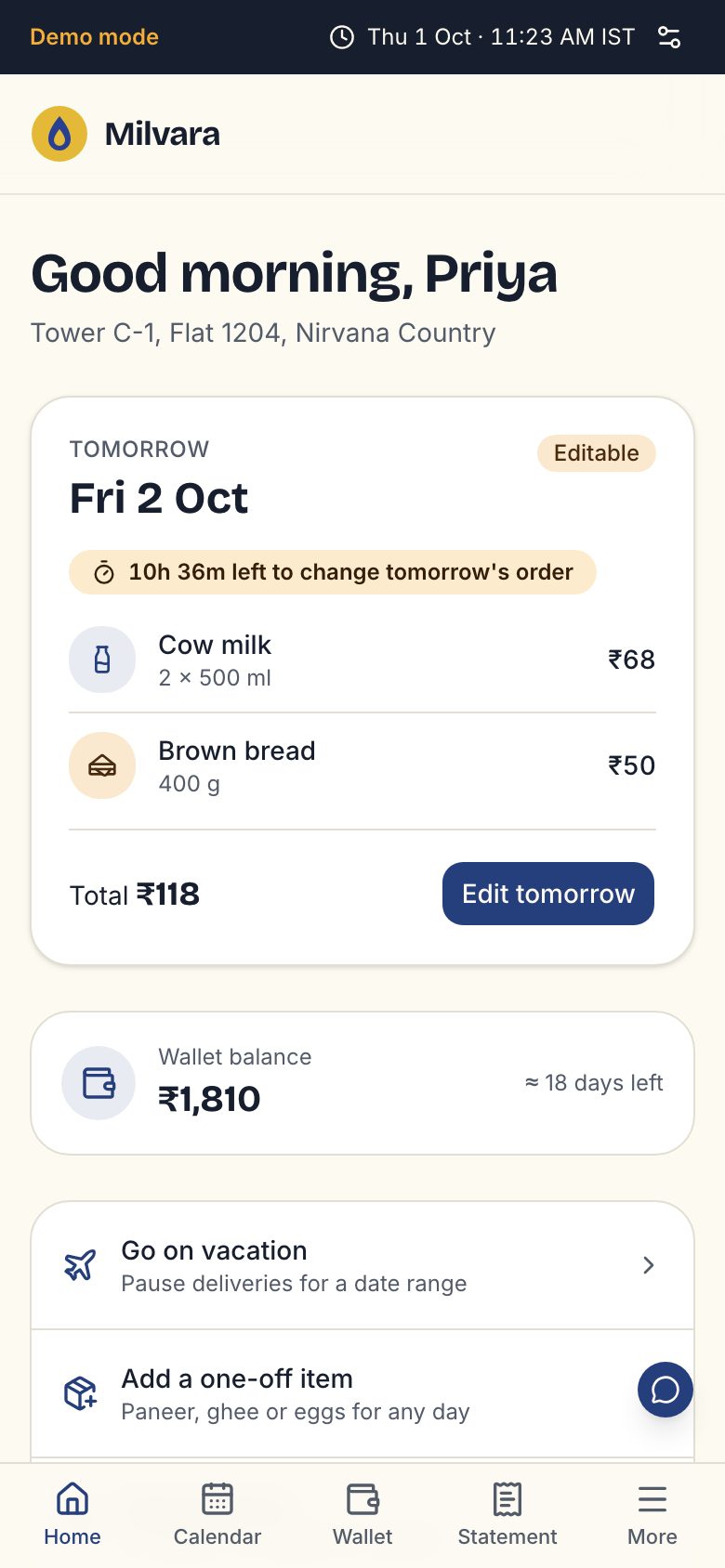
That is where a subscription delivery app earns its keep. Customers set a weekly can schedule, pause it when they travel and add an extra can in one tap, while you see each route, every customer's can balance and the dues outstanding. Our concept build Milvara was designed for daily milk, but its pause, skip, top-up and vendor view carry straight over to water cans. Our subscription app guide explains the moving parts, and you can send us a brief for a fixed quote within 48 hours.
See the app a water can delivery business runs on
We designed and built this concept end to end, every side of it, so you can open it and try it before you plan your own. Our milk & subscription delivery app page covers the features, timeline and what moves the cost.
Questions people ask
How much does it cost to start a water can delivery business?
A one-vehicle distribution business in a tier-2 city usually needs about ₹3–8 lakh, covering a used goods vehicle, a few hundred cans, a small godown, registrations and two months of wages. A metro setup with two or three vehicles is closer to ₹17–33 lakh. A bottling plant of your own costs far more and needs separate approvals.
Do I need BIS certification to distribute water cans?
Usually not as a distributor, because BIS certification belongs to the plant that treats and packs the water. You do need FSSAI registration or a licence as a distributor, GST, local registrations and a commercially registered vehicle. Always check the plant's BIS and FSSAI papers, because selling uncertified packaged water can land you in trouble as well.
How do I stop customers from keeping my cans?
Take a refundable deposit for every can a customer holds and record it against their name. Deliver on exchange, a full can for an empty one, and note every exception on the spot. A weekly count of cans in the godown, on the vehicle and with customers shows leaks early, before they turn into a large loss.
Is a water can business profitable?
It can be, if your routes are tight. The margin on each can is small, so profit comes from delivering many cans per trip, keeping cans circulating and collecting dues on time. Scattered customers, lost cans and long credit to offices eat the margin quickly, which is why it pays to grow one pocket at a time.
Should I start my own bottling plant instead?
Not at first, for most founders. A plant needs land, treatment equipment, an in-house lab, BIS certification, an FSSAI licence and, in many states, pollution and groundwater approvals, all of which take time and capital. Distributing for a licensed plant teaches you the demand, the routes and the customers. Consider a plant once your steady volume justifies it.


