The short answer
To start a clinic in India you need a registered medical practitioner, a suitable ground-floor space, clinical establishment registration where your state requires it, a biomedical waste arrangement, and the usual Shop & Establishment and municipal licences. A small GP or specialist clinic can start lean; a multispeciality OPD with diagnostics needs far more capital and paperwork.
Clinical skill gets patients through the door once. What brings them back is the experience around it: short, predictable waits, clear fees, a receptionist who answers the phone and records that are there next time. Plan those systems before the board goes up.
Is a clinic right for you?
Indian patients still choose doctors mostly by word of mouth, distance and timings. A clinic that opens on time, runs a sane queue and explains things in the patient's language earns loyalty that lasts decades — often across a whole family.
The founders who do well are usually doctors who want their own practice, or operators who partner with doctors and run everything else: rent, staff, billing and patient flow. Both work, but the roles must be clear and written down.
- Waiting rooms. Long, unpredictable waits are the most common complaint. Evening OPDs get crowded fast.
- Slow start. A new clinic takes months to build a patient base. Budget for that.
- Regulation. Registration, biomedical waste and record-keeping are not optional, and inspections happen.
- Doctor dependence. If one doctor leaves, patients may follow. Build the clinic's own reputation, not just one name's.
Business models to choose from
| Model | How it works | Suits |
|---|---|---|
| Solo GP or family clinic | One doctor, morning and evening OPD, basic procedures | A doctor starting their own practice |
| Specialist clinic | One specialty (paediatrics, dermatology, ENT, dental) with its own equipment | Specialists with referral networks |
| Polyclinic or multispeciality OPD | Several consultants on fixed days, shared reception and billing | Operators partnering with visiting doctors |
| Clinic + pharmacy + sample collection | OPD with an attached chemist and a lab partner | Busy residential areas with no nearby services |
| Teleconsult-first hybrid | Video follow-ups with in-person visits when needed | Chronic-care and follow-up-heavy specialties |
Many polyclinics pay visiting doctors a share of consultation fees. Agree the split, timings and who owns patient records in a written contract before the first OPD.
Licences and registrations
| Registration | Why you need it | Where you get it |
|---|---|---|
| Medical registration for every doctor | Only registered practitioners can practise; display the registration number | State medical council or the national registry |
| Clinical establishment registration | Many states require clinics to register and meet minimum standards | State or district health authority, under the state's clinical establishments law |
| Biomedical waste authorisation | Sharps, swabs and dressings must be segregated and disposed of through an authorised facility | State pollution control board, plus an agreement with a common treatment facility |
| Shop & Establishment registration | Staff, hours and holidays | State labour department |
| Trade or health licence | Local permission to run the premises | Municipal corporation |
| Fire NOC | Depends on building type and floor area | Fire department |
| GST registration | Many healthcare services by clinical establishments are exempt, but pharmacy sales and some services are taxable | GST portal — confirm with a CA |
| Drug licence (if you dispense) | Selling or stocking medicines for sale needs a licence | State drug control department |
| Equipment-specific approvals | Ultrasound needs registration under the PC-PNDT Act; X-ray needs approval from the atomic energy regulator | Appropriate authority for PC-PNDT; AERB for X-ray |
Telemedicine is allowed for registered doctors under national telemedicine practice guidelines, with limits on what can be prescribed remotely. Read them before you add video consults.
Rules vary by state and change over time. Confirm the current position with your state health authority, a CA or a healthcare lawyer. This is general information, not legal or medical-regulatory advice.
What it costs to start
| Item | Small start | Larger setup |
|---|---|---|
| Rent deposit and advance | ₹1–4 lakh | ₹8–20 lakh |
| Interiors: consult rooms, waiting area, accessible washroom | ₹3–8 lakh | ₹20–60 lakh |
| Medical equipment | ₹1–5 lakh for GP basics | ₹15 lakh–1 crore+ with diagnostics |
| Registrations, waste contract, legal | ₹30,000–1 lakh | ₹1–4 lakh |
| Staff for three months (reception, nurse or assistant) | ₹1.5–3 lakh | ₹10–25 lakh |
| Software and website | ₹20,000–1 lakh a year for ready-made tools | Custom systems quoted separately |
| Working capital | ₹2–5 lakh | ₹15–40 lakh |
These are ballpark estimates for planning, not quotes. Specialty, city and equipment choices change them sharply. Get vendor quotes and keep working capital apart from setup money.
Step by step: from idea to first customer
- Decide the specialty and hours. Morning, evening or both; weekdays only or Sundays too.
- Study the catchment. Residential density, nearby clinics and hospitals, chemists and labs, and what patients currently travel for.
- Choose the site. Ground floor or a lift, wheelchair access, parking, and a board visible from the road.
- Register the entity and open a bank account in the clinic's name.
- Apply for clinical establishment registration and sign a biomedical waste contract before opening.
- Fit out for flow. Separate waiting and consult areas, a reception desk that sees the door, and privacy for examinations.
- Hire and write SOPs. Consent, infection control, handling emergencies, and how the reception treats walk-ins versus appointments.
- Set fees clearly. Consultation, follow-up validity and procedure charges on a board and on your website.
- Optional tie-ups. Insurers or TPAs for cashless OPD, corporate health checks, and a lab partner for sample collection.
- Go live online with a Google Business Profile and a simple booking link.
- Open with a health camp — BP, sugar and BMI checks in a nearby society — and keep the follow-up honest.
Running it day to day
- Tokens or appointments. Most Indian clinics run a mix. Give appointment patients a slot and walk-ins a token, and show both on one board.
- Communicate delays. If the doctor is running 40 minutes late, tell waiting patients by SMS or WhatsApp. Silence is what makes people angry.
- Records. Keep consultation notes, prescriptions and reports in one place, backed up, with access limited to those who need it. Patient data is sensitive; follow our DPDP Act checklist. Linking records with ABHA under the national digital health mission is optional but increasingly expected.
- Consumables and stock. Track expiry dates for injections and dressings, and reorder before you run out.
- Cash flow. UPI and cards at reception, daily reconciliation, and a clear process for insurance claims, which pay later.
- Waste. Colour-coded bins, daily logs and a pickup schedule you never skip.
Getting your first patients
Medical council rules limit how doctors can promote themselves, so keep everything factual: names, qualifications, registration numbers, services, fees and timings. No before-and-after claims, no promises of cures.
- Google Business Profile. Accurate timings matter more than anything — patients turn up based on them. See our local SEO guide.
- Reviews, handled ethically. Ask satisfied patients after the visit. Never pay or offer discounts for reviews.
- Referrals. Build honest relationships with GPs, specialists, physiotherapists and pharmacies nearby. No kickbacks.
- Corporate and society health checks. Annual check-ups for small offices and residents' associations.
- Language. Signage and prescriptions in the language your patients read.
The tech you need
In the first months, a phone line, WhatsApp, a billing tool and a Google Business Profile are enough. Add online booking with a live queue position once evenings get crowded — that single change cuts waiting-room tension more than anything else. Our clinic appointment software guide explains the options.
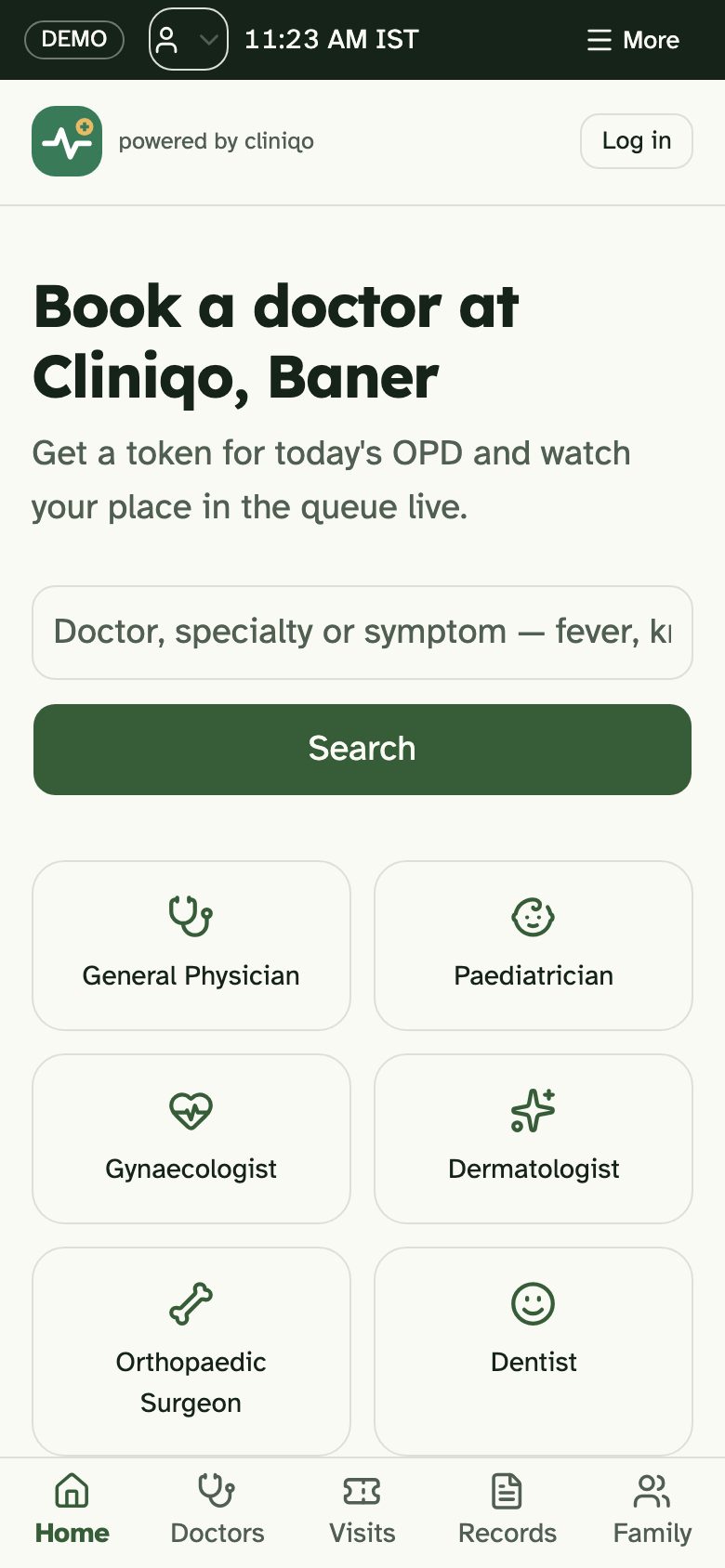
A full doctor appointment app adds patient booking by specialty, a reception day board for walk-ins and emergencies, a doctor desk with digital prescriptions, and a waiting-room screen calling tokens. Our concept build Cliniqo shows all four sides working together for a multispeciality OPD.
Planning a pharmacy counter alongside? Read how to start a pharmacy. And if you're comparing builders, our guide on choosing an app development company lists the questions to ask. Send us a brief for a fixed quote within 48 hours.
See the app a clinic runs on
We designed and built this concept end to end, every side of it, so you can open it and try it before you plan your own. Our doctor appointment app page covers the features, timeline and what moves the cost.
Questions people ask
Can a doctor open a clinic at home in India?
Often yes, but it depends on local zoning, society rules and your state's clinical establishment requirements. You still need registration, biomedical waste disposal and proper patient areas. Check with the municipal corporation and your housing society before putting up a board, because commercial use of residential premises is restricted in some places.
Is clinic registration compulsory in India?
In many states, yes. Clinics come under state clinical establishment laws that require registration and minimum standards, though the rules and which clinics they cover differ by state. Ask your district health office what applies to your type of clinic before opening, and keep the certificate displayed.
Is GST charged on doctor consultation fees?
Many healthcare services provided by clinical establishments and registered practitioners are exempt from GST, but not everything a clinic sells is. Medicines, cosmetic procedures and some other services can be taxable. Ask a CA to review your fee list and decide whether you need GST registration.
How should a small clinic handle biomedical waste?
Segregate waste at source into colour-coded bins, store it safely, keep a daily log and hand it over to an authorised common biomedical waste treatment facility on a fixed schedule. You also need authorisation from the state pollution control board. The facility usually helps with the paperwork.
Do patients need to download an app to book a clinic?
No. A booking link that opens in the browser, plus WhatsApp confirmations, works for most patients and avoids app downloads. A dedicated app makes sense later for repeat patients, family profiles and reports. Start with the simplest path your patients will actually use.


