The short answer
A laundry business in India ranges from a neighbourhood ironing counter to a full wash, dry-clean and steam-press plant with pickup and delivery. The money is in volume and repeat customers: households, hostels, hotels, salons and gyms that send clothes and linen every week.
Start by choosing what you will process in-house and what you will outsource at first, such as dry cleaning. Get your water, drainage and electricity sorted before you buy machines, and build a pickup-and-delivery routine customers can rely on. Lost or damaged clothes are what end laundry businesses, so tag and track every item.
Is a laundry business right for you?
Busy households, students, working professionals and small hotels all outsource laundry, and many cities have no reliable organised option nearby. The neighbourhood ironing stall is everywhere, but customers who want washing, dry cleaning, stain care and delivery often have few choices they trust.
You will do well if you like process: tagging, sorting by fabric and colour, machine cycles, quality checks and delivery routes. It is closer to running a small factory than a shop.
- The hard parts: water and power costs, machine breakdowns, monsoon drying, and claims for lost or damaged garments.
- What helps: business customers with steady weekly volume, and clear rules on what you accept and how you price risky fabrics.
- What to avoid: buying large machines before you have the volume to keep them busy.
Business models to choose from
| Model | How it works | Suits |
|---|---|---|
| Ironing and press counter | Steam or charcoal pressing for a neighbourhood, priced per piece. | Very low capital; dense residential areas |
| Wash, fold and iron by weight | Customers pay per kilo for everyday clothes; pickup and delivery included. | Students, working professionals, hostels |
| Dry cleaning and premium care | Suits, silks, sarees, bridal wear and shoes, priced per item. | Higher-income areas; founders willing to invest in skill and equipment |
| Commercial linen service | Bulk washing for hotels, hospitals, salons, gyms and restaurants on contract. | Founders with capital and B2B sales strength |
| Collection-point franchise | Stores collect clothes and send them to a central plant. | Brands expanding across a city |
A common path is to start with wash-fold-iron and pressing, outsource dry cleaning to a trusted plant, and bring it in-house when volume justifies the machines.
Licences and registrations
| Registration | Why you need it | Where you get it |
|---|---|---|
| Business structure | Sets liability and tax treatment. | A CA; LLPs and companies register with the Ministry of Corporate Affairs |
| GST registration | Required once turnover crosses the threshold; business clients will ask for GST invoices. | The GST portal |
| Udyam registration | MSME recognition, useful for equipment loans. | The Udyam registration portal (free) |
| Shop & Establishment / trade licence | Covers your premises under state and municipal rules. | Municipal body or state labour department |
| Pollution control consent | Commercial washing produces wastewater; larger units may need consent to establish and operate. | State Pollution Control Board |
| Water and drainage permissions | Commercial water use and discharge to drains may need approval. | Municipal water and sewerage authority |
| Boiler registration and fire safety | Steam boilers above certain sizes, and solvents used in dry cleaning, bring extra safety rules. | State boiler inspectorate and local fire department |
Which of these apply depends on your scale, equipment, state and city, and the rules change. Confirm with a CA, the pollution control board and your municipal office before you buy machines. This is general information, not legal advice.
What it costs to start
| Item | Small start | Larger setup |
|---|---|---|
| Premises deposit and fit-out | ₹1–3 lakh | ₹8–20 lakh |
| Washers and dryers | ₹2–5 lakh for commercial front-loaders | ₹15–40 lakh for industrial machines |
| Ironing and pressing tables | ₹30,000–1 lakh | ₹3–8 lakh with steam setup |
| Dry-cleaning machine | Outsourced at first | ₹10–30 lakh |
| Water treatment, plumbing and electricals | ₹50,000–2 lakh | ₹5–15 lakh |
| Delivery vehicles | Two-wheelers or an electric three-wheeler | Vans for B2B routes |
| Working capital | ₹1–2 lakh | ₹8–20 lakh |
These are planning estimates, not quotes. Machine prices vary a lot between new and refurbished equipment and between brands.
Step by step: from idea to first customer
- Choose your model and your first customers: households, students, hotels or salons.
- Find premises with reliable water, drainage, three-phase power if needed, and room to sort and dry.
- Check pollution, water and fire requirements before you sign the lease.
- Decide what you process in-house and line up a dry-cleaning partner for the rest.
- Buy or lease machines sized for your first six months, with an annual maintenance contract.
- Write a price list per kilo and per item, and a clear policy for delicate fabrics and stains.
- Set up tagging for every garment, from pickup to delivery.
- Plan pickup and delivery slots and routes.
- Set up UPI collection, GST invoicing if registered and a customer list.
- Create a Google Business Profile and a WhatsApp Business number.
- Offer a first-order discount in nearby societies and hostels, and pitch two or three local businesses.
Running it day to day
Mornings are pickups and sorting; afternoons are washing, drying and pressing; evenings are quality checks, packing and deliveries. Business customers often want early-morning drops before their day starts.
- Staff. Train every worker on fabric care labels, stain treatment and safe use of chemicals and steam.
- Fair pay and safety. Pay on time, provide gloves and ventilation, and keep boilers and irons maintained.
- Tracking. Count and tag every piece at pickup, and get the customer to confirm the count. It prevents most disputes.
- Quality. Check every order before packing; re-wash rather than deliver a stain.
- Claims. Publish a clear damage and loss policy so customers know what to expect before they hand over a wedding outfit.
Track water, power and detergent per kilo. Those three numbers tell you whether your prices are right.
The monsoon needs its own plan. Clothes take longer to dry, customers send more, and delivery routes slow down. Tumble dryer capacity, covered drying space and honest delivery times through the rains save you from a wave of complaints. Some laundries pause new customers for a few weeks rather than miss promises to existing ones.
Machines are your factory, so look after them. Keep a log of every service, clean filters and lint traps daily, and keep a technician's number who can come the same day. A single broken washer on a busy day can push a whole day's orders late.
Getting your first customers
Households search “laundry near me” and “dry cleaners near me” and pick a business with good photos, clear prices and recent reviews. Our local SEO guide covers building that presence honestly.
- Hostels and PGs. Students and young professionals need weekly wash-and-fold; offer monthly plans.
- Societies. A pickup day for a gated society makes routes efficient and builds word of mouth.
- Local businesses. Salons, gyms, spas, small hotels and restaurants need linen washed every day.
- WhatsApp. Let customers book a pickup with one message and send them a photo of the counted items.
Monthly subscriptions work well for laundry, much like a milk delivery business: fixed slots, predictable volume and simple billing.
The tech you need
At first, WhatsApp bookings, a tagging system and UPI are enough. As volume grows, you need pickup slots, garment tracking from tag to delivery, delivery routes, subscriptions and GST invoices for business clients.
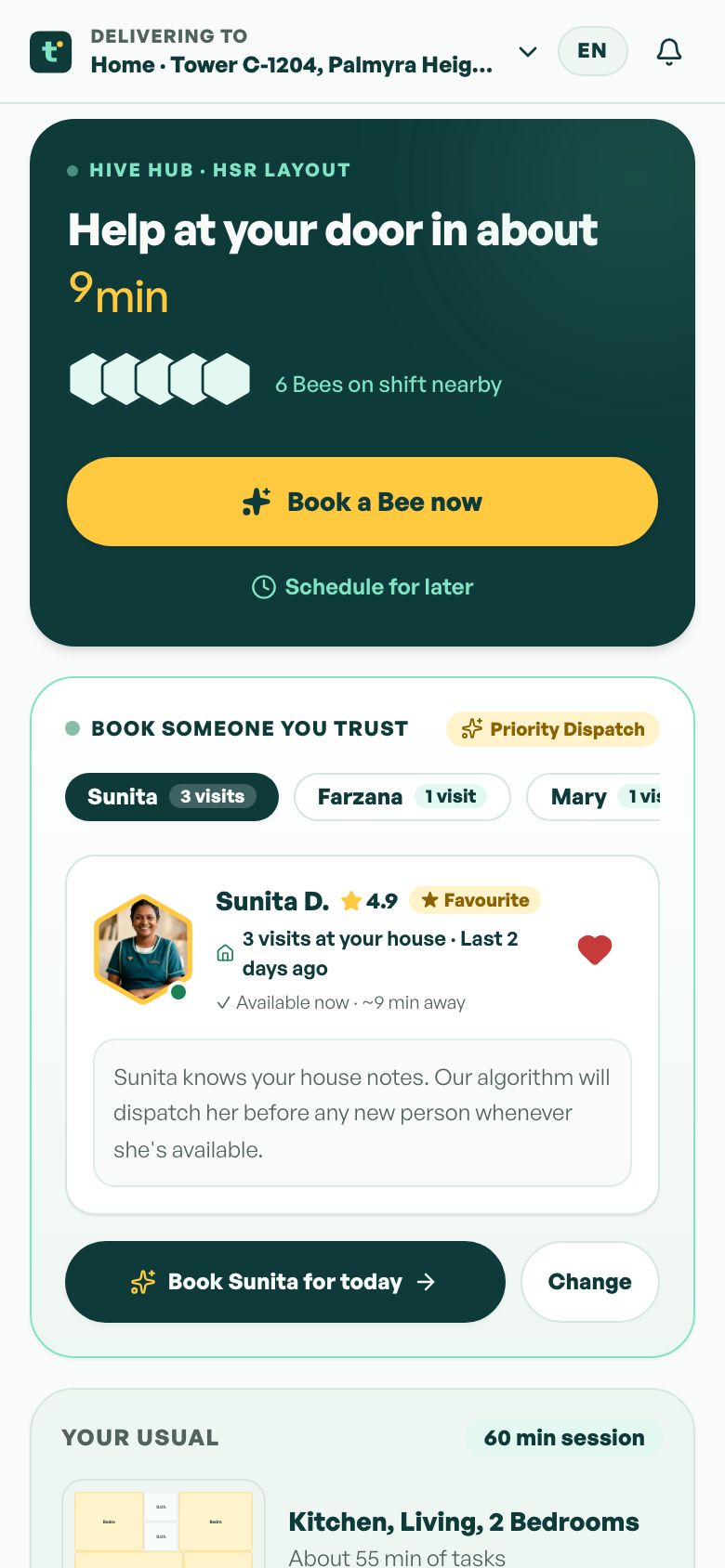
A laundry app follows the home services app pattern: customers book pickups and track orders, staff use an app for routes and item counts, and a dashboard shows the day's load. Our TidyBee concept build shows the customer, worker and ops sides of an on-demand home service.
For recurring plans, see our subscription delivery apps page and the guide to subscription apps. For business invoicing, a billing app with GST invoices keeps accounts clean.
See the app a laundry business runs on
We designed and built this concept end to end, every side of it, so you can open it and try it before you plan your own. Our home services app page covers the features, timeline and what moves the cost.
Questions people ask
How much does it cost to start a laundry business in India?
A small wash-fold-iron unit can start for roughly ₹5–12 lakh, including premises, commercial washers and dryers, pressing tables and working capital. Adding in-house dry cleaning and industrial machines can take it to several times that. These are rough planning estimates, not quotes.
Is a laundry business profitable in India?
It can be when machines stay busy. Margins depend on keeping water, power and detergent costs per kilo low, and on steady volume from subscriptions and business clients. Low volume with large machines is the most common reason laundries struggle.
Do I need pollution control permission for a laundry?
Commercial laundries produce wastewater, and larger units may need consent from the State Pollution Control Board. Requirements depend on your size, equipment and state. Check with the board and your municipal authority before you set up, ideally before you sign a lease, since some locations are not suitable.
Should I start with dry cleaning?
Most new laundries outsource dry cleaning at first and do wash, fold and ironing in-house. Dry-cleaning machines are expensive and involve solvents with extra safety rules. Bring it in-house once your dry-cleaning volume is steady enough to keep a machine busy, and you have staff trained to run it safely.
How do laundries avoid losing clothes?
Count and tag every garment at pickup, have the customer confirm the count, keep the tag on through washing and pressing, and check it again at packing. Photos at pickup help with valuable items. Clear loss and damage policies set expectations before a dispute happens.


