The short answer
Sell arrangements and occasions, not loose flowers. The margin is in bouquets, event décor, temple and puja orders and pre-booked birthdays and anniversaries, while loose flowers spoil within days and compete with every market vendor. Buy from the wholesale flower market early in the morning, keep a small chilled stock, and plan for wastage from the first day.
As a ballpark, a small counter shop with a display chiller and one delivery bike in a tier-2 city can open for roughly ₹4–10 lakh. A metro studio with a walk-in cold room, a van and an event décor kit often needs ₹22–50 lakh. This guide covers the models, permissions, costs, cold storage, the daily rhythm and how to win online orders.
Is a flower shop right for you?
Flowers are bought for every kind of moment in India: birthdays, hospital visits, pujas, weddings, office welcomes and apologies. Demand is spread across the year, with sharp peaks around Valentine's Day, Diwali, wedding months and festival weeks. A florist who delivers on time, with fresh stems and a neat card, gets remembered and reordered.
This business suits early risers with an eye for colour and a calm head on a deadline. You will be at the wholesale market before sunrise, conditioning stems by mid-morning and racing a delivery across town at seven in the evening because someone forgot an anniversary.
The hard parts are perishability, wholesale prices that jump before big days, heat that wilts stock in hours, and the tension of same-day delivery. Wastage is the silent cost: flowers you bought but could not sell. Successful florists plan around it rather than accepting it.
Business models to choose from
| Model | How it works | Suits |
|---|---|---|
| Neighbourhood flower shop | Walk-in bouquets, garlands and puja flowers from a small counter | Busy markets, near temples, hospitals and offices |
| Online bouquet studio | Orders through a website and WhatsApp, delivered the same day across the city | Founders good with photos and delivery planning |
| Event and wedding décor | Stage, mandap, car and venue flowers with a crew on site | Teams with planner contacts; big, uneven income |
| Corporate and hotel subscriptions | Weekly arrangements for reception desks, restaurants and clinics | Steady monthly income; needs reliability |
| Flowers with gifts | Bouquets bundled with cakes, chocolates or potted plants | Gifting occasions; adds food rules if you sell edibles |
Many florists start as a counter shop and add online orders, then décor. Décor sits close to event management, and potted plants close to running a plant nursery, so read those if you expect to grow in either direction.
Licences and registrations
| Registration | Why you need it | Where you get it |
|---|---|---|
| Shop & Establishment registration | Covers your shop's hours, holidays and staff | State labour department or municipal body |
| Trade licence | Permission to run a flower shop at that address | Municipal corporation |
| GST registration | Needed above the turnover limit or for interstate online orders; fresh flowers, bouquets and décor services can be treated differently, so ask a CA how to bill each | GST portal |
| Stall or vending permission | A roadside or market stall needs permission, often within a notified vending zone | Municipal body, town vending committee or market committee |
| FSSAI registration | Only if you sell cakes, chocolates or other food with flowers | FSSAI, online |
| Plant quarantine clearance | Only if you import cut flowers, bulbs or planting material | Directorate of Plant Protection, Quarantine and Storage |
For décor at venues, the venue or the event organiser usually handles permissions, but check who is responsible for fire safety around fresh flowers, candles and lighting before you sign.
Permissions for stalls and street vending vary widely between cities. Confirm with your municipal office and a CA. This guide is general information and not legal advice.
What it costs to start
| Item | Small start | Larger setup |
|---|---|---|
| Rent deposit and advance | ₹50,000–1.5 lakh | ₹3–8 lakh |
| Display chiller or walk-in cold room | ₹60,000–1.5 lakh | ₹4–8 lakh |
| Workbench, buckets, tools, vases and racks | ₹30,000–80,000 | ₹1.5–3 lakh |
| Interiors and signage | ₹50,000–1.5 lakh | ₹3–8 lakh |
| First month of flowers, foliage and wrapping | ₹40,000–1 lakh | ₹2–4 lakh |
| Delivery two-wheeler or van | ₹80,000–1.2 lakh | ₹5–10 lakh |
| Licences and CA fees | ₹15,000–40,000 | ₹50,000–1 lakh |
| Website, photos and billing | ₹25,000–80,000 | ₹1–3 lakh |
| Staff for the first two months | ₹50,000–1.2 lakh | ₹3–6 lakh |
| Rough total | ₹4–10 lakh | ₹22–50 lakh |
Cold storage is not optional. Most cut flowers last far longer when they are conditioned and kept cool, and a good chiller pays for itself in lower wastage. Keep a wastage log every day, use slightly older stems in garlands, petals and décor, and buy less on quiet days.
These ranges help sanity-check a plan; they are not quotes. Vehicle, cold room and rent swing the totals the most.
Step by step: from idea to first customer
- Learn the wholesale market: go at dawn for two weeks, note prices by flower and season, and find two growers or traders you can trust.
- Pick your model and the occasions you will own, such as birthdays, hospitals, temples or weddings.
- Choose a location with footfall and space for a chiller, a workbench and a bike outside.
- Register the business and apply for GST, Shop & Establishment and a trade licence, plus a stall permit if you start outdoors.
- Buy the chiller before the décor. Freshness is your product.
- Practise arrangements at three price points and photograph each one in daylight.
- Write an occasion price list with sizes, add-ons and delivery charges by area.
- Plan delivery slots and a backup rider for peak days.
- Set up your Google Business Profile with real photos, hours and delivery areas.
- Launch just before an occasion so the first week brings real orders, then ask happy customers for reviews.
Running it day to day
The day starts early with the wholesale market, often before six. Back at the shop, stems are cut, conditioned and put into water or the chiller. Mid-morning goes to arrangements for the day's orders, the afternoon to deliveries, and the evening to walk-ins, last-minute orders and planning tomorrow's purchase.
- Wastage log: record what you threw away each day and adjust tomorrow's buying, flower by flower.
- Peak-day planning: take pre-orders weeks ahead of Valentine's Day and festivals, and lock rates with growers where you can.
- Delivery proof: send the customer a photo of the bouquet before it leaves and when it is handed over.
- Cold chain: keep the chiller at a steady temperature, clean the buckets daily and change water often.
- Cards and messages: check spelling and names twice. A wrong name on an anniversary card undoes a perfect bouquet.
Getting your first customers
Most flower orders are urgent, so customers order from whoever shows up first in a search or a chat. Be easy to find on Google Maps, quick to reply on WhatsApp, and clear about delivery times. Our hyperlocal delivery guide explains how same-day delivery areas and slots work.
- Hospitals, clinics and temples nearby: a small, visible stand or tie-up brings daily orders.
- Offices and hotels: offer a weekly reception arrangement on a monthly plan.
- Wedding planners and décor teams: be the florist they can call at short notice.
- Occasion reminders: with permission, note customers' birthdays and anniversaries and message a week before.
- Instagram reels: show bouquets being made and handed over, which sells the craft and the freshness.
The tech you need
On day one you need a UPI QR, a WhatsApp catalogue with prices, a pre-order sheet with delivery slots and a Google Business Profile. Once orders grow, a website with occasion pages, a bouquet builder, a delivery slot picker, a message card field and payment upfront removes most of the back-and-forth in chat.
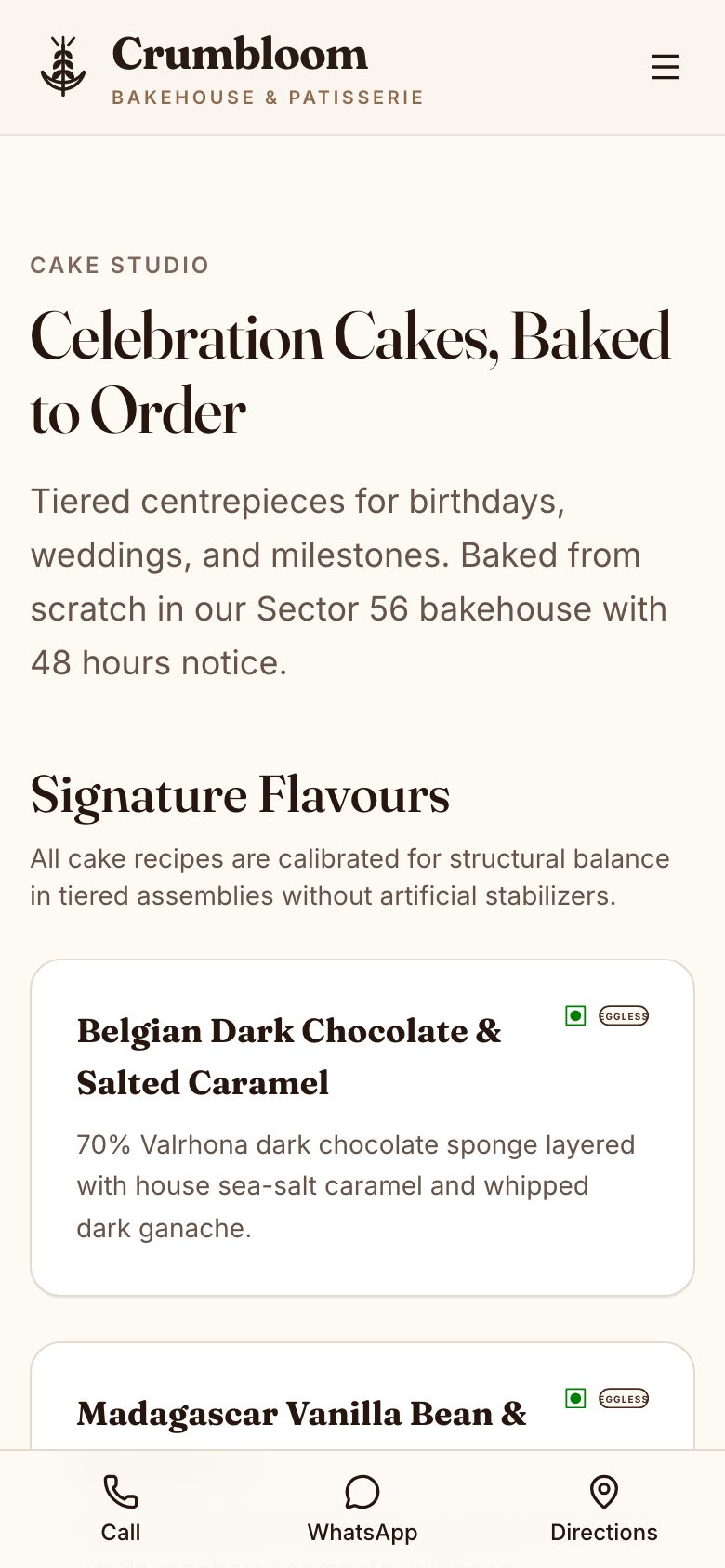
Our concept build Crumbloom is a bakery and cake studio, but the shape fits a florist well: its box builder becomes a bouquet builder, and its delivery slots and occasion pre-orders carry over as they are. See what an online store with slots and pre-orders involves, or send us a brief and we will reply with a fixed quote.
See the app a flower shop runs on
We designed and built this concept end to end, every side of it, so you can open it and try it before you plan your own. Our ecommerce website page covers the features, timeline and what moves the cost.
Questions people ask
How much does it cost to start a flower shop in India?
A small counter flower shop in a tier-2 city with a chiller and a delivery bike usually costs about ₹4–10 lakh to start. A metro studio with a cold room, a van and event décor kit often needs ₹22–50 lakh. Cold storage, rent and vehicles are the big items, and early wastage adds to running costs.
Do I need a licence to open a flower shop?
Most flower shops need Shop & Establishment registration, a municipal trade licence and GST registration once they cross the limit or sell online across states. A roadside or market stall needs permission from the municipal body or vending committee. FSSAI applies only if you sell food with flowers. Ask a CA how to bill flowers and décor for GST.
How do florists reduce flower wastage?
By buying to orders and patterns, not hope. Keep a daily wastage log, condition stems as soon as they arrive, store them in a chiller, and use slightly older flowers in garlands, petals and décor. Take pre-orders for peak days, and buy less on quiet weekdays. Over a few months, the log tells you exactly what to buy.
Can I start a flower business online from home?
Yes, an online bouquet studio can start from a home workroom with a chiller, a delivery rider and a WhatsApp or website catalogue. You save rent but must be reliable on delivery times and freshness. Check local rules on running a business from home, and register for GST when your turnover or interstate orders require it.
Where do florists buy flowers wholesale in India?
Most florists buy from the city's wholesale flower market early in the morning, where growers and traders sell by the bunch or kilogram. Larger florists also buy directly from growers or flower-growing clusters for roses, gerberas and orchids. Build steady relationships with two or three traders, compare prices daily, and agree rates ahead of peak days.


