The short answer
Most Indian brands end up selling in both places. A marketplace brings buyers who are already searching; your own website keeps the customer, the margin and the brand. The usual path is to list on a marketplace for reach, and build your own store once you have repeat buyers worth keeping.
This guide covers how to decide, what an online store in India needs that a template from abroad doesn't have, and what moves the time and cost of building one.
Marketplace, own website, or both
The choice is less about technology and more about who owns the relationship with the buyer. On a marketplace, the platform owns it. On your own site, you do — along with the work of bringing people in.
| Marketplace | Your own website | |
|---|---|---|
| Who brings buyers | The platform, through its search and ads | You: social, search, WhatsApp, repeat customers |
| Who owns the customer | The platform; you often don't get contact details | You: email, phone, order history |
| Fees | Commission per order, plus ads and shipping fees | Payment gateway fee, hosting, your own marketing |
| Brand control | Your products sit in a shared template beside competitors | Your design, your story, your packaging moments |
| Pricing freedom | Pressure to match the lowest price on the page | You set the price and the bundles |
| Speed to start | Days, once onboarding is approved | Weeks, depending on how custom it is |
Use the marketplace to learn what sells and at what price. Use the website to keep the buyers who come back. A D2C brand like our Brewmont coffee concept only works on its own site, because the roast date, brew guides and subscription are the product.
Hosted store builder or custom store?
Not every store needs custom code. A hosted store builder is often the right first step. Custom work earns its cost when the shopping experience itself is what sets you apart.
- Hosted builder: fast and affordable for a catalogue of standard products with standard checkout. You live inside its templates and its app add-ons, and pay a monthly fee.
- Custom front end on a commerce back end (headless): your own design and product pages, with proven cart, inventory and order systems underneath. This is how our Brewmont storefront is built.
- Fully custom: for products that behave differently — drops with countdowns, live shopping, configurators, subscriptions with complex rules.
If you are unsure, start with the simplest option that does your checkout properly and plan to move once revenue justifies it. Our website cost guide lays out the ballparks for each path.
What an Indian checkout needs
Checkout is where Indian stores lose the most orders, and it is where templates built for other markets fall short.
- UPI first. Show UPI at the top, with intent buttons on mobile so the payment app opens directly. Cards, net banking and wallets come after. Our UPI guide explains the flows.
- Cash on delivery, with care. COD still converts first-time buyers in many places, but returned COD parcels cost you shipping both ways. Common fixes: a small COD fee, COD only below a basket value, or OTP confirmation before dispatch.
- Pincode check before the cart. Tell buyers early whether you deliver to them and roughly when.
- Addresses with landmarks. A landmark field and a phone number the courier can call save more deliveries than any map.
- OTP login, not passwords. A phone number and a one-time code is what Indian buyers expect.
- GST invoices. Correct tax lines, your GSTIN, and the buyer's GSTIN when they want input credit.
- Order updates on WhatsApp. Confirmation, dispatch and delivery messages where buyers actually read them. See WhatsApp for business apps.
Product pages that answer the real question
Every category has one question that stops a buyer from ordering. A good product page answers it before it is asked.
- Fashion: will it fit? Threadline has a size finder and an outfit builder that shows a full look and its total price.
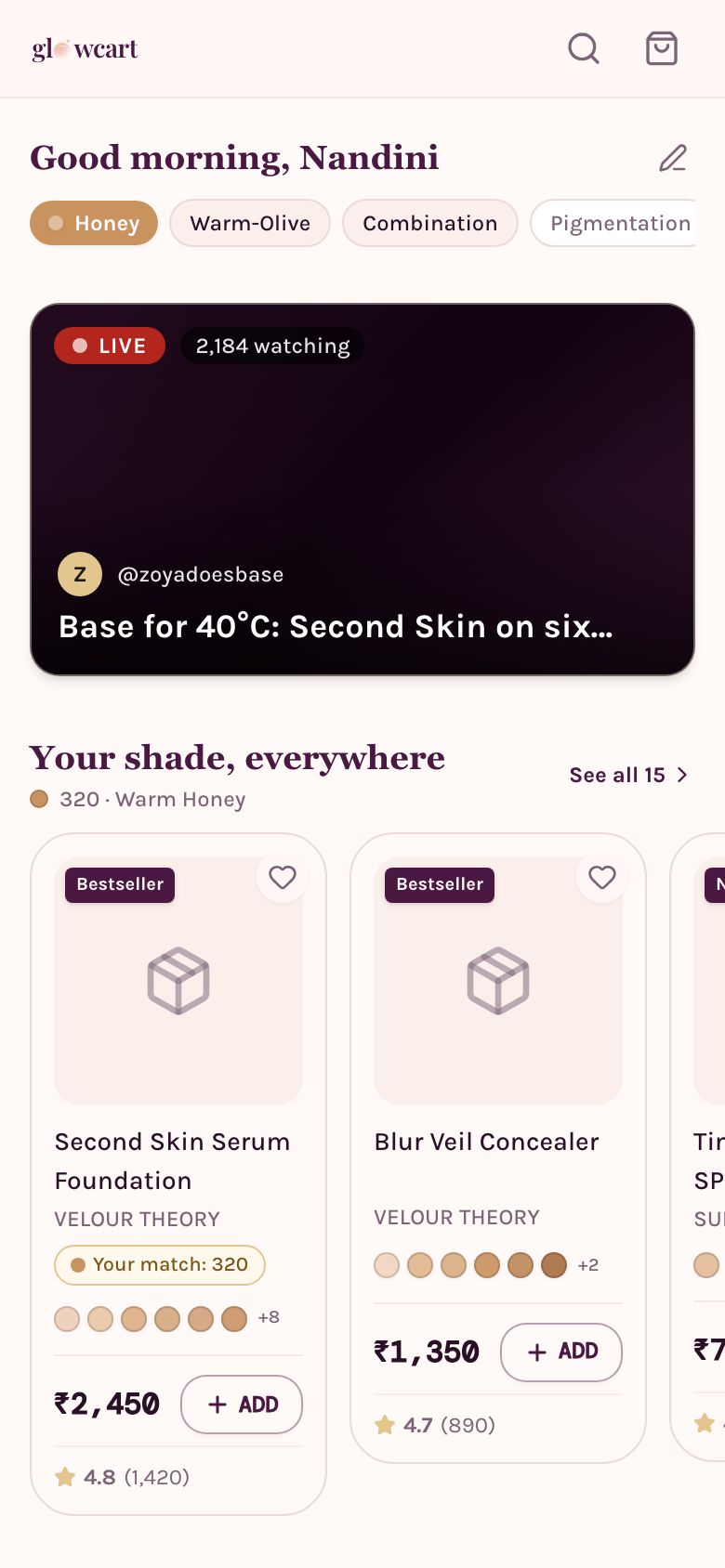
- Beauty: will it suit my skin? Glowcart is built around Indian skin tones, with shade matching across brands.
- Electronics: is it worth it? Bassline uses drops, a countdown and a 3D product view to make a launch feel like an event.
- Food and coffee: is it fresh? Brewmont shows roast dates and filters by tasting notes.
Use real photos on Indian bodies and in Indian homes, size charts in the units people use, and clear return rules near the buy button rather than in the footer.
The back office nobody sees
The store front is maybe half the work. The other half is what your team uses every day to keep promises.
- Inventory that updates across your website, marketplace listings and any physical store.
- Order management: packing lists, shipping labels, courier pickup and tracking numbers sent automatically.
- Returns and exchanges, with reasons tracked so you can fix the product or the size chart.
- Reports that show margin after shipping, returns and payment fees, not just revenue.
- Traffic handling for sales and drops, so a launch doesn't take the site down. Bassline's ops view includes flash-sale throttling for exactly this.
Glowcart's Brand Studio shows how far this can go: sales, conversion and a report on which skin tones the catalogue doesn't serve yet. You don't need all of it on day one, but plan the data so you can add it later.
Bringing buyers to your own store
A website with no traffic is a brochure. Plan how people will find it before you build it.
- Search: category pages and product pages written for what people actually type. Our local SEO guide covers the basics for Indian businesses.
- Social and creators: link every post to a specific product page, not the home page.
- WhatsApp and email: your repeat buyers are your cheapest sales. Ask for consent at checkout and use it well.
- ONDC: an option for some categories to reach buyers through other apps on the network. Check whether it suits your category and margins.
- The marketplace: keep selling there, and use inserts in the parcel to invite buyers to your own site for reorders.
Marketplace seller rules — what you can put in parcels, how you may contact buyers — vary by platform. Read your seller agreement before redirecting marketplace buyers.
Time and cost
A store on a hosted builder can be live in two to four weeks. A custom or headless store with its own brand system, product pages and back office usually takes six to eight weeks for a first version; more if it includes an app or live shopping.
Cost depends on how custom the shopping experience is, how many integrations you need (couriers, accounting, marketplaces), and whether you need a mobile app as well. Our ecommerce website page lists what moves the number, and every brief gets a fixed quote within 48 hours. Write your brief when you're ready.
Questions people ask
Should I start on a marketplace or my own website?
Start on a marketplace if you need to test demand quickly and have little marketing budget. Start with your own website if your brand, story or subscription is the product, or if you already have an audience on social media. Most brands end up on both: the marketplace for reach, the website for repeat buyers and better margins.
Is cash on delivery still necessary in India?
For many categories, yes, especially for first-time buyers outside the big cities. COD increases orders but also returns, because parcels that are refused at the door cost shipping both ways. Many stores keep COD but limit it by basket value or pincode, add a small fee, or confirm the order by OTP before dispatch.
How long does it take to build an ecommerce website?
A store on a hosted builder can be ready in two to four weeks. A custom or headless store with its own design system, rich product pages and a proper back office usually takes six to eight weeks for a first version. Adding a mobile app, live shopping or a complex subscription extends that.
Can my online store work in Hindi or other Indian languages?
Yes. Product names, descriptions, checkout and order messages can all be translated, and fonts chosen to render Devanagari, Tamil or Bengali cleanly. It is easiest when planned from the start, because longer words change layouts. Our guide to regional-language apps covers what to plan for.
Who owns the store and the customer data?
With a custom build from us, you do: the code, the design files, the brand assets and the customer data, all handed over in your own accounts. On a marketplace, the platform controls buyer data under its own rules. On a hosted builder, you own your data but depend on the builder's platform to run the store.


